What Is Pipe Dope?
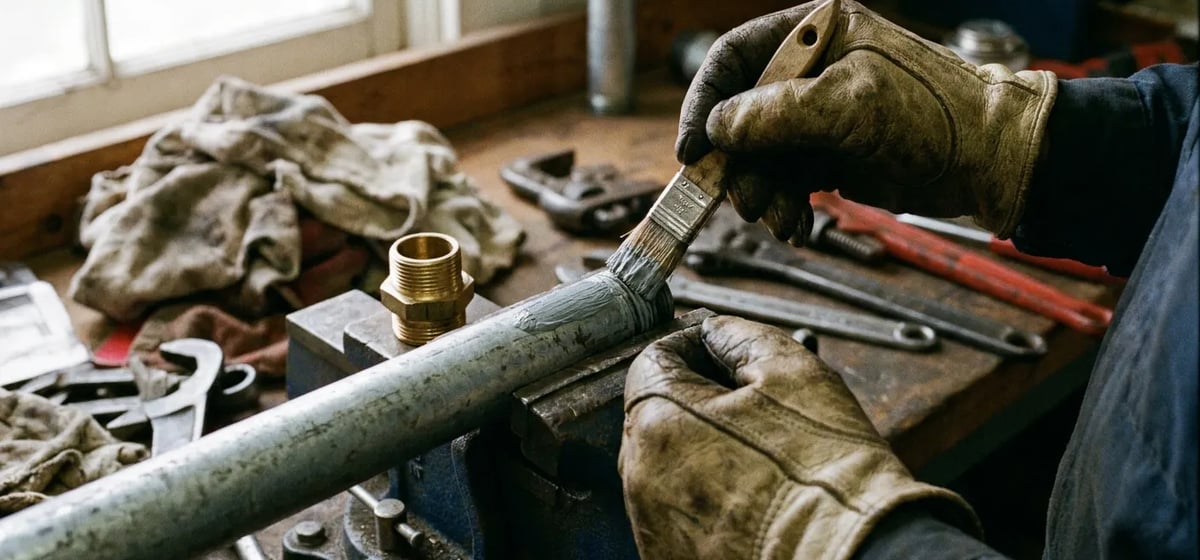
Pipe dope is a thick paste that plumbers brush onto the threads of metal or plastic pipes before twisting them together. It fills tiny gaps in the threads to stop water or gas from leaking out. You will often see it sold in small plastic jars with a brush built right into the cap. It looks and feels a lot like thick cake frosting or peanut butter. The paste stays wet in the jar but cures over time once it is squeezed inside the pipe joint.
The word dope comes from the Dutch word doop. This word originally meant a thick dipping sauce. Tradespeople adopted the term in the late 1800s to describe any thick liquid they applied to a surface. Today, it is a staple in almost every toolbox. Plumbers rely on it every day to make sure your home stays dry and safe.
Why It Matters to You
Even the best pipes have tiny imperfections in their threads. When you screw two pipes together, metal rubs against metal. This friction can damage the threads and leave tiny spaces where water or gas can escape. Pipe dope acts as a lubricant to help the pipes twist together smoothly. Once the pipes are joined, the paste hardens just enough to create a watertight and airtight seal.
This simple step prevents slow drips under your sink or dangerous gas leaks behind your stove. A small jar of pipe dope costs 5 to 15 dollars at most hardware stores. Prices vary based on the brand and the exact chemical formula. This cheap material can save you thousands of dollars in water damage repairs. A plumber might charge 150 to 300 dollars for a basic service call to fix a leaky pipe. They will likely use just a few cents worth of pipe dope to seal the fix. The true value is in the protection it offers. A slow drip hidden behind a wall can rot your wood framing and grow mold.
Where You Run Into It
You will mostly encounter this paste when dealing with Plumbing repairs or gas line installations. If you look closely at the exposed pipes under your kitchen sink or near your water heater, you might see a little bit of messy paste squeezed out where two pipes meet. The paste is usually gray, white, or yellow. Yellow dope is almost always used for gas lines. This color coding helps city inspectors know the right product was used.
Here are common places you will find it in your home:
- Gas lines connecting to your furnace or kitchen stove.
- Water supply lines under your bathroom sinks and toilets.
- Threaded connections on the top of your water heater.
- Sprinkler system pipes buried in your yard.
Sometimes plumbers use pipe dope along with a thin white tape called Teflon tape. They wrap the tape around the threads first and then brush the dope over it. This creates an extra strong seal for high pressure lines. If you are upgrading your heating system, the technicians will use a special gas rated dope. You can learn more about these systems in our HVAC & Climate Control section.
What to Watch For
Not all pipe dope is the same. Some formulas are made only for water pipes. Other formulas are rated for natural gas or propane. If you use the wrong type on a gas line, the gas can actually eat through the paste and cause a dangerous leak. Always read the label before you buy or use a product.
You should also check the material of your pipes. Some pipe dope will melt or crack certain types of plastic pipes over time. If you are doing a project yourself, make sure the label says it is safe for your specific pipe material. Applying it is also messy work. It easily gets on your hands, clothes, and tools. You only need to brush it onto the male threads. These are the threads on the outside of the pipe. You do not need to put it on the female threads on the inside of the fitting. If you put too much, the excess will just squeeze out and make a mess. You can wipe away the extra paste with an old rag.