What Is a Pressure Switch?
The word pressure comes from the Latin word pressura, meaning to press or squeeze. Engineers combined it with the word switch in the late 1800s for steam boilers and water pumps. Today, a pressure switch is a simple but vital part of your home systems. It turns equipment on or off based on changes in pressure.
Think of it as a tiny security guard. It constantly monitors the pressure of water or air inside a system. When the pressure drops too low, the switch closes an electrical circuit to turn a machine on. This is the cut-in point. When the pressure gets too high, the switch opens the circuit to turn the machine off. This is the cut-out point. The switch keeps your equipment running safely without you having to lift a finger.
Where You Will Find Them
You'll mostly find pressure switches in two major home systems. The first is your private water well. The second is your gas furnace.
If you have a private well, the switch sits near the water pressure tank. It tells the well pump when to send more water into the house. Most well switches are set to a 30 to 50 cycle. This means the pump kicks on when your water pressure drops to 30 pounds per square inch. It stops pumping when the pressure reaches 50 pounds per square inch. You can learn more in our Plumbing guide.
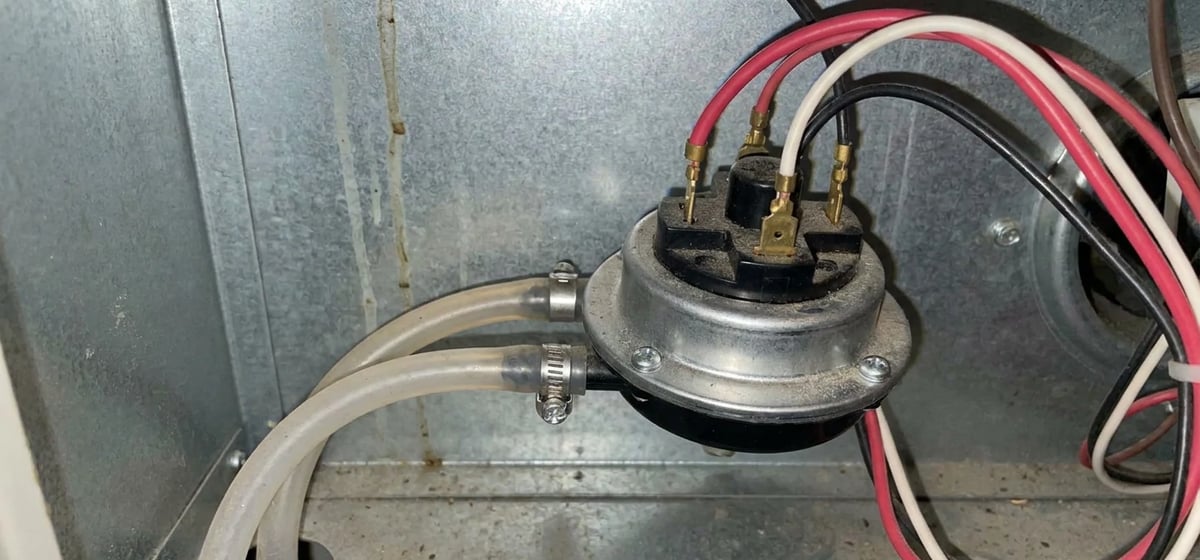
In a gas furnace, the switch looks for air pressure instead of water pressure. It acts as a safety device. Before the furnace burners light, a small fan turns on to blow exhaust gases outside. The pressure switch checks to make sure this fan is working. If the switch doesn't feel the right amount of air suction, it stops the furnace from lighting. This prevents carbon monoxide from building up. Read more about heating systems in our HVAC & Climate Control section.
Signs Your Switch Is Failing
Pressure switches work hard. Over time, the small moving parts inside them can wear out or corrode. When a switch starts to fail, you'll notice a few clear warning signs.
- No water pressure: If you turn on the sink and nothing comes out, your well pump switch might be stuck.
- Pulsing water: If your shower water pressure goes up and down constantly, the switch might be turning the pump on and off too fast.
- Furnace won't heat: If you hear your furnace click on but the burners never light, a bad switch might be blocking the ignition.
- Furnace shuts off early: The furnace might start blowing warm air but shut down after a minute.
Repair and Replacement Costs
Pressure switches are relatively cheap parts, but you usually need a professional to install them safely. Working with these switches involves live electricity, water lines, or gas appliances.
If you need to replace a well pump switch, you can expect to pay between 150 and 300 dollars for a plumber. The part itself only costs 20 to 40 dollars at a hardware store. The rest covers the service call and labor.
Replacing a furnace pressure switch costs a bit more. You'll typically pay an HVAC technician between 150 and 400 dollars to diagnose the problem and install a new switch. Keep in mind that these ranges vary based on your location and equipment. Sometimes a furnace switch fails because a vent pipe has debris in it. In those cases, the technician might just need to clean the tubes. Check our What Home Repairs Cost guide for details on hiring help.