What is a well pressure tank?
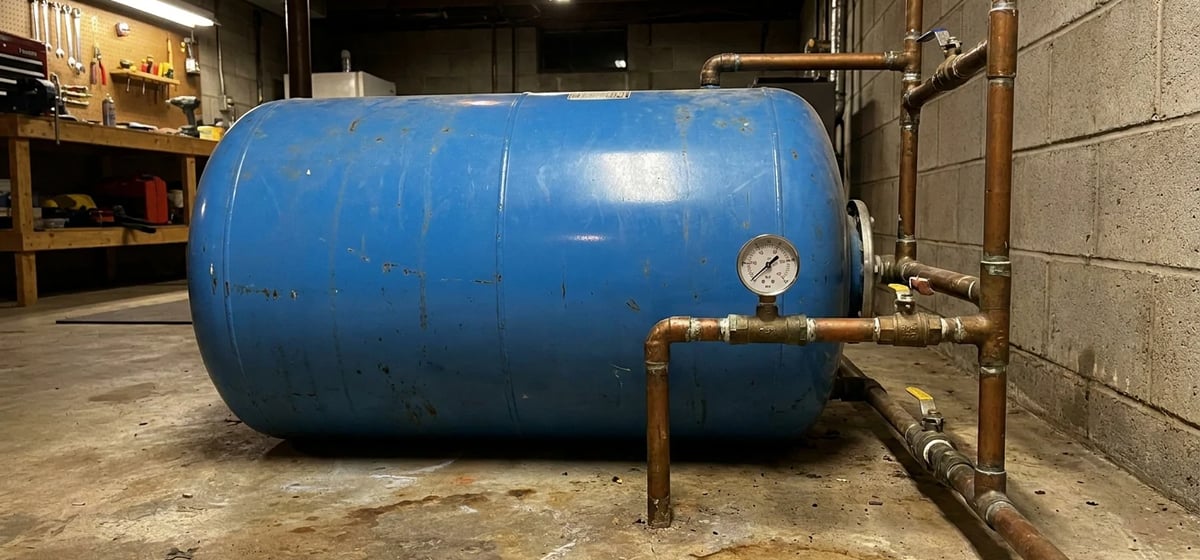
If your home gets water from a private well, you have a well pressure tank. This metal tank sits inside your house. It's usually in the basement, garage, or utility closet. The tank stores water from your well and keeps it under pressure. This pressure pushes water through your Plumbing system so it can flow out of your faucets.
Inside the metal shell, most modern tanks have a heavy rubber balloon called a bladder. The bladder holds the water. The space between the bladder and the metal shell is filled with compressed air. When the well pump fills the bladder with water, the air gets squeezed. When you turn on a shower, that compressed air pushes the water out of the tank and into your pipes.
Why it matters to your home
Your well pressure tank has a very important job. It protects your well pump from burning out. Well pumps are expensive to replace. They're meant to run for a few minutes at a time, not for just a few seconds.
Without a pressure tank, your well pump would turn on every single time you wash your hands or flush a toilet. The tank holds enough extra water to handle these small tasks. A standard tank holds 20 to 44 gallons of water. Because of this stored water, your pump only turns on when the tank gets low. This saves electricity and adds years of life to your pump.
It also gives you steady water pressure. If the pump pushed water directly to your shower, the pressure would change every time the pump cycled. The tank acts like a shock absorber. It keeps the water flowing smoothly so you don't get blasted with high pressure or left with a tiny trickle.
Signs of trouble
Pressure tanks wear out over time. The rubber bladder inside stretches and bends every day. Eventually, it can tear or lose its seal. When this happens, the air escapes and the tank fills completely with water. Plumbers call this a waterlogged tank.
Watch out for these common signs of a failing pressure tank:
- Your water pressure suddenly drops or constantly goes up and down.
- Your faucets spit air and water at the same time.
- Your electricity bill goes up because the pump is running too often.
- The tank feels very heavy or sounds solid when you tap on the top half.
- You see rust or small puddles of water around the base of the tank.
Maintenance and replacement costs
You can check the air pressure in your tank yourself. You just need a standard tire pressure gauge. Turn off the power to your well pump and run a faucet until the water stops flowing. Then, find the air valve on top of the tank. It looks just like the air valve on a car tire. The pressure should be 2 PSI lower than the starting pressure of your well pump. If it's too low, you can add air with a bicycle pump or air compressor.
Tanks come in different sizes. A small home with one bathroom might only need a 20 gallon tank. A large home with a big family might need a tank that holds 80 gallons or more. A larger tank means your pump runs less often, but it costs more upfront.
A good pressure tank usually lasts 5 to 15 years. When it's time for a new one, you'll need to hire a pro. The cost to replace a well pressure tank is usually 400 to 1,500 dollars. Keep in mind that ranges vary based on the size of the tank and labor rates in your area. If you need help finding a good plumber to do the job, check our guide on Hiring Contractors & What Things Cost.