What is a pressure reducing valve?
A pressure reducing valve is a brass plumbing fitting that sits on your main water line. City water towers push water out at very high pressures to make sure it reaches every home in town. By the time that water gets to your house, the pressure is often too strong for your indoor pipes. It takes the high pressure from the street and slows it down to a safe level before the water enters your home.
Engineers first designed these valves in the late 1800s. As towns built massive water towers, the heavy water flow started bursting early indoor pipes. The pressure reducing valve solved this problem. Today, it's a standard part of modern Plumbing systems. Most homes need their water pressure set between 40 and 60 pounds per square inch. Without this valve, your home might get hit with 100 or even 150 pounds of pressure from the city main.
Why it matters to your home
High water pressure sounds great when you take a shower, but it's a silent killer for your house. If your water pressure is too high, it puts extreme stress on every pipe, joint, and fixture. Over time, this constant pushing causes tiny leaks inside your walls. It also wears out the rubber seals inside your faucets and toilets.
Your major Appliances are also at risk. Washing machines, dishwashers, and water heaters aren't built to handle massive water pressure. A failed valve can cause a washing machine hose to burst while you're at work. This leads to a flooded house and thousands of dollars in water damage. Keeping your pressure reducing valve in good shape protects your home and extends the life of your plumbing fixtures.
Where you'll find it
You can usually find your pressure reducing valve right next to your main water shutoff valve. If you have a basement, look where the main water pipe comes through the concrete wall or floor. In warmer climates, it might be in your garage or mounted on an outside wall near your garden hose hookup. Sometimes, builders install it out by the street inside a plastic utility box buried in the ground.
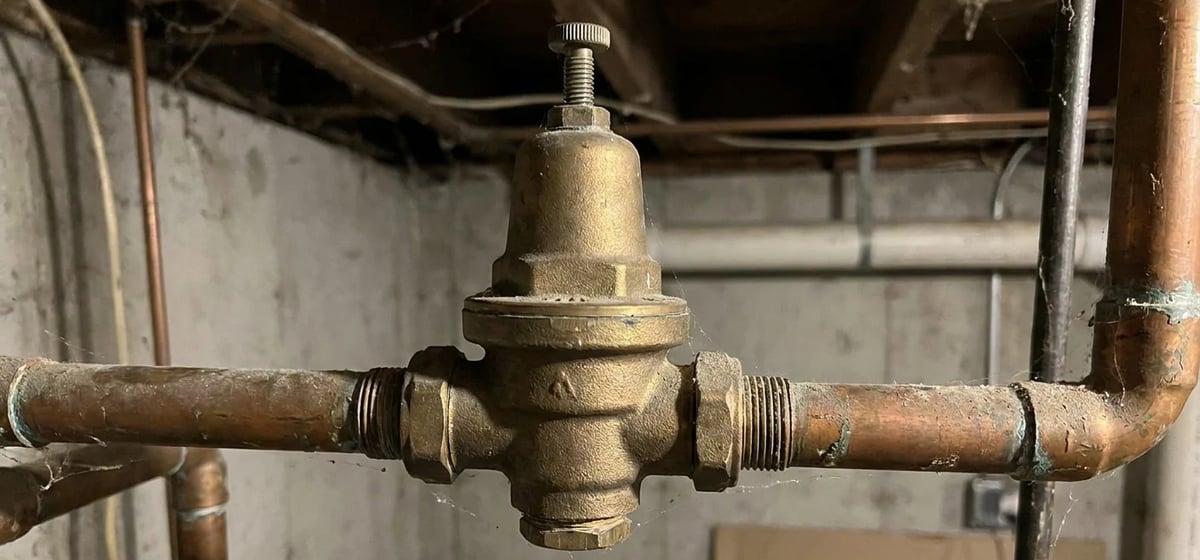
The valve is easy to spot. It's made of heavy brass and has a distinct bell shape on top. You'll also see a threaded bolt sticking out of the top of the bell. A plumber uses this bolt to adjust the water pressure up or down.
Signs your valve is failing
These valves work hard every single day, and they eventually wear out. Most last about 10 to 15 years. When the inner spring or rubber diaphragm goes bad, the valve stops holding back the city water pressure. You'll usually notice a few clear signs when it starts to fail.
- You hear a loud banging noise in your walls when your washing machine stops filling.
- Your toilets randomly run or hiss even when no one has flushed them.
- Your faucets drip constantly, and replacing the faucet cartridge doesn't fix the leak.
- Water sprays out aggressively when you turn on the kitchen sink.
- Your hot water heater relief valve leaks water onto the floor.
What it costs to replace
If your valve fails, you need to replace it quickly to protect your home. This is a job for a professional plumber because it requires cutting into your main water line and soldering new brass fittings. Plumbers also carry a special gauge to test the pressure and set the new valve perfectly.
The total cost to replace a pressure reducing valve usually runs between $350 and $600. The brass valve itself costs about $100 to $200 at a hardware store. The rest of the cost covers the plumber and their labor. Prices vary depending on your location. You can learn more about typical contractor rates in our guide on What Home Repairs Cost. If your valve is buried deep in a muddy yard, expect to pay on the higher end of that range.