What It Is
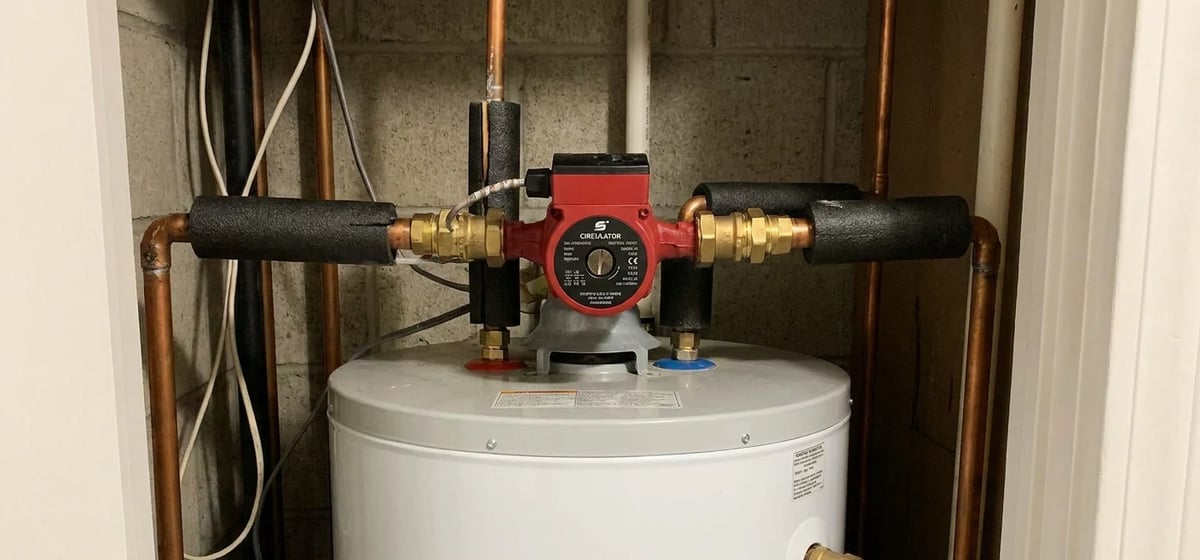
A recirculating pump is a small device that attaches to your water heater. It pushes hot water through your pipes constantly. This means you never have to wait for the water to warm up. You get hot water the second you turn on a faucet or step into the shower.
The word recirculate combines the Latin prefix re, meaning again, with circulare, meaning to form a circle. Plumbers combined this with the word pump in the mid twentieth century. Instant hot water systems became very popular in large homes during that time.
How It Works
Normally, hot water sits in your pipes after you turn off the tap. It slowly cools down to room temperature. When you turn the hot water back on, the new hot water has to push all that cold water out of the way. That's why you stand there shivering while the shower warms up.
A recirculating pump creates a continuous loop. It slowly pulls the cooling water out of the hot water line and sends it back to the water heater. The heater warms it back up, and the pump pushes it out again. Your pipes stay full of hot water at all times. There are two main ways to set this up in a house.
- Dedicated loop: The pump uses a separate pipe to send water back to the heater. This is common in new construction.
- Retrofit system: A valve goes under your farthest sink. It uses your existing cold water pipe to send the cooling water back to the heater.
Why It Matters To You
Waiting for hot water is annoying. It also wastes a lot of water. Every time you let the shower run until it gets warm, clean water goes right down the drain. A recirculating pump solves this problem completely.
This setup can save a family up to ten thousand gallons of water a year. If you live in an area with high water bills or frequent droughts, this is a huge benefit. You'll also save precious time during your busy morning routine. If you want to learn more about how water flows through your home, check out our guide on Plumbing.
How Much It Costs
Adding one of these pumps to your home is a pretty affordable project. The total cost usually falls between $400 and $800. These ranges vary based on your location, the type of pump, and the layout of your pipes.
- The pump itself costs between $200 and $400.
- Labor for a plumber to install it runs about $200 to $400.
- A dedicated return line can cost an extra $300 to $600 if your home needs one.
Many newer homes already have the right plumbing setup. Older homes usually use the retrofit valve method. The valve is cheap and easy for a plumber to install under your bathroom sink.
What To Watch For
A pump that runs all day and night uses extra electricity. It also causes your water heater to work harder to keep the loop hot. You don't need instant hot water at three in the morning or while you are at work. This is why most modern pumps come with built-in timers or smart controls.
You also need a standard wall outlet near your water heater to plug the pump in. If you don't have one, you'll need to hire an electrician to wire one for you. You can read more about wiring projects in our Electrical section. Finally, check the pump for small leaks every few months. The metal connections can vibrate loose over time. If you hear loud grinding noises, the motor bearings might be failing. This usually means it's time to replace the unit.