What is a lumen?
A lumen is a measurement that tells you exactly how bright a light bulb will be. The word comes directly from the Latin word for light. Scientists adopted it in the late 1800s to measure the total amount of visible light a source produces. Think of it simply as a measure of brightness. A higher number means the light is brighter while a lower number means it's dimmer. When you walk down the lighting aisle today, this is the main number you need to find on the box.
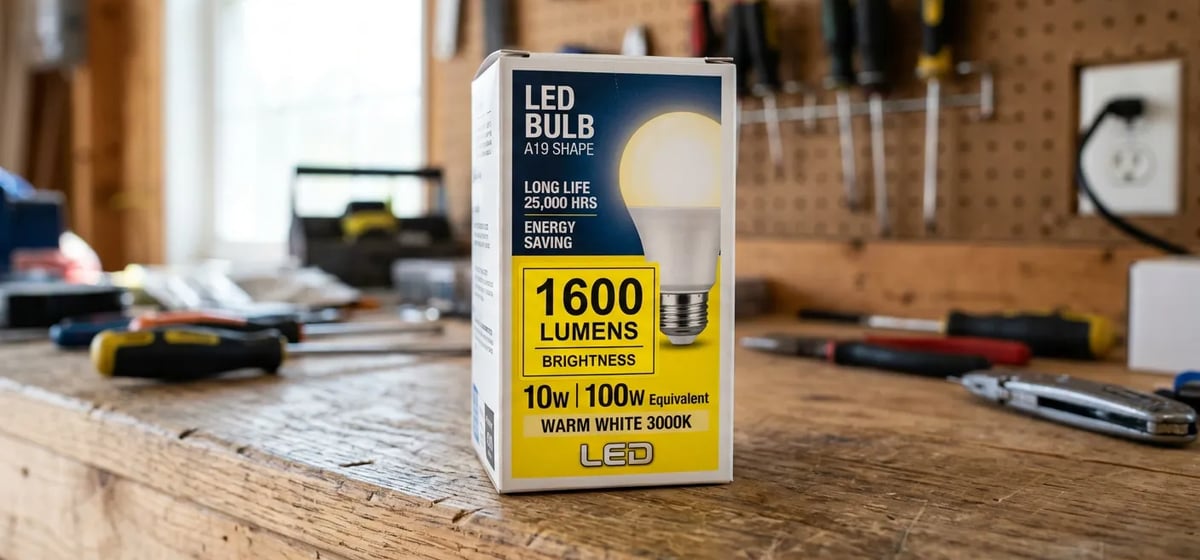
To understand the scale, imagine a single birthday candle. That candle gives off roughly one lumen of light. Now imagine an old traditional 100-watt bulb. That bulb gives off about 1600 lumens. When you grasp this scale, it becomes much easier to light your home properly. You can avoid buying a bulb that blinds you in a small hallway. You can also avoid buying a bulb that leaves your home office feeling like a dark cave.
Why lumens replaced watts
For decades, we bought light bulbs based on watts. You probably remember grabbing a 60-watt bulb for a reading lamp. But watts actually measure how much energy a bulb uses, not how much light it gives off. Old incandescent bulbs used a massive amount of energy just to make a little bit of light. They wasted most of their energy as heat.
Modern LED bulbs are much more efficient. They turn almost all their energy directly into light and use very little power. Because of this, watts no longer tell you how bright a bulb is. A modern LED bulb might use only 9 watts to produce the exact same brightness as an old 60-watt bulb. If you're in Your First Month as a Homeowner, replacing old bulbs with LEDs is a fast way to lower your power bill. You just need to learn the new translation. An 800-lumen LED replaces a 60-watt bulb. A 1600-lumen LED replaces a 100-watt bulb.
How many do you need?
Figuring out the right brightness depends entirely on the room. You rarely want all your light coming from one single bulb in the center of the ceiling. Instead, you should add up the brightness of several different lights in a room. You might have a ceiling fixture, a floor lamp, and two table lamps. You add the numbers from all those bulbs together to get the total for the room.
Pro Tip: Look for the black and white Lighting Facts label on the back of any light bulb box. The government requires this label, and it lists the exact brightness right at the top.
Here's a quick guide to the total brightness you might need for different rooms in your house:
- Kitchens: 3000 to 4000 total to help you see while you chop vegetables and cook.
- Bathrooms: 4000 to 8000 total so you can see clearly at the mirror.
- Living Rooms: 1500 to 3000 total to create a comfortable space for relaxing.
- Bedrooms: 1500 to 4000 total, usually spread across a ceiling light and bedside lamps.
Buying and installing
If you want flexibility, buy dimmable LED bulbs. This lets you turn the brightness down when you don't need it. Just make sure your dimmer switch is compatible with LEDs. Older dimmer switches were made for incandescent bulbs and might make your new LEDs buzz or flicker. If you plan to change out your old switches, you might want to review our Electrical guide first.
You'll need much higher numbers for outdoor lighting. Exterior floodlights often start at 2000 lumens and can go up to 5000 or more to light up a whole driveway. Standard indoor LED bulbs usually cost between $2 to $5 each. Heavy duty outdoor floodlights might cost $15 to $30 each. Remember that these ranges vary by store and region. For more tips on exterior upgrades, check out our guide to Exterior: Siding, Garage & Decks.