What is a reciprocating saw?
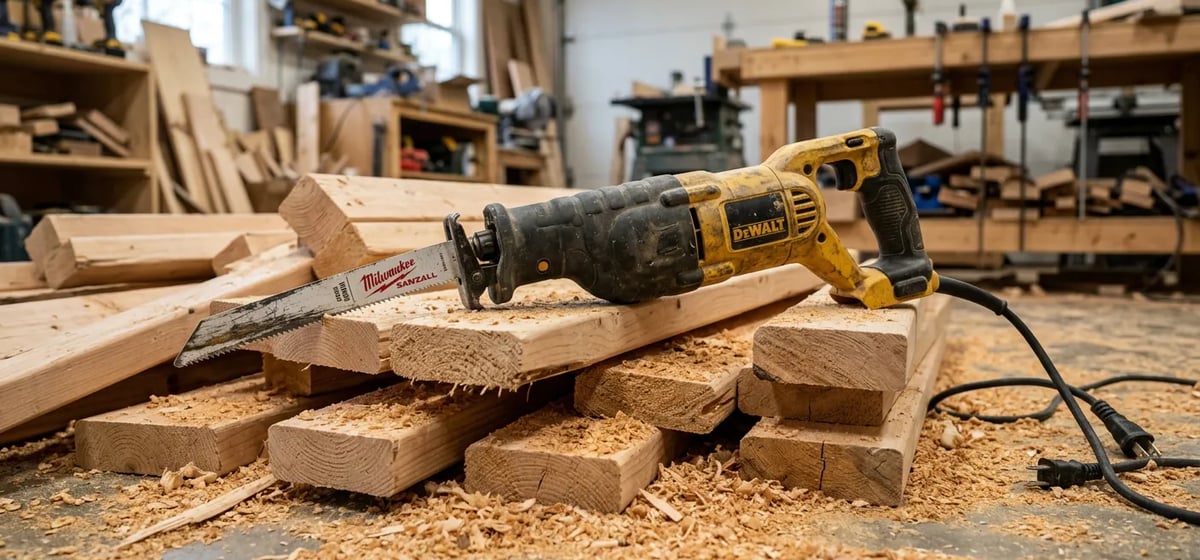
A reciprocating saw is a powerful handheld power tool. It uses a strong push and pull motion to cut through tough materials. The blade moves back and forth repeatedly. This mechanical action gives the tool its name. You'll often hear contractors call it a Sawzall. The Milwaukee Electric Tool Company invented the first popular version in 1951, and the name stuck.
This tool isn't for making pretty, straight cuts. It's a demolition tool. You use it when you need to tear things apart quickly. It easily slices through wood, metal pipes, drywall, and nails. You just need to attach the right blade for the job.
Why it matters to you
If you plan to do any heavy work around your house, this saw is a lifesaver. You might want to remove an old deck, take out a wall, or cut away rusty plumbing. A reciprocating saw handles these ugly jobs fast. It saves you hours of sweating with a manual hand saw.
Many homeowners buy one when they start their first big renovation. You'll need to decide if you want a corded model or a battery powered model. Corded saws run forever but keep you tied to an outlet. Battery models let you walk anywhere in the yard, but the batteries eventually die. If you're reading about DIY vs. Hiring a Pro, knowing how to use this tool safely can help you tackle more projects on your own.
Common uses around your house
You'll find plenty of ways to use this saw indoors and outdoors. Here are a few common jobs where it shines.
- Cutting pipes: If you're updating your Plumbing, this saw cuts right through old PVC, copper, and cast iron pipes.
- Tree pruning: You can buy special pruning blades. They make quick work of thick tree branches in your yard. This is very helpful for your Landscaping, Drainage & Outdoor chores.
- Removing old frames: When you replace old windows or doors, the saw slices right through the hidden nails and screws holding the frames to the house.
- Tearing out walls: It cuts through drywall and wood studs in seconds when you need to open up a room.
Choosing the right blade
The saw itself is just the motor. The blade does all the actual work. You must match the blade to the material you want to cut. If you use the wrong blade, you'll ruin it in seconds.
- Wood blades: These have large teeth spread far apart. They chew through lumber fast but leave a very rough edge.
- Metal blades: These have tiny teeth packed closely together. They slowly grind through steel pipes, nails, and bolts.
- Bi metal blades: These are a mix of both. They're perfect for cutting through wood that has hidden nails inside it.
Blades bend and get dull quickly during heavy demolition. You should always keep a few extra blades in your toolbox. Changing a blade is usually very simple. Most modern saws have a quick release lever on the front. You just twist the lever, pull the old blade out, and push the new one in.
What to watch for
This is a rough and aggressive tool. It vibrates heavily in your hands. You must hold it tightly with both hands so it doesn't bounce off the material. Always wear safety glasses because it throws wood chips and metal sparks everywhere.
If you want to buy your own, expect to spend some money. A basic corded saw costs 50 to 120 dollars. A cordless model with a battery and charger usually costs 100 to 300 dollars. You also need to buy blades. A variety pack of blades costs 15 to 30 dollars. Keep in mind that prices vary based on the brand you choose and where you live.