What is a service entrance cable?
The service entrance cable is the main power artery for your house. The name comes from the utility trade where service refers to the power company providing electricity to a customer. This specific cable design evolved in the 1930s to replace older exposed wiring methods. Today, it's the thick bundle of wires that carries electricity from the utility line into your home.
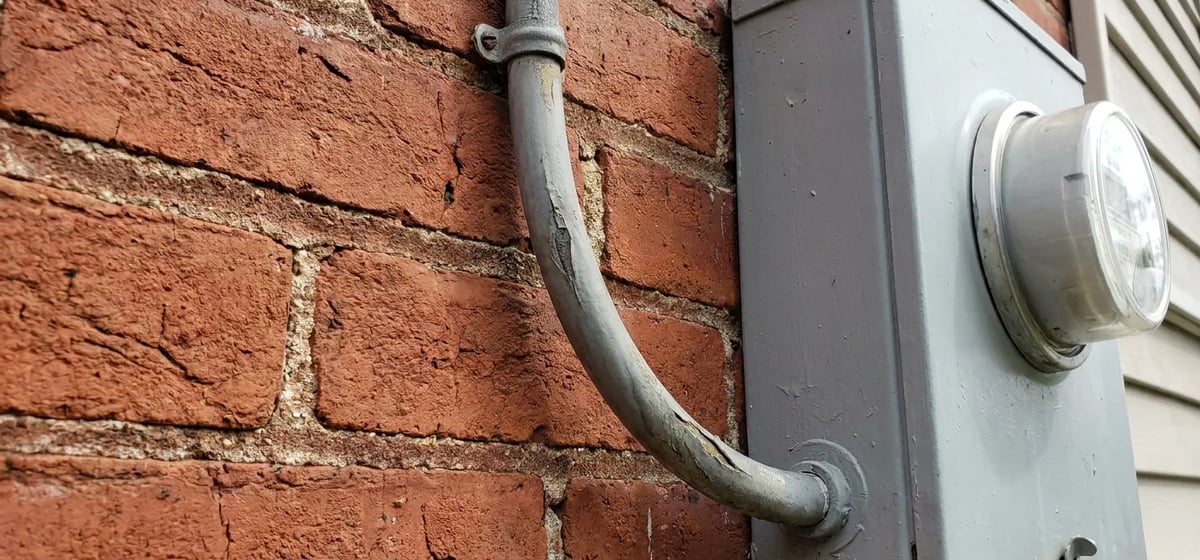
You'll usually see this thick gray or black cable running down the side of your exterior wall. It connects the overhead power lines to your electric meter. From the meter, the cable continues inside to your main breaker box. If you want to learn more about your breaker box, you can read our Electrical guide.
Inside the tough plastic jacket, you'll find several large wires. These wires are usually made of aluminum or copper. The outer jacket is built to survive harsh outdoor weather. It protects the wires from rain, snow, ice, and direct sunlight.
Why this cable matters to you
Every single thing in your home that uses power relies on this one cable. If the cable fails, your entire house goes dark. Beyond just keeping the lights on, this cable is a major safety component for your property.
This wire carries a massive amount of raw electricity straight from the power grid. There's no breaker switch on the street pole to protect it. If the thick plastic jacket cracks, rain water can easily get inside. Water and electricity are a dangerous mix. When water enters the cable, it can travel down the inside of the jacket right into your main indoor electrical panel. This causes serious rust, short circuits, and severe fire hazards.
Many homeowners don't realize they actually own this cable. The utility company owns the wire coming from the street pole to your house. However, you own the service entrance cable attached to your siding, the meter box, and the panel inside. If the cable gets damaged, you have to pay to fix it.
Signs of trouble to watch for
You should inspect the outside of your house a few times a year. Walk over to your electric meter and look closely at the thick cable running down the wall.
Look for these common problems:
- Frayed or cracking plastic. The sun beats down on the cable and makes the plastic jacket brittle over time.
- Exposed metal wires. If you can see the shiny metal strands inside the jacket, the cable is no longer safe.
- Detached metal straps. The cable should be held tight against your siding with metal straps. If the straps pull loose, the heavy cable will sag and pull away from the wall.
- Water stains on your indoor panel. A rusty breaker box often means water is leaking through the outdoor cable jacket.
Repair and replacement costs
Replacing a service entrance cable isn't a weekend project. You must hire a licensed professional. Check out our guide on DIY vs. Hiring a Pro to understand why heavy electrical work is strictly for experts. The power company will need to shut off the power at the street before anyone can safely touch the wires.
If your cable is fraying, an electrician will normally replace the entire line from the top of your house down to the meter. They may also need to install a new meter box at the same time.
A simple cable replacement usually costs between 800 and 1,500 dollars. If you also need a new meter box or a bigger electrical panel inside, the price will jump. A full service upgrade often runs from 2,000 to 4,000 dollars. Keep in mind that prices vary based on where you live, the size of your home, and local permit fees. The electrician will pull the required permits, complete the repair, and schedule an inspection with your city.