What Is a Service Drop?
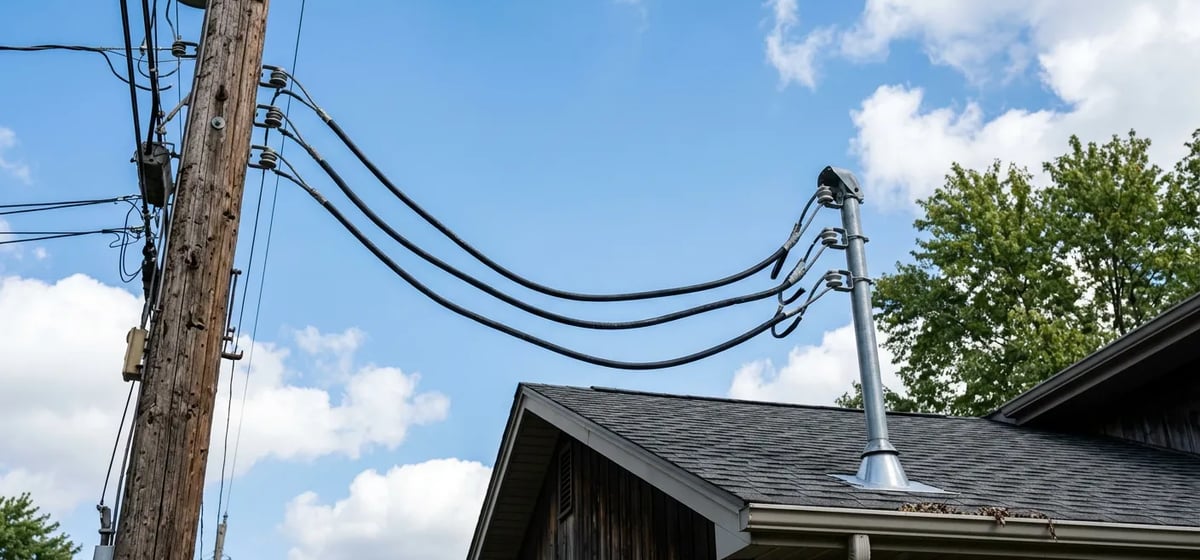
Look up at the power pole near your street. You'll see a thick bundle of wires looping down and connecting to your roof or the side of your house. This bundle is the service drop. It carries all the electricity your home needs to run. The name goes back to the late 1800s. Early grid engineers called the main street line the service. The smaller line hanging down to a single building became known as the drop. Today, this overhead connection is how millions of older and rural homes get their power. If your neighborhood has underground power lines, you don't have a service drop. Instead, you have a service lateral buried in your yard.
Who Owns What?
The rules about ownership can confuse many homeowners. The utility company usually owns the service drop wires. They also own the meter box on the side of your house. However, you own the equipment that attaches those wires to your home. This includes the metal pipe sticking up from your roof, called the mast. You also own the weatherhead, which is the cap on top of the mast that keeps rain out.
If a storm knocks down the wires, the utility company will fix them for free. If the storm damages the metal mast or the wires inside your house, you have to hire an electrician. You can read more about your home power setup in our Electrical guide.
How to Inspect Your Service Drop
You should look at your service drop a few times a year. Stand in your yard and look up at the connection. Don't use a ladder and never touch the wires. You just want to do a visual check from the ground. Look for these common issues:
- Frayed black insulation on the wires where sun and weather caused rot.
- Tree branches rubbing against the lines or resting heavily on the bundle.
- A bent roof mast leaning to one side under the weight of the cables.
- Wires pulled tight like a guitar string instead of having a gentle swoop.
If you see bare metal shining through the insulation, call your power company right away. If the metal mast on your roof looks bent, you need a pro. A leaning mast means water can get under the roof flashing. It also means the weight of the wires might rip the pipe right off your house. You can check our Roofing guide for tips on spotting water leaks.
Upgrading Your Power
Sometimes you need to upgrade your service drop on purpose. If you buy an older home, it might only have a 100-amp service. This isn't enough power for modern life. When you add a hot tub, central air conditioning, or an electric car charger, you need more juice. Your electrician will upgrade your panel and the mast. Then, the utility company will come out and hang a thicker service drop to safely carry the extra electricity to your house.
Typical Costs and Repairs
Repairs to the service drop wires cost you nothing because the utility company handles them. But fixing your side of the equipment is a different story. Replacing a bent roof mast and weatherhead usually costs between 500 and 1200 dollars. If you need to upgrade your entire electrical panel to 200 amps, expect to pay 1500 to 3000 dollars. Keep in mind that these ranges vary based on your location and the electrician you hire. If the utility company has to disconnect the drop so your electrician can work, they might charge a small disconnect fee. This fee is usually around 50 to 100 dollars.