What Is a String Inverter?
A string inverter is a large metal box that acts as the brain of your home solar system. When the sun hits the solar panels on your roof, those panels create direct current electricity. However, your home appliances run on alternating current electricity. The string inverter takes the direct current from the panels and changes it into alternating current that your home can actually use.
The word string refers to the way your solar panels connect to each other. Installers wire the panels together in a series. This setup works exactly like an old string of holiday lights. The electricity flows from one panel to the next, straight down the line, until it reaches the inverter box. Solar engineers use this term to tell this setup apart from systems that use tiny microinverters under every single panel.
Where to Find It
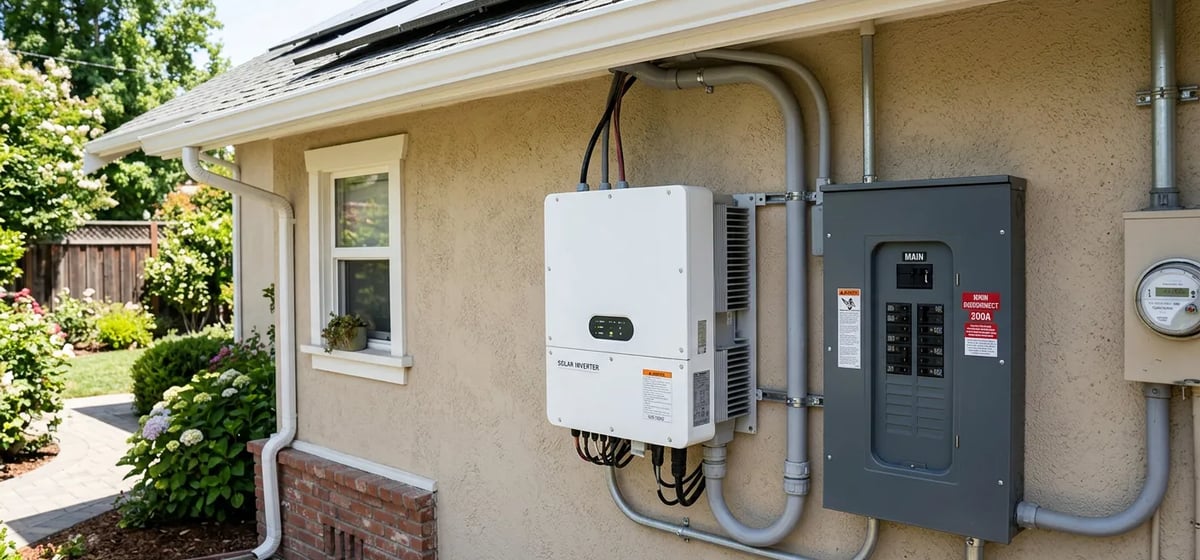
You'll usually find the string inverter mounted on an exterior wall of your house. It's often placed right next to your main electrical meter. Sometimes, installers will place the inverter inside a garage to protect it from harsh weather. It's roughly the size of a small suitcase and often has a digital screen or a set of glowing lights on the front.
This box connects directly to your home electrical system. Once the power gets converted to alternating current, it flows into your breaker box. From there, it powers your lights, refrigerator, and television. You can learn more about how power flows through your house in our guide to Electrical systems.
The Shade Problem
String inverters are very reliable and cost less than other options. However, they have one major drawback. Because the panels are wired together in a single line, the whole string only performs as well as its weakest link.
If a large tree branches out and casts a shadow on just one panel, the power output of the entire string drops. The same thing happens if leaves or thick dust cover a single panel. If your house has a lot of shade trees or a complex roof shape, a string inverter might not give you the best results. You can read more about panel placement in our guide to Solar Panels.
Lifespan and Replacement Costs
Solar panels can last 25 to 30 years, but a string inverter works much harder. It deals with high heat and constant electrical loads. Because of this, most string inverters only last 10 to 15 years. You'll likely need to replace the inverter at least once during the life of your solar system.
If your inverter stops working, your whole solar system stops making power. You'll know it's broken if the screen goes blank or shows a red error light. You might also notice your monthly electric bill suddenly spike.
Replacing a string inverter isn't a cheap project. A new unit typically costs 1,000 to 2,500 dollars. You'll also need to pay a professional electrician or solar technician to install it. Labor usually adds another 500 to 1,000 dollars to the bill. Keep in mind that these ranges vary based on your location and the size of your solar system.
How to Monitor Your System
Most modern string inverters connect to your home internet network. This feature lets you check on your solar production using a smartphone app or a computer. It's a good habit to check this app once a week.
- Look for sudden drops in daily power production.
- Check that the green indicator light on the physical box is glowing steadily.
- Keep the area around the inverter clear of tall weeds and storage boxes so it gets plenty of airflow.
- Listen for unusual clicking or loud buzzing noises coming from the box.
If you notice a problem early, you can call your solar company before you lose a whole month of free electricity. Keeping an eye on your string inverter ensures your home stays powered by the sun.