What Is a Stringer?
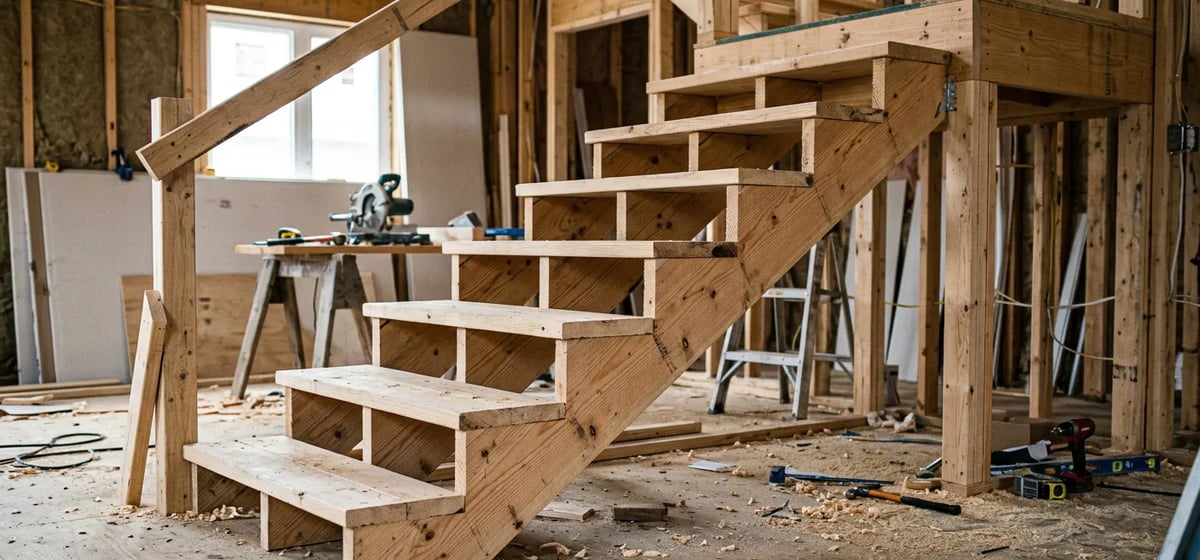
A stringer is the heavy, angled wooden board that supports the steps of a staircase. If you look under a wooden staircase, you will see these long pieces running from the top floor down to the bottom landing. Builders cut zigzag notches into the top edge of the board. These flat notches hold the parts of the stairs you step on. Every staircase needs at least two of these strong supports. Wider stairs usually need three or more to safely hold your weight.
Most stringers are made from sturdy two-by-twelve lumber. On an outdoor deck, builders use pressure-treated wood to stop rot. Indoors, they might use standard pine or engineered wood. The flat board you step on is called a tread. The vertical board behind your heel is called a riser. The stringer is the hidden backbone that holds both of these pieces together.
Why Your Stair Stringers Matter
Stringers do all the heavy lifting when you walk up and down your stairs. They carry the weight of the wood, the people, and any furniture you move between floors. If a stringer fails, the staircase can collapse. This is a major safety risk, especially for tall outdoor decks.
When you learn about your Foundation & Structure, you quickly realize that gravity is always pulling your house down. Stringers fight that gravity. They also keep your stairs quiet. When a stringer warps or shrinks over time, the treads get loose. Loose treads rub against the nails and cause annoying squeaks every time you take a step.
Signs of Stringer Trouble
Because they carry so much weight, stringers take a lot of abuse. Indoor stringers mostly suffer from dried out wood or loose nails. Outdoor stringers face much harsher conditions. Rain, snow, and bugs can destroy the wood over time. You should check your outdoor stairs every year. Pay close attention to the Exterior: Siding, Garage & Decks around your home.
- Wood rot: Poke the bottom of your outdoor stringers with a screwdriver. If the wood is soft or crumbly, it is rotting and needs replacing.
- Cracks at the notches: Look closely at the inside corners of the zigzag cuts. Deep cracks here mean the board is losing its strength.
- Bouncing steps: If the whole staircase bounces or sags when you walk on it, the stringers might be broken or too far apart.
- Detached tops: The top of the stringer must attach firmly to the deck or floor frame. If it pulls away, the stairs could fall.
Repair and Replacement Costs
Fixing a squeaky indoor stair stringer is usually cheap. You can often fix it yourself with some wood shims and construction adhesive. Replacing a rotted outdoor stringer is a much bigger job. You usually have to tear apart the whole staircase to fix it.
If you hire a contractor to rebuild a basic set of wooden deck stairs, expect to pay 1,000 to 3,000 dollars. This includes new stringers, treads, and labor. The raw materials are not too expensive. A single pre-cut pressure-treated stringer costs 40 to 80 dollars at a hardware store. Custom-cut boards cost more. Keep in mind that exact price ranges vary based on your location and the height of your deck. Because cutting these boards requires difficult math and exact measurements, you should read up on DIY vs. Hiring a Pro before you try to build a staircase yourself.