What It Is
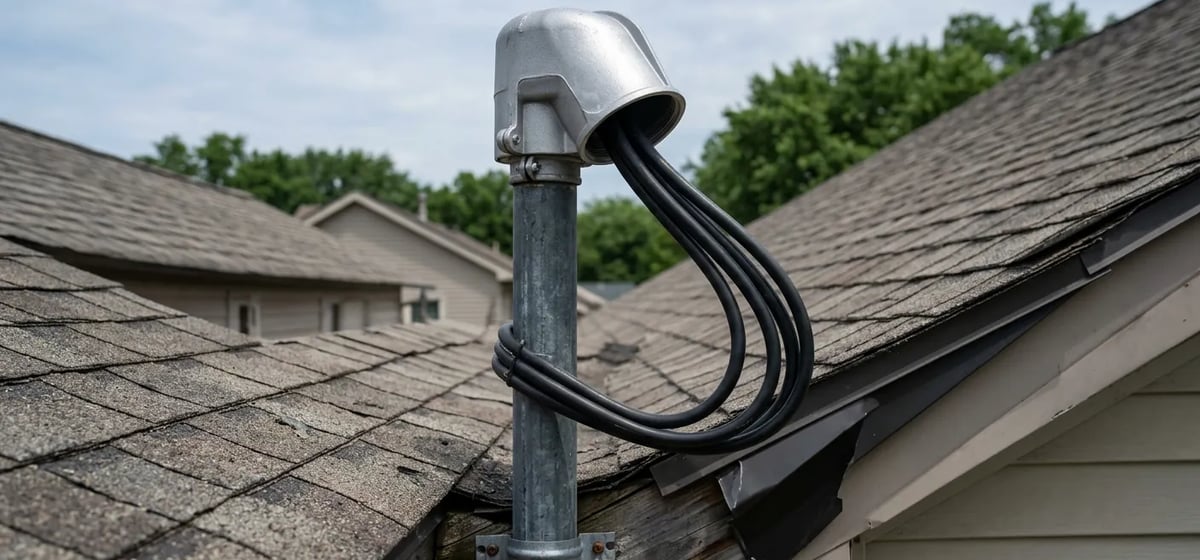
Look up at the roof line of your house where the power lines connect from the street. You'll see a metal pipe sticking up above the roof. At the very top of this pipe sits a rounded cap. This cap is the weatherhead. If you want to understand how power enters your home, start with our Electrical guide.
It acts like a hood for your home power supply. The weatherhead covers the wires right before they go down the pipe and into your house. It always points down. This shape forces rain and snow to slide off the sides. It stops water from getting inside the pipe. You might also hear electricians call it a weather cap, service head, or periscope.
Most weatherheads are made of aluminum, cast iron, or tough PVC plastic. Inside the cap, you'll find separate holes for each wire. These holes keep the wires organized and prevent them from touching each other. The cables coming from the utility pole meet your house wires right below the weatherhead. They form a U shape called a drip loop. The loop hangs lower than the cap so water drips off the bottom of the wire instead of climbing up into the weatherhead.
Why It Matters
The weatherhead is your first line of defense against water damage in your electrical system. If rain gets into that roof pipe, it flows straight down into your main breaker box. Water and electricity are a very dangerous mix. Water inside your panel will rust the breakers and connections. This rust causes short circuits and can easily start a fire.
The cap also protects the wire coating from sun damage and harsh weather. Without it, the heavy wires would rub against the sharp metal edge of the pipe. Over time, the metal edge would slice through the wire insulation and cause a massive spark. The weatherhead also keeps pests away. Squirrels and birds often climb on roof lines. The tough cap blocks them from getting inside the pipe and chewing on your main power lines.
What to Watch For
You should inspect your weatherhead a few times a year. Grab a pair of binoculars, stand in your yard, and look for these warning signs:
- Cracks in the plastic or metal cap.
- A cap that is tilted backward, which catches rain instead of shedding it.
- A bent or crooked metal pipe below the cap.
- Frayed wires where they exit the bottom of the weatherhead.
High winds or falling tree branches often bend the pipe or knock the weatherhead loose. If the pipe looks crooked, you need to call a pro. You should also check the rubber seal where the pipe goes through your shingles. Sometimes the weatherhead is fine, but the roof seal is cracked and leaking water into your attic. If you see roof damage, read up on your Roofing basics.
Repair and Replacement Costs
Many homeowners don't realize they own the weatherhead. The utility company owns the wire coming from the street. You own the weatherhead, the pipe, and the meter box on your house. If a storm breaks your weatherhead, you must hire an electrician to fix it. The utility company won't repair it for you. They will actually refuse to turn your power back on until a licensed pro fixes the cap and pipe.
Replacing a broken weatherhead requires teamwork. Your electrician must schedule a time for the power company to cut the power at the pole. The electrician replaces the cap and fixes the wires. Then the power company comes back to reconnect the lines. This process can take a full day.
A simple weatherhead replacement usually costs 150 to 300 dollars. If a falling tree branch bent the entire metal pipe, the repair will cost much more. Rebuilding the whole pipe and weatherhead setup can run 800 to 1500 dollars. Prices vary widely based on your location and local labor rates. Check our guide on Hiring Contractors & What Things Cost for tips on getting good quotes.