What is a whole-house fan?
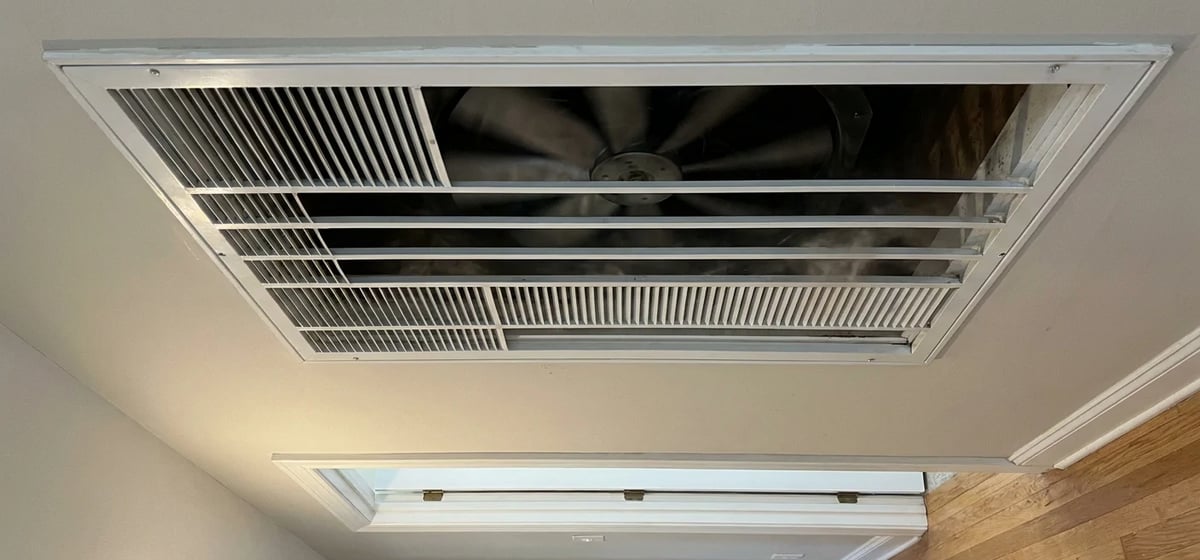
A whole-house fan is a large cooling system installed in the ceiling between your living space and your attic. The concept dates back to the 1950s when builders installed large belt driven fans in ceilings to cool homes before air conditioning became common. The name simply describes a fan sized to move air through an entire house at once. Today, these fans are a great addition to your HVAC & Climate Control setup because they offer a fast way to cool your home.
Instead of chilling the air like an air conditioner does, a whole-house fan pulls fresh outdoor air through your open windows. It then pushes the hot, stale indoor air up into your attic and out through your roof vents. This process replaces the hot air inside your home with cooler outside air in just a few minutes. It also cools down the physical structure of your house, including the walls and furniture, which keeps the house comfortable longer the next day.
How you use a whole-house fan
You run this fan during the evening, night, or early morning when the outside temperature is lower than the inside temperature. You must open a few windows before you turn the fan on. If you do not open your Windows & Doors, the fan will pull air from dirty places like your chimney or gas water heater vent. This is called backdrafting and it is very dangerous.
Once the windows are open, you flip the switch or use a remote to turn the fan on. You will feel a strong breeze pull through the house. You can control which rooms cool down the fastest by opening windows in those specific rooms and closing others. For example, you can open just the bedroom windows at night to pull cool air directly over your bed. After the house cools down to a comfortable temperature, you turn the fan off and close your windows to trap the cool air inside for the next day.
Costs and savings
Installing a whole-house fan usually costs between $1,000 and $2,500 for both the unit and the labor, though ranges vary based on the size of your home and your attic access. While the upfront cost might seem high, a whole-house fan uses a fraction of the electricity required by a central air conditioner. Running the fan instead of your AC can significantly lower your summer energy bills. In dry climates with cool nights, some homeowners barely use their air conditioners at all.
If you plan to install a whole-house fan, remember that federal home energy tax credits ended on December 31, 2025. You cannot claim these federal credits for anything installed in 2026 or later. However, you should still check with your local utility company or state energy office. Many local programs still offer rebates or free energy audits to help you offset the cost of energy efficient upgrades.
What to watch for before installing
Not every house is a good fit for a whole-house fan. You need to consider a few key details before you hire a pro to cut a hole in your ceiling. A bad installation can cause more problems than it solves.
- Attic ventilation: The fan pushes a massive amount of air into your attic. Your roof must have enough vents to let that air escape. If your attic lacks proper ventilation, the air pressure will build up and push hot, dusty air back down into your living space.
- Noise levels: Older traditional fans sound like a loud airplane engine. Modern units feature insulated ductwork and quieter motors that make much less noise. Always look for a fan with a low decibel rating if you plan to run it while you sleep.
- Winter heat loss: A big hole in your ceiling can let warm air escape during the winter. Make sure the fan you buy includes insulated doors that seal tightly when the unit is turned off.
If you notice strange smells when running your fan, it might be pulling air from a crawlspace or a dusty attic. You can read more about tracking down these issues in our guide to Smells & Odors.