What Exactly is a Mil?
A mil is a tiny unit of measurement. It equals exactly one thousandth of an inch. If you cut an inch into one thousand equal slices, one slice is a mil. The word comes from the Latin word mille, which means one thousand. Manufacturers adopted this term to help consumers compare thin products.
You won't use a standard tape measure for a mil. Instead, you'll see the word printed on boxes at the hardware store. It tells you exactly how thick a sheet of plastic or a protective layer is. For a quick mental picture, a heavy duty trash bag is 1 to 3 mils thick. A piece of printer paper is about 4 mils thick. A standard credit card is 30 mils thick.
Where You Run Into This Term
As a homeowner, you will run into this measurement during specific repair and upgrade projects. You will rarely use it for wood or metal, but it is very common for plastics and coatings.
- Vapor barriers: This is the heavy plastic sheet laid over the dirt floor of a crawl space. It keeps ground moisture out of your house.
- Plastic drop cloths: When you paint a room, you cover the floor and furniture with thin plastic sheeting.
- Vinyl flooring: Luxury vinyl plank flooring has a clear top layer called the wear layer. Manufacturers always list the thickness of this protective layer in mils.
- Contractor bags: Heavy duty trash bags are usually 3 mils thick so they won't rip when you fill them with sharp wood scraps.
Why Thickness Matters
Choosing the right mil thickness makes a huge difference in how long a material lasts. If you buy a plastic drop cloth that is too thin, your ladder will tear right through it and ruin your floor. If you buy a vapor barrier that is too thin, rocks and roots will poke holes in it. Moisture will then seep into your crawl space and cause mold. If you are dealing with your Foundation & Structure, building codes usually require a minimum thickness of 6 mils for a basic dirt crawl space. Many experts recommend 10 to 20 mils if you plan to store boxes down there or crawl around often.
When you shop for new Flooring, the wear layer on vinyl planks tells you how scratch resistant the floor is. A 6 mil wear layer is okay for a quiet guest bedroom. A 20 mil wear layer is much better for a busy kitchen with dogs running around.
How Painters Use This Measurement
Contractors also use this term for paint. They use a pocket tool called a mil gauge to measure wet or dry paint. When you hire a professional, they must apply paint thick enough to protect the siding. A single coat of dried house paint is about 1 to 2 mils thick. Exterior paint jobs might require 4 to 5 mils to survive the weather. If spread too thin, paint peels much faster.
Typical Costs and What to Buy
Thicker materials use more raw plastic, so they cost more money. Here are some ballpark costs for standard 100 foot rolls of clear plastic sheeting. Keep in mind that prices vary by region and hardware store.
- A roll of 4 mil plastic costs about 40 to 60 dollars. This is good for covering furniture during a dusty remodel.
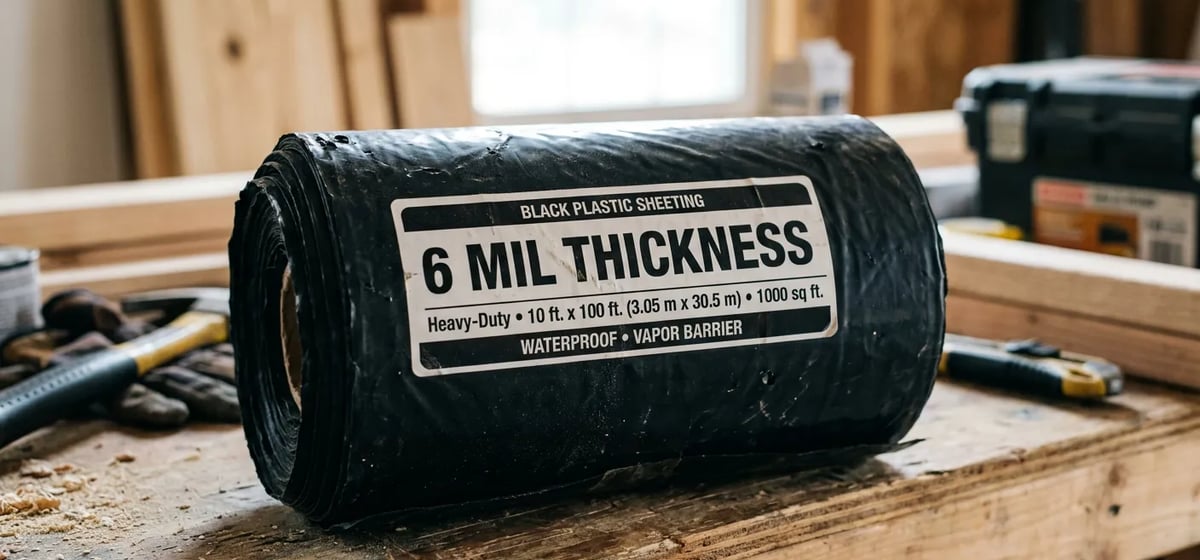
- A roll of 6 mil plastic costs about 60 to 100 dollars. This is the absolute minimum for a dirt crawl space vapor barrier.
- A roll of 10 mil plastic costs about 100 to 150 dollars. This is great for a heavy duty moisture barrier that you can walk on safely.