Carpenter Ant Control: How to Find and Destroy the Nest
Spotting large black ants or mysterious piles of sawdust indoors? Learn how to track carpenter ants back to their hidden nest and eliminate the colony before they cause serious structural damage.
Full guide Pest Control Learn how to stop ants, mice, termites, and wasps from invading your home and know when to hire a pro.You walk into the kitchen for a late-night glass of water and spot a massive, dark ant marching across the baseboard. A few days later, you notice a mysterious, neat pile of fine sawdust sitting under a window sill. These are the classic early warning signs of a carpenter ant invasion, and effective carpenter ant control is essential. Unlike the tiny nuisance ants that show up for dropped breadcrumbs, carpenter ants represent a genuine threat to your home's structural integrity.
They do not eat wood, but they excavate it to build their nests, hollowing out load-bearing beams, window frames, and wall studs from the inside out. Effective carpenter ant control requires a strategic approach. If you just spray the stragglers you see on the floor, the colony will simply reroute and continue destroying your house in secret. To stop the damage, you have to track the workers back to their hidden colony and eliminate the queen.
What Are You Dealing With: Carpenter Ants or Termites?
Before you buy any treatments, you need to confirm exactly what insect is chewing through your house. Carpenter ants, for instance, typically have three distinct body segments. Homeowners frequently confuse carpenter ants with termites, but the treatment methods for these two wood-destroying insects are entirely different.
Look closely at the insect. Carpenter ants are large—often between 1/4 to 5/8 of an inch long. They have distinct, narrow waists between their abdomen and thorax, and their antennae are bent or elbowed. If you see flying insects (swarmers), carpenter ants have front wings that are significantly longer than their back wings. Termites, on the other hand, have thick, straight waists, straight antennae, and wings that are equal in length.
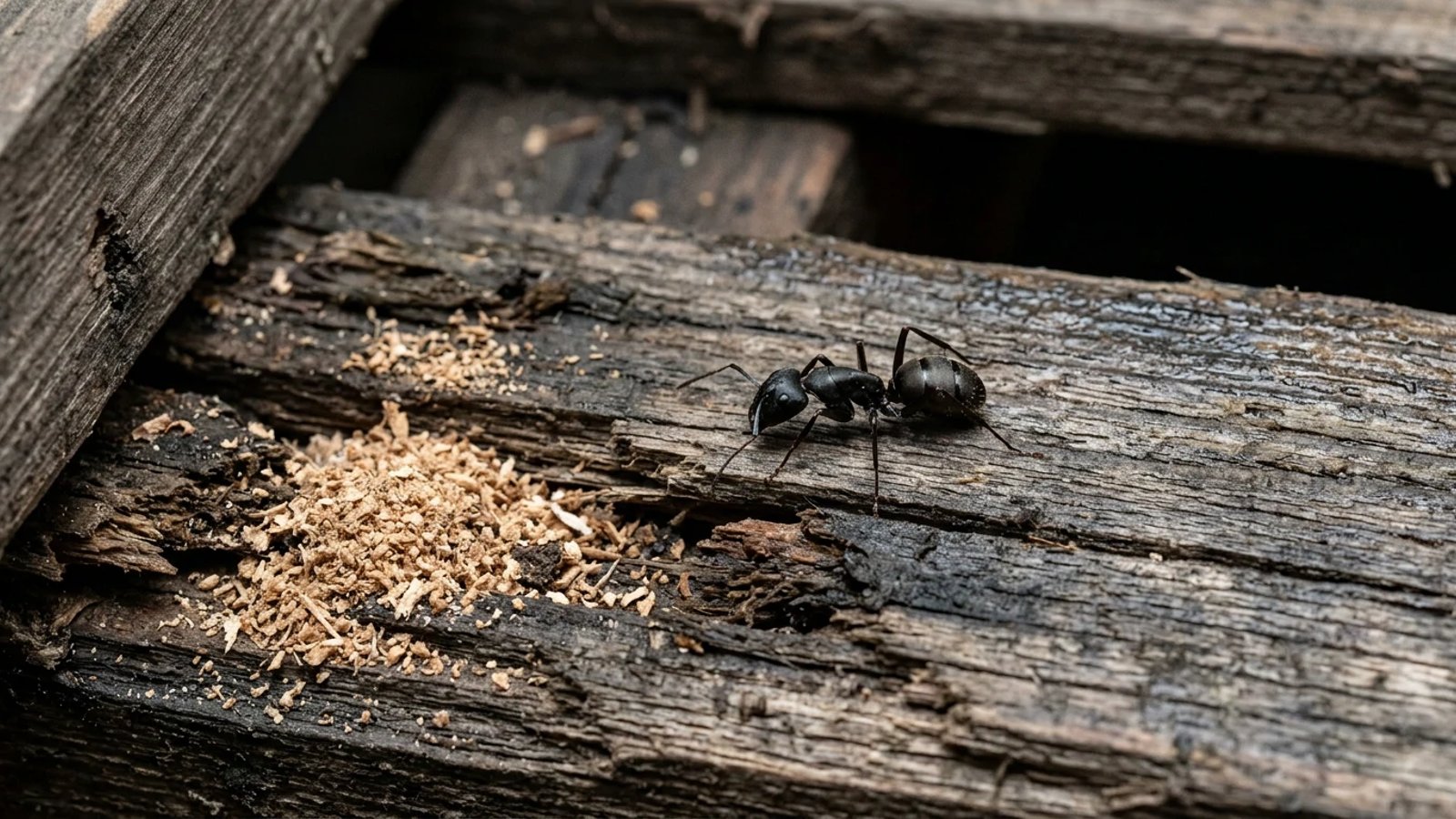
The most obvious sign of a carpenter ant problem isn't usually the ants themselves; it is the debris they leave behind. Because they do not consume wood for nutrition, they have to push the excavated material out of their tunnels. This results in small, cone-shaped piles of frass. Frass looks exactly like pencil shavings or fine sawdust, often mixed with dead insect parts and soil.
In my experience, finding frass is the biggest red flag. Last summer, I noticed a tiny pile of sawdust appearing repeatedly in the corner of my garage. I would sweep it up, and three days later, it was back. That recurring pile is a guaranteed indicator of an active excavation directly above the debris. If you find frass, look straight up. You will likely find a small kick-out hole in the wood where the workers are dumping their trash.
The Warning Sign of Swarmers: Why Flying Ants Mean Trouble
If you suddenly find dozens of large ants with wings crawling on your windowsills, you are looking at reproductive swarmers. This is one of the most alarming signs of a severe infestation. Swarmers do not forage for food, and they do not excavate wood. Their sole purpose is to fly out, mate, and establish brand new colonies.
Seeing a few swarmers outdoors in the yard during the spring is normal and usually nothing to panic about. However, if you find them trapped inside your house, especially near closed windows or light fixtures, it means the parent nest is already inside your structure. Carpenter ant colonies typically do not produce swarmers until the colony is mature, which takes about three to four years and requires a population of at least 2,000 workers.
Finding indoor swarmers means the ants have been secretly hollowing out your wood for years. When this happens, vacuuming them up is just treating a symptom. You must immediately begin the inspection and baiting process, as the internal damage to your wall studs or window frames could already be significant.
The Hunt: How Do You Find the Main Nest?
Carpenter ants are highly organized and operate in a network. A single property often hosts a parent colony located outdoors—usually in a decaying tree stump, a stack of old firewood, or a rotting landscaping timber. When that parent colony grows large enough, the queen sends workers to establish satellite nests. These satellite nests are what end up inside your walls.
Satellite nests require consistent moisture and warmth to survive. Therefore, your hunt should always start in the dampest areas of your home. Check the wood around leaky window frames, beneath poorly sealed doors, under bathroom sinks, and in damp basement corners. If you have a roof leak or a clogged gutter that spills water down your siding, the wood behind that wall is a prime target. You can use a basic pin-type moisture meter (which costs about $30 at most hardware stores) to check the wood. If the moisture reading is above 15%, it is highly attractive to these pests.
Because these insects are primarily nocturnal, the best time to track them is between 10:00 PM and 2:00 AM. Grab a bright flashlight and turn off the lights in your house.
Follow the foraging workers. They will usually travel in established, invisible chemical trails along baseboards, the edges of carpets, and plumbing pipes. Your goal is to see where they disappear into the wall or floor. You might also try the tap test. Take the handle of a screwdriver and gently tap on wooden beams or baseboards near where you suspect activity. Press your ear against the wood. If there is a large nest inside, you can often hear a distinct rustling or crinkling sound as the disturbed ants scramble around in their galleries.
DIY Carpenter Ant Control: Deploying the Right Baits
The biggest mistake homeowners make when attempting carpenter ant control is reaching for a can of topical bug spray. Repellent sprays kill the ants on contact, which feels satisfying in the moment, but it is the worst thing you can do for a severe infestation. When the surviving ants detect the repellent, they panic. The colony may fracture and split into multiple smaller nests, a process called budding. Suddenly, your single nest turns into three separate nests hidden in different walls.
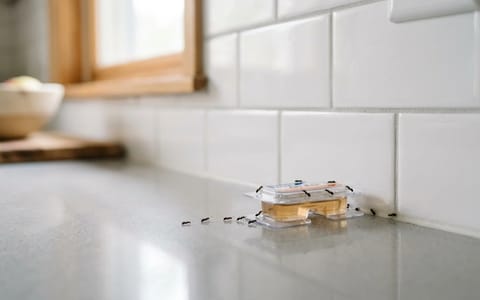
The only reliable DIY method is using slow-acting toxic baits. The strategy relies on the ants' natural behavior. Foraging workers will find the bait, consume it, and carry it back to the hidden nest. Through a biological sharing process called trophallaxis, they regurgitate the toxic food and feed it to the larvae, the other workers, and most importantly, the queen. Once the queen dies, the entire colony collapses.
Here is how to properly bait and destroy the colony:
- Select a slow-acting commercial bait. Look for liquid or gel baits containing active ingredients like borax, fipronil, or indoxacarb, which take 24 to 48 hours to kill the insect.
- Offer both sweet and protein options. A colony's dietary needs shift depending on the season, so place a sugary liquid bait next to a protein-based granular bait to see which they prefer right now.
- Place bait stations along active trails. Set the traps exactly where you saw the ants foraging at night, or directly next to the piles of frass.
- Remove all competing food sources. Wipe down counters, sweep up crumbs, and store pantry items in airtight containers so the ants are forced to eat the bait.
- Do not spray or crush the ants you see. You need these workers alive long enough to transport the poison back into the walls.
- Monitor and refill the stations continuously. The bait must remain fresh and fully stocked for at least two to three weeks to ensure the entire colony gets a lethal dose.
For more detailed guidelines on handling household pesticides safely, you can review the recommendations provided by the EPA on safe pest control.
When Is It Time to Call a Professional?
While baiting is highly effective for satellite nests that are just getting established, some infestations are simply too entrenched for consumer-grade products. If the parent colony is massive and located somewhere inside your home's actual framing, the structural threat escalates rapidly.
Professional pest control technicians have access to specialized tools that the average homeowner does not. They frequently use thermal imaging cameras to detect the heat signatures of massive nests hidden behind drywall. Once they locate the exact void, they can drill tiny holes into the wall and inject insecticidal dusts directly into the galleries. This dust coats the ants immediately and provides months of residual protection. Hiring a professional for comprehensive carpenter ant control typically costs between $300 and $500, depending on the severity of the infestation and the size of your home. It is a worthwhile investment when load-bearing wood is at risk.
Future Prevention: Defending Your Home's Perimeter
Eliminating the current colony is only half the battle. If you do not change the environmental conditions that attracted the pests in the first place, a new colony will simply move into the vacant real estate. Carpenter ants are always searching for soft, moisture-damaged wood to excavate. Making your property inhospitable to them requires a few targeted home maintenance routines.
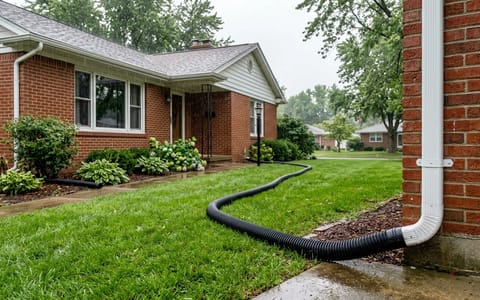
First, you must eliminate excess moisture. Inspect your roof for damaged shingles and clean your gutters thoroughly. Clogged gutters cause rainwater to back up and spill over the fascia boards, rotting the wood and creating a perfect entry point. Walk around your foundation and check your outdoor plumbing. A dripping garden hose spigot can keep the soil and siding damp all summer long. Fix any leaks immediately and ensure your property is graded so that rainwater flows away from the foundation, not toward it.
Next, address the landscaping. Tree branches and large shrubs should never touch your roof or siding. Carpenter ants use these branches as natural highways, bypassing your foundation entirely and marching straight onto your roof. Keep all vegetation trimmed at least three to six feet away from the exterior walls. If you burn wood in the winter, never stack your firewood against the side of the house or inside the garage. Firewood is a natural nesting site. Store it elevated on a metal rack at least 20 feet away from your home, and only bring logs indoors when you are ready to toss them straight into the fire.
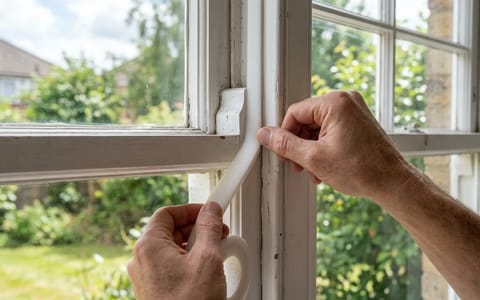
Finally, seal up the physical entry points. Walk the perimeter of your house with a caulking gun loaded with high-quality exterior silicone caulk. Fill in any cracks in the foundation, gaps around window frames, and spaces where utility pipes or wires enter the home. Install tight-fitting door sweeps on all exterior doors.
By keeping the wood dry, removing their natural bridges, and sealing the gaps, you make it incredibly difficult for these destructive pests to gain a foothold. A dry, well-maintained exterior is the absolute best defense against future invasions.
- Identify the pest first: Carpenter ants have narrow waists and bent antennae, unlike termites.
- Deploy slow-acting liquid or gel baits along active ant trails instead of using repellent sprays.
- Check for moisture issues in your home, as carpenter ants prefer to nest in damp, decaying wood.
- Hire a professional if you hear rustling in the walls or if the infestation persists after a month of baiting.