What Baseboard Is
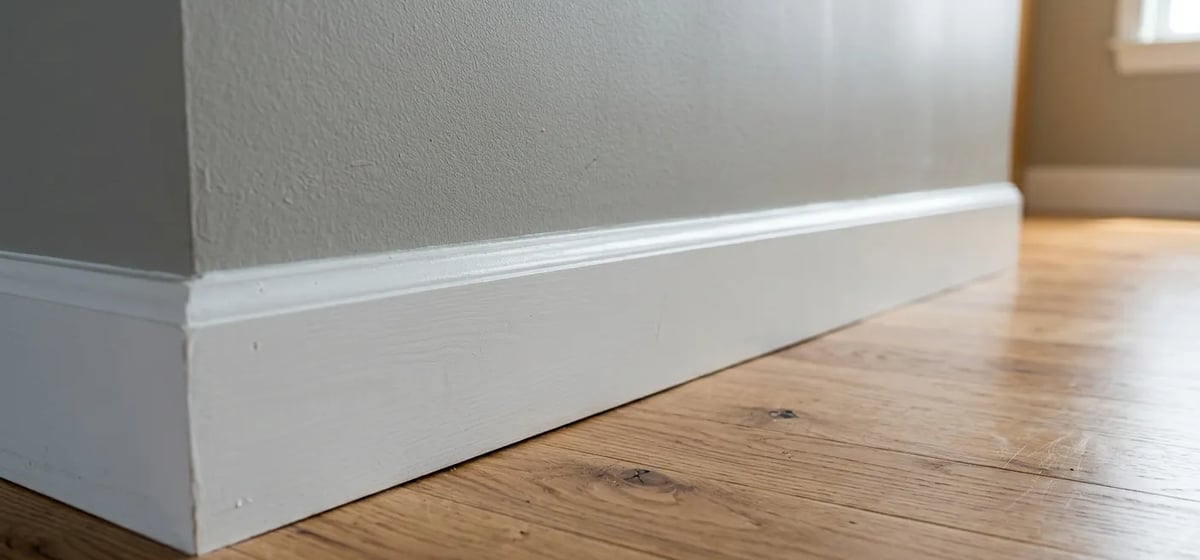
A baseboard is a piece of wood or plastic trim that runs along the very bottom of your interior walls. It covers the corner joint where your wall meets the floor. Builders use baseboards to hide the messy expansion gaps left between your drywall and your flooring materials. The term comes from combining the word base with board. Carpenters have used these boards for centuries to make rooms look finished and to conceal uneven plaster edges.
Baseboards do much more than just look nice. They serve as a hard barrier that protects the fragile bottom edge of your walls from daily wear and tear. Without this trim, your drywall would take direct hits from vacuum cleaners, wet mops, pet claws, and muddy shoes. The trim takes the abuse so your walls stay intact. You can learn more about how trim protects your home in our guide to Interior: Paint, Drywall & Trim.
Common Materials and Styles
You'll find baseboards made from a few different materials. The right choice depends entirely on your budget, the style of your home, and the specific room you are working on.
- MDF (Medium-Density Fiberboard): This is the most common choice in modern homes. It's affordable, smooth, and very easy to paint. However, MDF acts like a sponge if it gets wet. You should avoid using it in bathrooms, kitchens, or laundry rooms.
- Solid Wood: Pine is a popular and cheap choice for painted trim. Oak, maple, or cherry works best if you want a natural wood stain. Solid wood costs more than MDF, but it holds up much better to moisture and hard impacts from shoes.
- PVC or Plastic: This material is completely waterproof. It's the best choice for wet areas or basements that might flood. PVC baseboards look just like painted wood but will never rot, mold, or swell.
What It Costs to Replace
Replacing baseboards is a very common project when you install new carpets or hardwoods. You can read more about this process in our Flooring section. The total price depends on the size of your room and the material you pick. Keep in mind that prices vary widely based on where you live and current supply costs.
For the materials alone, you can expect to pay $1 to $3 per linear foot for standard MDF or basic pine. Solid hardwood or tall, fancy profiles will cost $4 to $7 per linear foot. If you hire a professional carpenter to cut, install, caulk, and paint the trim, labor adds another $2 to $5 per linear foot. A typical bedroom might cost $150 to 400 for a complete professional installation. You can save a large amount of money by renting a miter saw and nailing the boards yourself.
Maintenance and Repairs
Baseboards require very little daily upkeep. You mainly just need to dust the top ledge and wipe away dark shoe scuffs with a damp cloth or a magic eraser. Over time, you might notice the caulk cracking where the top of the baseboard meets the drywall. This happens naturally as your house settles and the wood shrinks during winter. You can easily fix this ugly crack by running a fresh bead of paintable acrylic latex caulk along the gap.
If a section gets badly damaged by a chewing puppy or a water leak, you don't have to replace the whole room. You can take a utility knife to cut the caulk line, then carefully pry off the damaged piece with a flat bar. Take a small sample to the local hardware store to find an exact profile match. Cut the new piece to size, nail it into the wooden wall studs, and paint it to blend perfectly with the rest of the room.