How to Get Rid of Ants in House (And Keep Them Out)
Stop squishing scout ants and target the colony instead. Learn how to eradicate indoor ant infestations using liquid baits, vinegar, and basic exclusion techniques.
Full guide Pest Control Learn how to stop ants, mice, termites, and wasps from invading your home and know when to hire a pro.Seeing a solid black line of ants marching across your kitchen counter is enough to ruin your morning coffee. Your first instinct is probably to grab a paper towel and squish them, or reach for a harsh, foul-smelling bug spray. But killing the visible scouts won't solve the problem. To permanently get rid of ants in house environments, you have to target the source: the hidden colony.
Most homeowners make the mistake of treating the symptom rather than the disease. Surface sprays might kill a few dozen workers, but a mature ant colony can contain thousands of insects. As long as the queen is alive and reproducing, she will simply send out a new wave of foragers to replace the ones you eliminated. Winning this battle requires a strategic approach that turns the ants' own biology against them.
Why Do Ants Keep Coming Inside Your House? (And How to Get Rid of Them!)
Ants are driven by three basic biological needs: food, water, and shelter. When outdoor conditions become extreme—such as during a dry, hot summer or after heavy rainfall floods their nests—they head indoors looking for an oasis. Your kitchen and bathrooms provide the perfect microclimate. A dripping faucet, a pet food bowl left out overnight, or a few stray breadcrumbs under the toaster are all it takes to trigger a massive invasion. They can squeeze through gaps as tiny as 0.5 millimeters!
Once a single scout ant finds a reliable food or water source, it heads back to the nest, leaving behind an invisible chemical pheromone trail. This trail acts like a glowing runway for the rest of the worker ants to follow. That is exactly why squishing the ants you see doesn't work—the chemical trail remains embedded on your floorboards and countertops, and more ants will simply follow the exact same path a few hours later.
Step 1: Erase the Invisible Pheromone Trails
If you want to stop the immediate, visible march of insects across your kitchen, you need to wipe out their GPS system. Ants rely entirely on scent to navigate your home. By neutralizing the pheromone trail, you blind the incoming workers and stop the current wave of foragers in their tracks.
- Mix a cleaning solution. Combine equal parts plain white vinegar and tap water in a clean spray bottle.
- Trace the path. Follow the line of ants backward to find exactly where they are entering the room, usually a small crack near a baseboard or window sill.
- Spray and wipe. Spray the entire path generously with the vinegar solution and wipe it up with a paper towel. The acetic acid in the vinegar completely breaks down the pheromone chemicals.
- Clean the entry point. Give the specific crack or crevice they were emerging from an extra heavy spray to deter new scouts from poking their heads out.
You can also use warm water mixed with a few squirts of liquid dish soap. The soap destroys the ants' cell membranes and washes away the scent trail just as effectively as vinegar, though it leaves a slight residue you will need to rinse later.
Step 2: Deploy Liquid Baits to Destroy the Colony
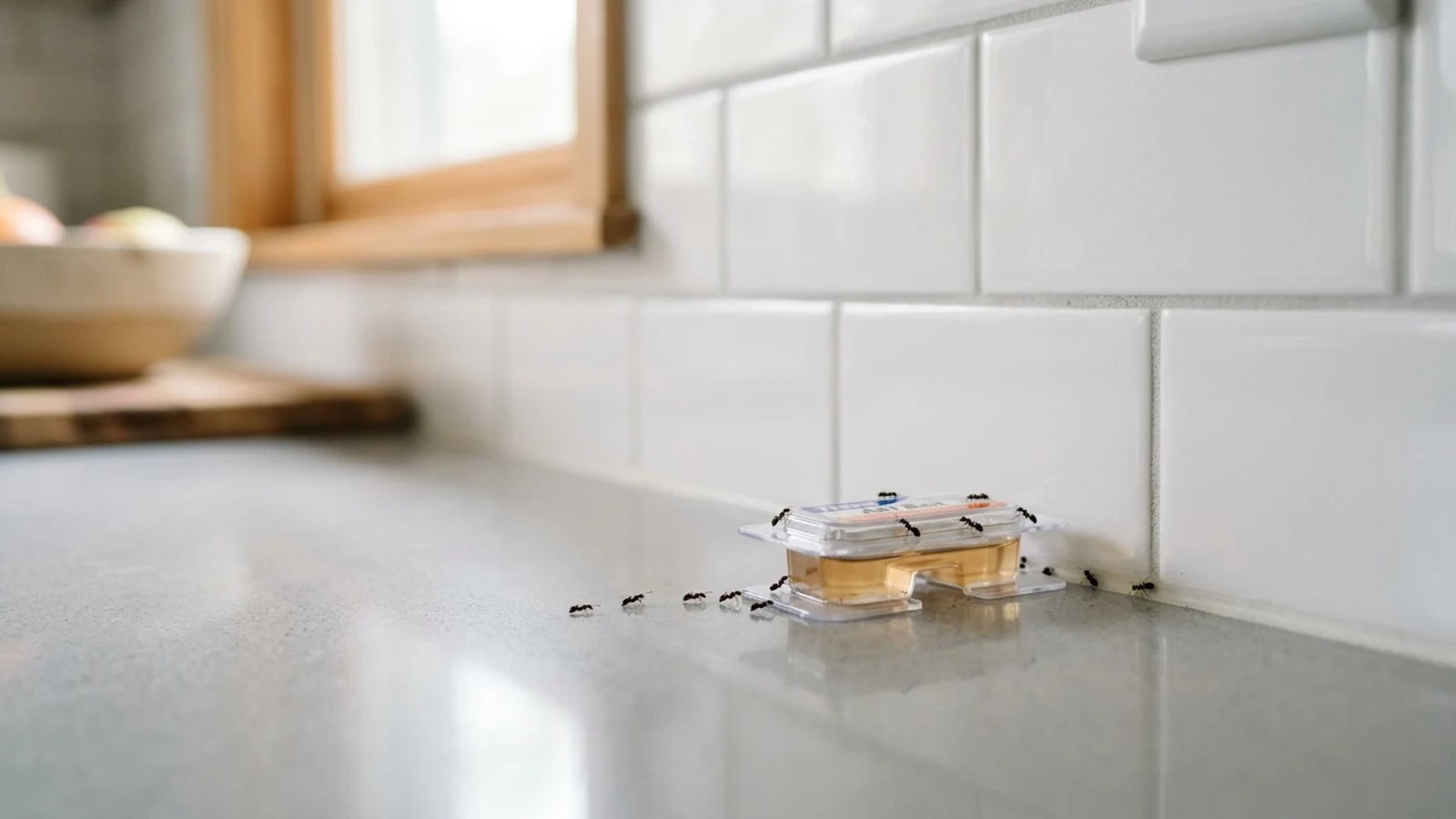
This is the most critical step in learning how to get rid of ants in house permanently. You actually want the ants to take the bait back home. Liquid ant baits typically use a mixture of sugar water and borax (sodium tetraborate). The sugar attracts the ants, and the borax acts as a slow-acting stomach poison.
Last summer, I tested three different types of traps when tiny sugar ants invaded my pantry. The clear winner was a simple liquid borax bait station. I placed it near the baseboard where they were entering, and within an hour, the trap was swarming with hundreds of ants. It requires patience to watch them feast on the bait without intervening, but they drank it up and carried the poison back to the queen. Within 48 hours, the entire infestation was gone, and I haven't seen an ant in that pantry since.
When using any pest control product, it is wise to follow the EPA recommendations for safe ant control, which advise using enclosed bait stations rather than aerosol sprays to minimize your family's exposure to airborne chemicals.
Step 3: Seal the Exterior Entry Points
Once the liquid bait has done its job and the colony is dead, you need to physically block the next colony from moving in. Exclusion is the foundation of long-term pest control. Ants can squeeze through gaps as small as a millimeter, so you need to be thorough when inspecting your home's perimeter.
Grab a tube of 100% silicone caulk (usually around $6 to $9 at the hardware store) and a basic caulk gun. Silicone is ideal because it remains flexible, won't crack as your house settles, and is entirely waterproof. Walk around the interior and exterior of the affected room and look for vulnerabilities.
Pay special attention to the areas where baseboards meet the floor, the gaps around window frames, and the spaces where plumbing pipes enter the drywall underneath your sinks. Apply a thin, smooth bead of caulk to seal these gaps. If you find larger holes around exterior plumbing or HVAC conduits, use expanding foam sealant to fill the void, then trim it flush once it cures.
Step 4: Daily Habits to Prevent Future Invasions
The final piece of the puzzle is making your home as unappealing to pests as possible. Even if a scout ant manages to find a way inside, you want them to report back to the colony that your kitchen is a barren wasteland with nothing to offer.
Killing the ants you see is a temporary fix; eliminating their food and water sources is the cure.
Start by rethinking how you store your food. Cardboard cereal boxes and thin paper flour bags are no match for determined insects. Transfer all baking supplies, sugars, and dry goods into airtight hard plastic or heavy glass containers with rubber gasket seals. Wipe down the outside of honey and syrup bottles after every use, as a single sticky drip can attract a swarm.
Next, manage the moisture in your home. Ants are incredibly sensitive to humidity and will seek out damp areas. Check the P-traps and supply lines under your kitchen and bathroom sinks for slow leaks. Tighten any loose fittings and replace worn rubber washers. If you have a damp basement or crawlspace, run a dehumidifier to keep the relative humidity below 50 percent.
Finally, keep up with daily kitchen maintenance. Sweep the floors every evening, wipe down countertops with an all-purpose cleaner, and don't leave dirty dishes soaking in the sink overnight. If you have pets, pick up their food bowls after mealtime and wash them out, rather than leaving kibble sitting on the floor all day.
Dealing with an ant infestation is frustrating, but it doesn't require dousing your home in toxic chemicals. By understanding how ants communicate, using targeted baits to eliminate the colony, and sealing up their secret entryways, you can reclaim your kitchen and keep the pests outside where they belong.
- Erase the trail before you set the trap. Ants rely on chemical paths to find your food.
- Patience is required with liquid baits. It takes 24 to 48 hours for the workers to poison the colony.
- Store pantry staples in airtight hard plastic or glass containers to eliminate food sources.
- Fix dripping under-sink pipes, as ants are highly attracted to moisture during dry months.