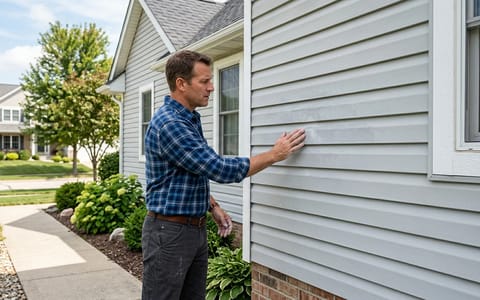
Vinyl Soffit and Fascia Explained: A Simple Homeowner Guide
Demystify your home's exterior anatomy. Learn what soffit and fascia are, why attic ventilation matters, and why upgrading to vinyl saves money on rot repair.
Full guide Exterior: Siding, Garage & Decks Learn how to maintain your siding, garage doors, and decks to protect your home from the weather.Many homeowners stare blankly when a contractor or home inspector mentions problems with their eaves, specifically the fascia and soffit. If you are wondering what these terms mean, you aren't alone. Most of us don't spend our weekends analyzing roofline anatomy.
This guide breaks down exactly what these exterior components do, why they matter, and why upgrading to vinyl soffit and fascia is one of the smartest investments you can make to protect your home from water damage and pests.
What Exactly Are Soffit and Fascia?
When I bought my first house, a home inspector pointed up at the roof and noted "severe rot on the fascia board." I just nodded, having absolutely no idea what he was talking about. I later learned these two components are the unsung heroes of a dry, healthy house.
The anatomy is straightforward once you know what to look for:
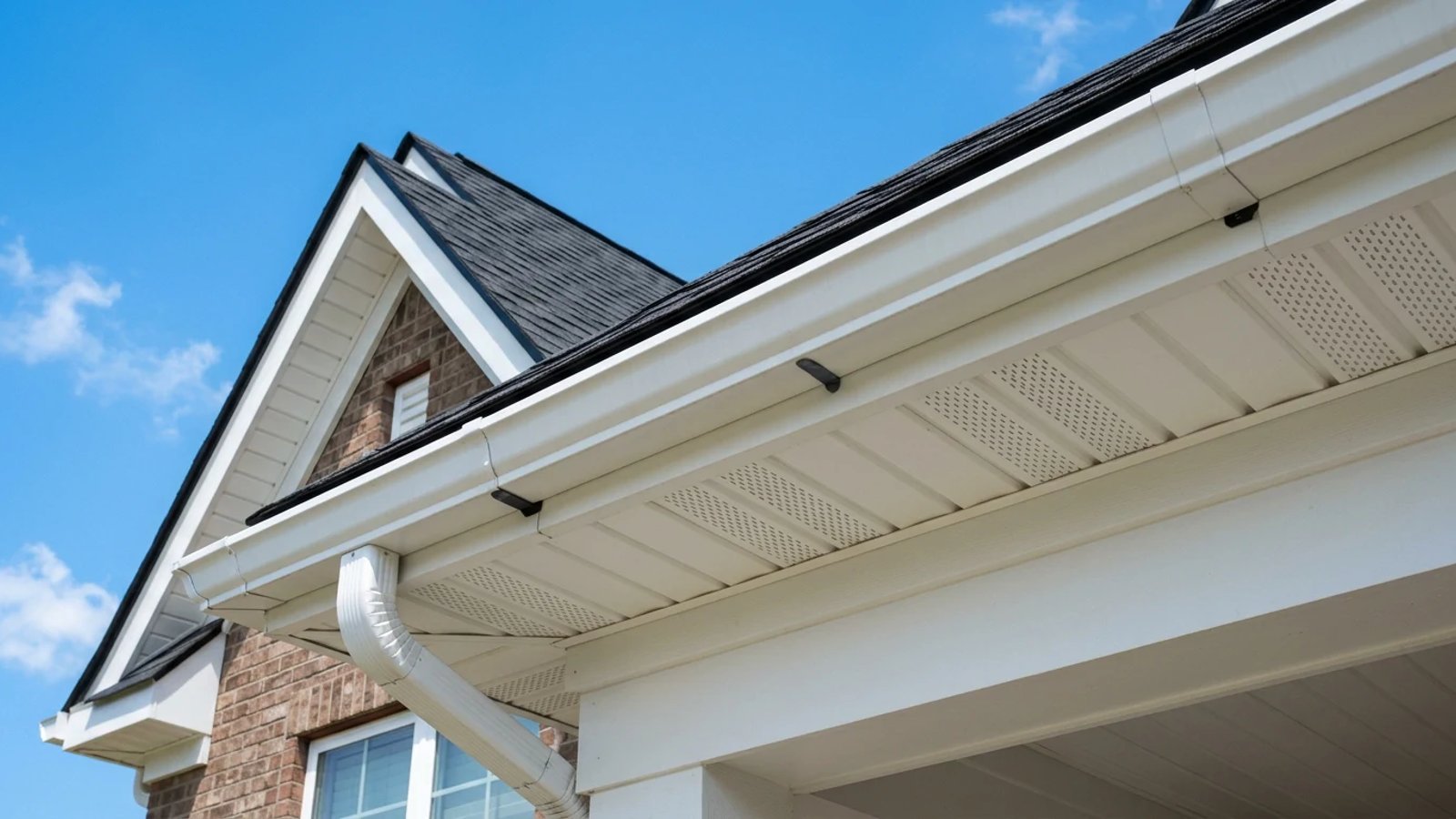
- Fascia: This is the long, straight board that runs horizontally along the lower edge of your roof, typically 6 to 8 inches in width. It faces outward, directly at you when you stand in the street. Its primary job is to hold up your gutters and cap the ends of your roof rafters.
- Soffit: If you walk up to your exterior wall and look straight up, the material you see under the roof overhang is the soffit. It bridges the gap between the siding and the roofline.
Together, they form a protective barrier that seals the edge of your roof, keeping weather out while finishing the look of your siding.
Think of the fascia as the trim board that gives your roof a finished edge, and the soffit as the "ceiling" of your roof overhang. They work in tandem to create a continuous barrier, preventing moisture, pests, and even severe weather like wind-driven rain from entering your roof structure or attic space.
Understanding these components is the first step in appreciating their critical role. When homeowners invest in quality soffit and fascia, they're not just improving aesthetics; they're fortifying their home's defenses against the elements and ensuring long-term structural integrity.
Wood vs. Vinyl: Why the Shift to Modern Materials?
For decades, builders constructed roof overhangs using solid wood—typically pine or cedar. While wood offers a traditional look, it sits in the wettest, most exposed part of your house. Gutters overflow, rain splashes back, and snow melts directly against these boards.
Because of this constant moisture exposure, wood fascia and soffits require heavy maintenance. You have to scrape, prime, and paint them every 3 to 5 years. If you fall behind, the wood rots quickly. Once rot sets in, water easily travels into your roof decking and attic.
This heavy maintenance burden is why modern homeowners overwhelmingly choose vinyl soffit and fascia (or aluminum-wrapped fascia). Vinyl is entirely immune to rot. It never needs painting, it doesn't peel, and it easily sheds water. We replaced the rotting pine soffits on our 1970s ranch with heavy-duty vinyl last year, and the difference in maintenance is night and day. A quick spray with a garden hose in the spring is all it takes to keep them looking brand new.
Aluminum fascia is another popular choice, often used to cap existing wood fascia boards. This provides a durable, low-maintenance protective layer without needing to remove the structural wood underneath. Like vinyl, aluminum is highly resistant to weather, rot, and pests, and comes in a wide array of colors that are baked on for long-lasting vibrancy.
The shift away from wood also considers the environmental impact. While wood is a renewable resource, the frequent need for repainting involves chemicals and labor. Vinyl and aluminum, once installed, have a significantly longer lifespan with minimal upkeep, reducing waste and the need for continuous resource consumption over the decades.
How Vinyl Soffit and Fascia Protect Your Attic
Your roofline does much more than just look pretty. It acts as the primary breathing mechanism for your entire house.
If you look closely at a vinyl soffit, you will notice thousands of tiny holes. These are called vented soffits. According to Energy Star guidelines, proper attic ventilation requires a continuous flow of outside air. Vented soffits pull cool air in from the bottom of the roof. As the attic heats up, that warm, moist air naturally rises and exhausts out through the ridge vents at the top of your roof.
Without this airflow, your attic turns into an oven during the summer, forcing your air conditioner to work twice as hard. In the winter, trapped moisture from your bathrooms and kitchen condenses on the cold roof decking, leading to severe mold growth and wood rot.
Proper attic ventilation, facilitated by vented soffits, is also crucial in preventing ice dams during colder months. Ice dams form when heat escapes from the attic, melts snow on the roof, and the water refreezes at the colder eaves. Continuous airflow keeps the entire roof deck uniformly cold, minimizing melting and refreezing cycles that can damage shingles and gutters.
Beyond structural protection, improved attic ventilation directly translates to energy savings. By preventing heat buildup in summer and moisture accumulation in winter, your HVAC system operates more efficiently. This means lower utility bills year-round and a more comfortable indoor environment, making vented soffits a smart investment for both your home's health and your wallet.
Beyond airflow, a tightly secured vinyl soffit and fascia system acts as your first line of defense against pests. Mice, bats, squirrels, and wasps constantly look for warm, dry places to build nests. A rotting wood fascia board or a loose soffit panel provides the perfect entry point into your attic.
Choosing the Right Colors for Curb Appeal
When it comes time to replace or upgrade your exterior, you will face a choice of colors. While manufacturers offer vinyl in shades ranging from deep brown to slate gray, crisp white remains the undisputed king of the roofline.
Crisp white soffit and fascia is the timeless standard for a reason: it reflects light into your windows and neatly frames the house.
Using white under the eaves brightens the interior rooms of your home by reflecting ambient sunlight through the windows. It also provides a clean, sharp contrast that pairs perfectly with almost any siding color. Because white is produced in such high volumes, it is also typically the most cost-effective option available at the lumberyard.
While white is a classic, don't shy away from exploring other options that complement your home's aesthetic. A darker soffit can create a dramatic, modern look, especially when paired with light-colored siding. Conversely, matching your soffit and fascia to your siding color can create a seamless, monochromatic effect that makes your home appear taller and more expansive.
Consider your home's architectural style and existing trim colors when making your choice. Many manufacturers offer color palettes designed to coordinate with popular siding and window brands, ensuring a cohesive and polished exterior. Remember, the goal is to enhance your home's curb appeal while maintaining its protective functionality.
How to Inspect Your Roofline Exterior
You don't need to climb a steep roof to check the health of your eaves. Grab a pair of binoculars and walk the perimeter of your house on a sunny day.
- Look for sagging panels. Vinyl soffit that is drooping or separating from the wall indicates loose nails or failing support channels.
- Check for water stains. Brown streaks running down the fascia or siding usually mean your gutters are clogged and overflowing behind the metal.
- Inspect for peeling paint. If you still have wood components, flaking paint is the first sign that moisture is trapped inside the wood.
- Scan for pest activity. Look for wasp nests tucked into the corners or chew marks along the edges of the fascia board.
- Test the gutter spikes. Ensure the long nails or screws holding your gutters are driven tightly into the fascia board; if they are pulling out, the wood behind them might be soft.
- Check for insect nests. Look for mud tubes from termites, wasp nests, or ant trails, especially in shadowed or less-trafficked areas.
Regular inspections are your best defense against costly repairs down the road. By catching issues early, you can often address them with simple fixes, like cleaning gutters or resealing a small gap, before they escalate into major problems requiring professional intervention. A well-maintained roofline not only protects your investment but also enhances the overall beauty and efficiency of your home for years to come.
Taking care of your home's exterior doesn't have to be complicated. By understanding how your vinyl soffit and fascia work together, you can spot minor issues before they turn into major water damage. Make a habit of walking around your house twice a year—once in the spring and once before the snow flies—to ensure your roofline is sealed, vented, and doing its job.
- Inspect your eaves twice a year using binoculars to spot sagging panels, water stains, or pest activity before they become expensive repairs.
- Never paint over vented soffit panels, as clogged holes will destroy your attic's ventilation system.
- Upgrade to vinyl or aluminum-wrapped fascia if you are tired of scraping and repainting wood every 3 to 5 years.
- Ensure your soffit vents are not blocked by attic insulation; use baffles to keep the air path clear.