How to Insulate Windows for Winter (And Stop Drafts)
Stop feeling the cold breeze and watching your heating bill climb. Learn the most effective, budget-friendly DIY methods to insulate drafty windows using shrink film, removable caulk, and thermal curtains.
Full guide Windows & Doors Learn how to spot energy leaks, fix drafts, and decide when to replace your windows and doors.You are sitting on the couch, wrapped in a blanket, and you feel that unmistakable chill against the back of your neck. You check the thermostat—the heat is definitely running, but the room still feels cold. If this sounds familiar, your windows are likely the culprits. Learning how to insulate windows for winter is key to keeping your home cozy and reducing those bills. Drafty windows act like open valves, pulling the warm air out of your home and driving your heating bills through the roof.
Many homeowners assume the only fix is spending thousands of dollars on replacement windows. While new double-pane windows are great, they are not your only option. Figuring out how to insulate windows for winter using cheap, highly effective DIY methods can make your home noticeably warmer by the end of the weekend.
Before you start taping up plastic, you need to know exactly where the cold air is getting in. Let's look at how to find those leaks and seal them up tight.
How Do I Find the Exact Source of the Draft?
Windows usually leak air in specific spots: where the upper and lower sashes meet, around the edges of the frame, or under the bottom sill. Guessing where the draft is coming from often leads to wasted time and materials. Instead, use a visual test to pinpoint the exact location of the leak.
Last November, I tested the original 1980s double-hung windows in my own living room using this method. I fully expected the air to be leaking around the outer edges of the frame. Instead, I found a massive draft right in the middle where the two sashes met—the locking mechanism had loosened over the years, leaving a tiny gap.
To run this test yourself, wait for a windy day. Turn off your furnace or heat pump so the indoor air is still. Light a stick of incense or a candle, and slowly move it around the perimeter of the window pane, the sashes, and the trim.
Watch the smoke. If it flows straight up, the seal is tight. If the smoke suddenly dances, blows sideways, or gets sucked toward the glass, you have found your air leak. Mark these spots with a small piece of painter's tape so you know exactly where to focus your insulation efforts.
The Best Defense: How to Insulate Windows for Winter Using Shrink Film
If you have older, single-pane windows, or double-hung windows that rattle in the wind, window insulation film is your best friend. These kits, typically costing about $15 to $20, are found at any hardware store and contain a roll of double-sided tape and large sheets of clear, heat-shrinkable plastic.
When applied correctly, the plastic forms a tight, crystal-clear barrier that traps a layer of dead air between the film and the glass. This dead air acts as a powerful insulator. Here is how to apply it so it looks invisible and stays stuck all season.
- Clean the window trim thoroughly. Wipe down the painted wood or vinyl frame with rubbing alcohol and a clean rag to remove all dust, grease, and moisture.
- Apply the double-sided tape. Press the tape firmly around the entire perimeter of the window frame, leaving no gaps at the corners. Do not remove the paper backing yet.
- Measure and cut the plastic film. Unfold the film and cut it so it is about two inches wider and longer than your window frame.
- Peel the backing and attach the film. Remove the paper backing from the top piece of tape first. Press the top edge of the plastic firmly onto the tape, then work your way down the sides, pulling the film gently to remove major wrinkles.
- Seal the bottom edge. Press the final edge of the plastic onto the bottom tape line, ensuring the entire perimeter is completely sealed.
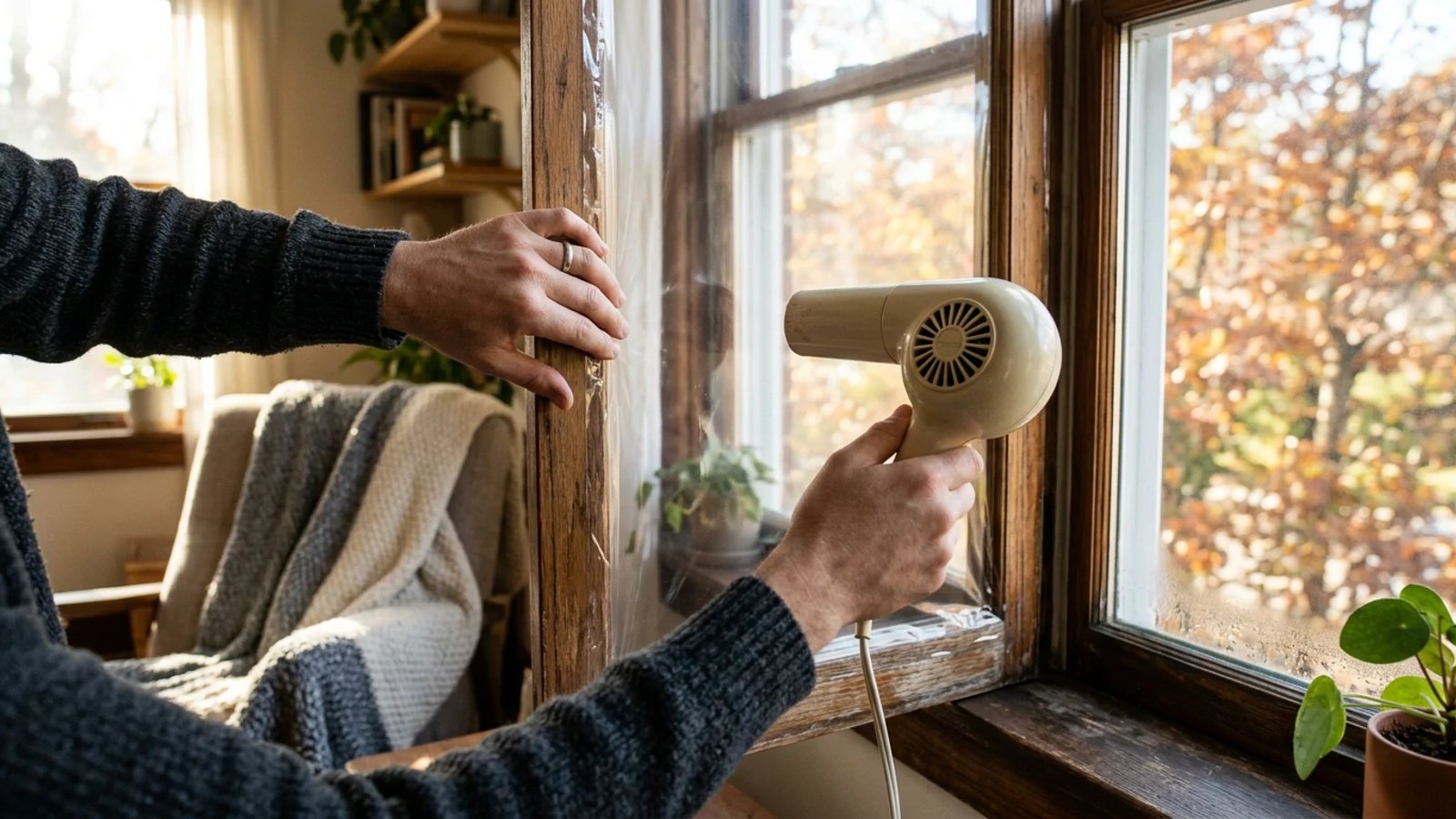
- Shrink the film with a hairdryer. Turn your hairdryer to its highest heat setting but lowest fan speed. Hold it about two inches away from the plastic and sweep it back and forth. Watch as the heat magically pulls the plastic drum-tight and crystal clear.
Sometimes the cheapest fix is the most effective. A $15 window insulation kit can save you up to $50 a month on heating.
Quick Fixes: Removable Caulk and Window Locks
If you do not want to cover your entire window with plastic—perhaps it is a window you still want to open on mild days—you have other options for sealing specific gaps.
First, check your window locks. It sounds incredibly simple, but an unlocked window is a drafty window. The crescent lock on a standard double-hung window does more than provide security. When you flip that latch, the cam action physically pulls the upper and lower sashes tightly together, compressing the built-in weatherstripping. If your windows are unlocked, simply locking them can cut drafts by half.
For gaps around the edges of the sashes that locking doesn't fix, use removable weatherstripping caulk. Products like DAP Seal 'N Peel come in a standard caulking tube but behave differently than permanent silicone or acrylic.
You run a thick bead of this clear, rubbery caulk right over the drafty seams. It cures into a flexible gasket that blocks the wind entirely. When spring arrives, you just grab a corner and peel it off like a giant rubber band. It leaves no sticky residue and won't strip your paint.
Do Thermal Curtains Actually Stop Drafts?
Many people buy heavy thermal curtains expecting them to cure a drafty room. Thermal curtains are excellent for energy efficiency, but you need to understand how they work.
Curtains do not stop cold air from entering the house. If you have a physical gap in your window frame, cold air will still blow inside. However, thick, insulated curtains trap that cold air between the glass and the fabric, preventing it from circulating freely through your living room. According to the Department of Energy, conventional draperies can reduce heat loss from a warm room up to 10%.
For the best results, use thermal curtains in combination with physical seals like shrink film or removable caulk. Make sure the curtains hang as close to the window as possible and drop all the way to the floor or the window sill to create a tight air pocket.
If your draft is strictly at the bottom sill, a simple draft snake—a long fabric tube filled with sand or rice—pushed tightly against the bottom sash works wonders. It is a low-tech, damage-free solution that takes two seconds to put in place.
When to Stop Patching and Call a Professional
While DIY insulation methods are fantastic for standard winter drafts, some window problems require a permanent fix. Knowing when to stop taping and start repairing will save you from bigger structural issues down the road.
You should also check the glass itself. If you have double-pane windows and notice fog, condensation, or a milky haze trapped between the two layers of glass, the factory seal has failed. The insulating argon gas has escaped, and the window has lost its thermal rating. Shrink film will help temporarily, but the glass unit will eventually need to be replaced by a local glass company.
Taking an afternoon to properly seal your windows is one of the highest-return projects a homeowner can tackle. By blocking the wind and trapping your expensive heat inside where it belongs, you will enjoy a much more comfortable winter and a noticeably lower utility bill.
- A $15 window insulation kit can block drafts and noticeably warm up a room in under an hour.
- Always clean your window frames with rubbing alcohol before applying insulation tape, or it will peel off mid-winter.
- Locking your windows pulls the upper and lower sashes tight together, which is often enough to stop minor air leaks.
- Thermal curtains work best when paired with physical draft-blockers like film or caulk.