Winter Ceiling Fan Direction: How to Lower Heating Bills
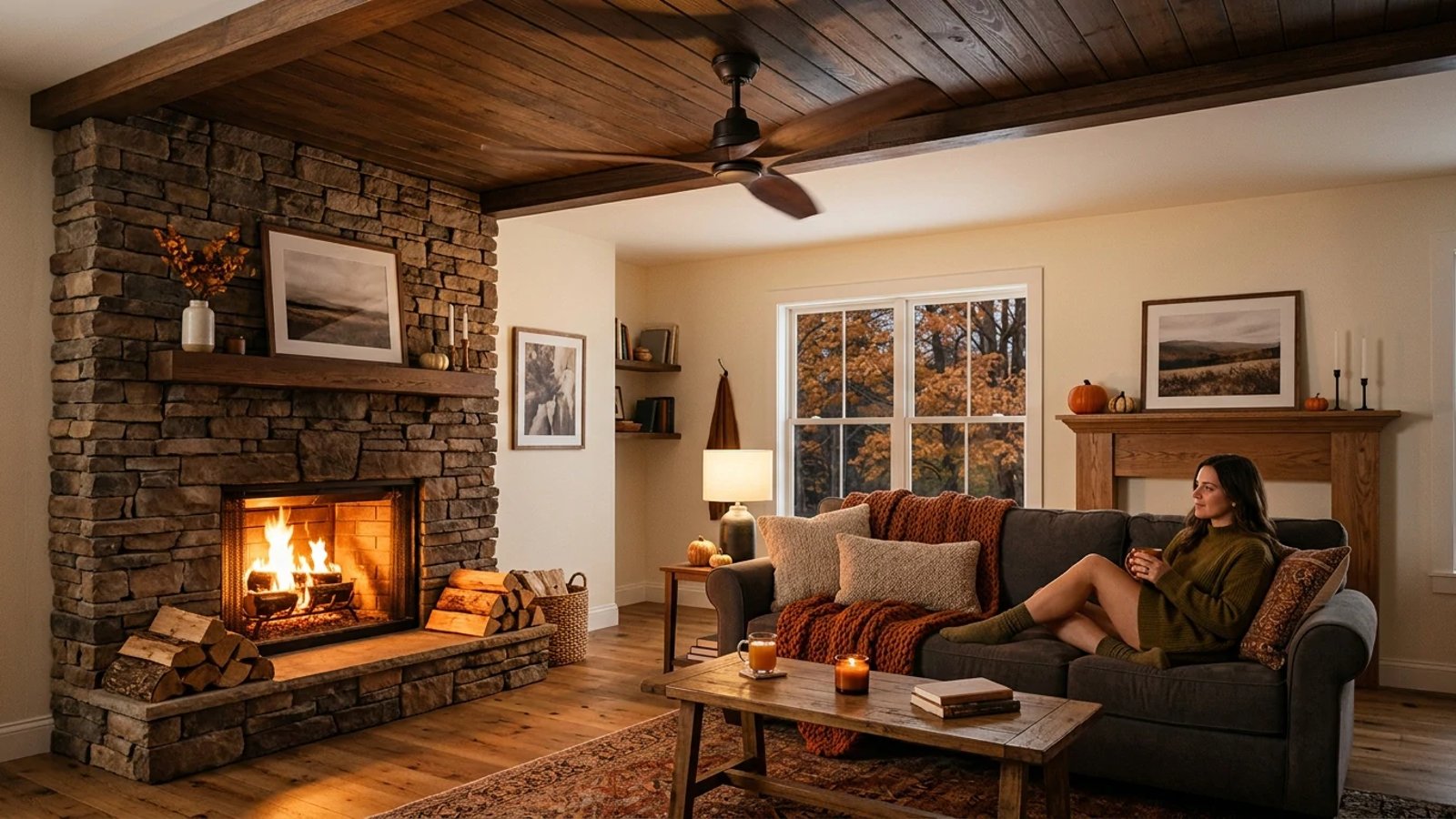
Don't turn off your ceiling fans this fall. Learn how changing your winter ceiling fan direction can push trapped heat down and lower your heating bills for free.
As mid-fall weather settles in and overnight temperatures drop, you are likely turning on your furnace for the first time this season. Many homeowners simply switch off their overhead fans until spring, assuming they are only useful for beating the summer heat. But ignoring your fans right now means missing out on a completely free way to cut your utility costs.
Setting the correct winter ceiling fan direction is one of the easiest home maintenance tasks you can do to keep your house warm and your bills low. It takes about two minutes per room, requires no special tools, and costs absolutely nothing.
Winter Ceiling Fan Direction: Clockwise for Optimal Warmth
During the colder months, your ceiling fan should spin clockwise. To check your current setup, stand directly under the fan, turn it on, and look up. If the blades are moving to the right—matching the hands of a clock—you are good to go.
The physics behind this trick are incredibly straightforward. Warm air is less dense than cold air, so the heat produced by your furnace naturally rises to the highest point in the room. In a standard room with an 8-foot ceiling, the air near the ceiling can easily be 3 to 5 degrees warmer than the air near the floor.
When a fan spins counter-clockwise (the summer setting), it pushes air straight down, creating a breeze that evaporates moisture on your skin and makes you feel cooler. When you reverse the motor to spin clockwise, the angled blades pull cool air up from the floor. This gentle updraft forces the warm air trapped at the ceiling outward and down the walls, mixing the air and warming the lower half of the room without blowing a draft directly onto you.
How to Change Your Ceiling Fan Direction for Winter
Reversing your fan is a fast process, but you want to do things in the right order to avoid a mess. You'll usually find a small switch on the motor housing. Here is how to prep your fans for the cold months ahead.
- Turn off the power. Switch off the fan at the wall and wait for the blades to come to a complete stop before setting up your step ladder.
- Clean the blades. Dust settles on the top edge of the blades all summer. If you reverse the motor without cleaning them first, that dust will blow all over your floor and furniture.
- Locate the directional switch. For most standard fans, look for a small black toggle switch on the side of the metal motor housing, just above the blades.
- Flip the switch. Slide the toggle to the opposite position. If you have a modern smart fan or a DC motor fan, you will likely press a reverse button on your remote control instead of a physical switch.
- Test the rotation. Turn the power back on and verify the blades are now moving in a clockwise direction.
The One Rule You Can't Ignore: Keep the Speed Low
Flipping the switch to clockwise is only half the battle. You must also set the fan to run on its lowest possible speed.
If you run a fan on high speed during the winter, the sheer velocity of the air moving through the room will create a wind-chill effect. Even though you are pushing warm air down, the fast-moving air will make your skin feel cold, completely defeating the purpose of the exercise.
The goal is gentle air circulation, not a stiff breeze. If you can feel the air blowing against your skin while sitting on the couch, the fan is spinning too fast.
By keeping the speed on low, the air mixes silently and gently. According to Energy Star guidelines, using a ceiling fan properly allows you to adjust your thermostat by a few degrees without sacrificing any comfort. Lowering your thermostat by just 2 degrees in the winter can cut your heating bill by up to 5 percent over the course of the season.
While reversing your ceiling fan and setting it to a low speed are the primary steps to harnessing its winter benefits, a few other considerations can help you maximize comfort and savings. Thinking about your fan's role beyond just directional spin can turn it into an even more powerful tool for home efficiency.
Maximizing Comfort: More Winter Fan Tips
Once you've got your ceiling fan spinning clockwise at a low speed, you've done the most important part! But there are a few other quick tips that can enhance your fan's performance and contribute to a more comfortable, energy-efficient home throughout the colder months.
Keep Those Blades Clean
We touched on cleaning the blades before reversing the fan, but it's a good practice to maintain year-round. Dust buildup on fan blades can actually impede airflow and reduce efficiency. A quick wipe-down every few months, using the pillowcase trick or a duster, ensures your fan is always moving air as effectively as possible. Clean blades also prevent dust from circulating into your living space, contributing to better indoor air quality – a win-win!
Right Size, Right Room
For your ceiling fan to be truly effective, especially in winter, it needs to be appropriately sized for the room it's in. A fan that's too small for a large room won't be able to adequately circulate the warm air trapped near the ceiling. Conversely, an oversized fan in a small room might create too much airflow, even on its lowest setting, potentially causing that unwanted wind-chill effect. Consult your fan's manual or a sizing guide to ensure your fan is a good match for your room's dimensions.
Pairing Your Thermostat for Greater Savings
The real magic of using ceiling fans in winter comes when you pair them with smart thermostat adjustments. Since a clockwise-spinning fan can make a room feel 3 to 5 degrees warmer, you can often lower your thermostat by a few degrees without noticing any drop in comfort. For example, if you typically set your thermostat to 70°F, try setting it to 67°F or 68°F while running your fan. This small adjustment, compounded over the entire heating season, can lead to significant reductions in your energy bill, making your home both cozier and more economical. You'll be surprised how much difference a few degrees can make when aided by proper air circulation.
Quick Maintenance Checks
Beyond cleaning and directional reversal, take a moment to perform a quick visual check on your fan. Look for any wobbling blades, which could indicate an imbalance or loose screws. Listen for unusual noises like grinding or squeaking. Addressing these minor issues early can prevent larger problems down the road and ensure your fan operates smoothly and quietly. A well-maintained fan is an efficient fan, ready to work hard for your comfort all winter long.
Do Vaulted Ceilings Change the Strategy?
If you have high or vaulted ceilings, you might wonder if a fan can really make a difference. The answer is a resounding yes. In fact, reversing your fan direction is even more critical in rooms with tall ceilings.
In my own home, the main living room features a 12-foot vaulted ceiling. During our first winter in the house, the room always felt freezing, even though the furnace was running constantly. I finally dragged out a tall ladder and checked the ceiling fan—it was spinning counter-clockwise on high. I dusted the blades, flipped the switch to clockwise, and set it to low. Within an hour, we measured a 4-degree increase in temperature at seating level. We were losing all our expensive heat to the rafters, and that simple switch pushed it right back down to the couch.
Make It a Fall Habit
Tending to your ceiling fans should be a standard part of your mid-fall routine, right alongside checking your smoke detector batteries and clearing out your gutters. It takes almost no time, costs nothing, and makes your heating system's job noticeably easier. Grab a step ladder and an old pillowcase this weekend, and get your fans ready for the cold weather ahead.
- Flipping your fan's directional switch is a completely free way to lower your winter utility bills.
- Clockwise rotation creates an updraft that gently pushes warm air trapped at the ceiling down the walls and into your living space.
- Always clean your fan blades before reversing the motor to prevent a dust shower over your furniture.
- Keep the fan on its lowest setting; high speeds will create a wind-chill effect regardless of spin direction.