How to Unclog a Toilet Fast (With or Without a Plunger)
Stop a toilet overflow in its tracks and clear stubborn clogs fast. Learn the proper plunging technique and a plunger-free dish soap trick to get your bathroom working again.
Full guide Plumbing Learn how your home plumbing works and how to stop leaks before they ruin your house.You flush the handle, but instead of the familiar rushing sound, the water level starts rising fast. A clogged toilet is one of the most stressful plumbing emergencies a homeowner faces, especially when dirty water threatens to spill over the rim and ruin your bathroom floor. Knowing exactly how to unclog a toilet quickly will save your floors, your wallet, and your sanity.
Stop the Overflow Immediately
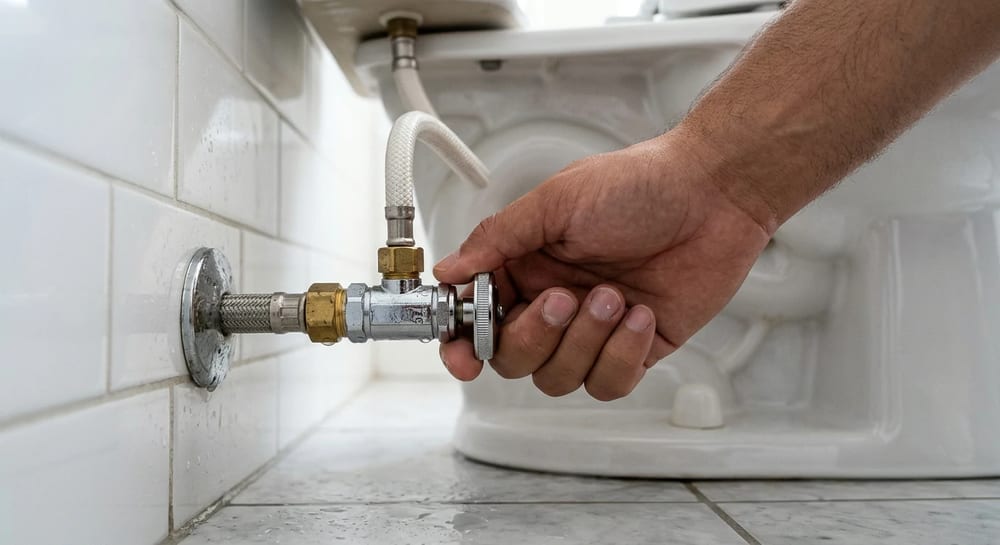
Before you even think about clearing the blockage, you must stop the bowl from overflowing. You have a few seconds to act, so skip the panic and go straight for the water supply line.
Reach behind the base of the toilet near the wall. You will see a small valve, usually a 1/4-turn or multi-turn knob, connected to a flexible metal or plastic hose. Turn this valve clockwise (righty-tighty) as far as it will go. This cuts off the water supply to the tank. If the valve is stuck or you cannot reach it in time, take the lid off the toilet tank and push the rubber flapper down over the hole at the bottom. This immediately stops water from flowing from the tank into the bowl.
Why Do Toilets Keep Clogging?
Understanding what causes a clog helps prevent the next one. A toilet trapway is an S-shaped curve designed to hold standing water, which keeps sewer gases from entering your home. However, that curve is a natural bottleneck.
Most modern clogs are caused by products falsely marketed as "flushable." According to the EPA guidelines on what to flush, only human waste and toilet paper should ever go down your drain. Disinfecting wipes, baby wipes, and heavy paper towels do not break down in water and will quickly form massive blockages in the trapway.
Another common culprit is hard water. Over time, calcium and magnesium deposits build up inside the siphon jet—the small hole at the bottom of the bowl that pushes water into the trap. When the jet gets clogged with minerals, the flush loses its power, making blockages far more likely even with normal toilet paper use.
How to Unclog a Toilet With a Plunger
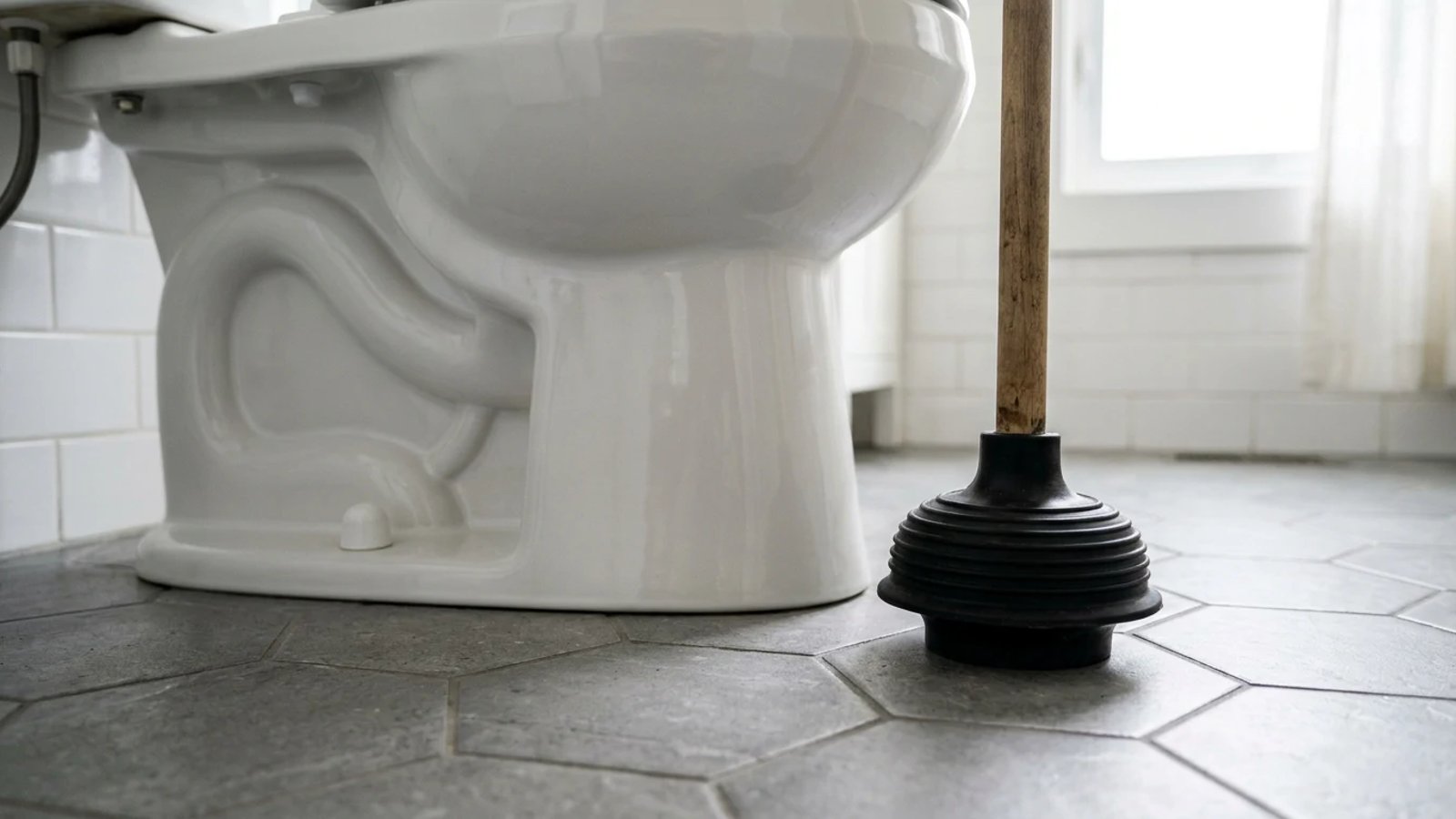
Most homeowners grab a standard red cup plunger, pump it frantically, and get nowhere. Cup plungers are designed for flat sinks and bathtubs. For a toilet, you need a flange plunger. This type has an extra rubber sleeve extending from the bottom cup, designed to fit perfectly into the toilet drain opening and create a tight vacuum seal.
When we replaced the toilets in our 1970s split-level, I noticed the new low-flow trapways were much narrower than older models. A standard cup plunger simply could not form a seal, but a $15 heavy-duty flange plunger cleared blockages on the first try.
- Warm up the rubber. Run the plunger under hot water in the sink for 30 seconds to soften the rubber, making it easier to form a tight seal against the porcelain.
- Insert the flange. Angle the plunger so the extended rubber flange fits directly into the hole at the bottom of the bowl.
- Create the seal. Push down gently on the first stroke to force the air out of the bell. If you push hard immediately, you will splash dirty water all over yourself.
- Push and pull forcefully. Once the air is out, push down and pull up vigorously, keeping the seal intact. The pulling motion is actually what dislodges most clogs by reversing the water pressure.
- Break the seal. After 15 to 20 seconds of plunging, sharply pull the plunger up to break the vacuum. The water should rush down the drain.
How to Unclog a Toilet Without a Plunger?
If you find yourself facing a stubborn clog in a bathroom without a plunger, do not reach for harsh chemical drain cleaners. Liquid chemicals can generate intense heat, potentially cracking the porcelain bowl or eating away at older cast-iron pipes. Instead, you can use items already sitting in your kitchen.
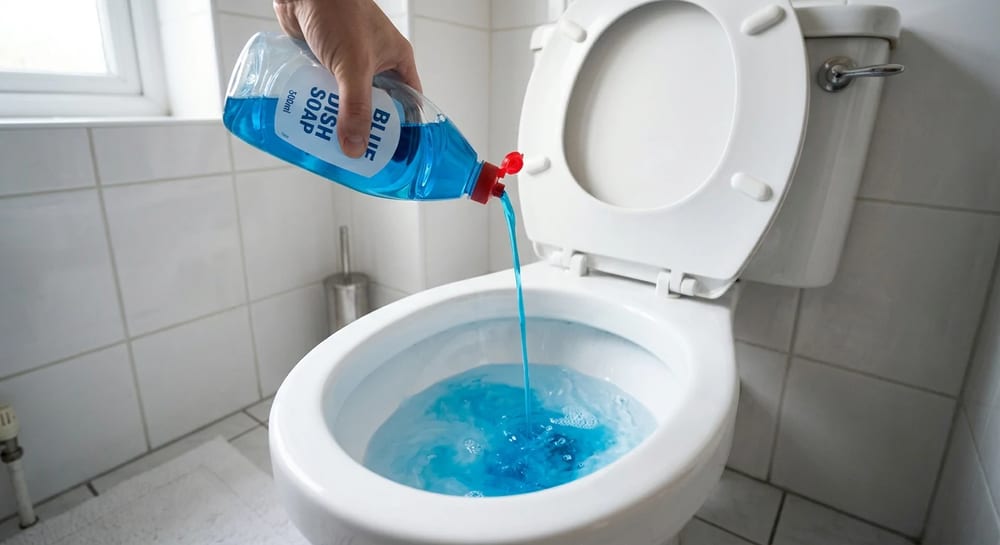
The dish soap method is highly effective for organic waste and toilet paper clogs. The heavy, viscous soap acts as a lubricant, coating the porcelain pipe walls and allowing the blockage to slide through the narrow trapway.
- Squirt dish soap. Pour about 1/2 cup of liquid dish soap (like Dawn) directly into the toilet bowl. Shampoo also works in a pinch.
- Add hot water. Fill a bucket with hot tap water. Pour it into the bowl from about waist height to create some downward pressure.
- Let it sit. Walk away for 20 to 30 minutes. The soap will slowly seep into the clog and lubricate the pipe walls.
- Check the water level. If the water level has dropped, the clog is clearing. Turn the wall valve back on and flush normally to clear the rest of the debris.
Using a Toilet Auger for Deep Blockages
Sometimes plunging and soap are not enough, especially if a foreign object like a plastic toy, a makeup brush, or a toothbrush is wedged in the S-trap. This is where a closet auger comes in. Unlike a standard metal drain snake, a toilet auger has a protective rubber sleeve over the metal tube so you do not scratch the visible porcelain in the bowl.
You can buy a standard 3-foot closet auger for $15 to $45 at any hardware store. Pull the handle all the way up, insert the curved end into the bowl drain, and crank the handle clockwise while pushing down gently. The metal cable will bore into the clog. Once you feel heavy resistance, pull the auger back out to retrieve the blockage. Do not force the cable too hard, or you risk damaging the wax ring seal at the base of the toilet.
When Should You Call a Professional Plumber?
Most isolated toilet clogs are easy DIY fixes, but certain symptoms point to a much larger issue in your home plumbing system. If you plunge the toilet and hear gurgling sounds coming from the bathtub, or if dirty water starts backing up into the shower drain, stop immediately.
These symptoms indicate a blockage in your main sewer line, not just the toilet trap. Pushing more water into the system will only cause sewage to flood your lowest drains. At this point, the problem is beyond a household plunger or a 3-foot auger, and you need a licensed plumber to camera the line and clear it with a heavy-duty mechanical snake.
Handling a clogged toilet does not have to be a disaster. By learning how to shut off the water instantly, keeping a proper flange plunger nearby, and knowing a few household tricks, you can resolve the issue in minutes and get your bathroom back in working order.
- Turn the shut-off valve behind the toilet clockwise (righty-tighty) to stop rising water instantly.
- A tight vacuum seal is the secret to plunging; push down gently to expel air, then pull up forcefully.
- The dish soap and hot water method naturally lubricates the trapway, breaking down waste in 20 to 30 minutes.
- If plunging the toilet causes gurgling in your shower drain, you have a main line clog that requires a plumber.