What is a Supply Line?
A supply line is the small flexible hose that connects your home water pipes to your fixtures. It brings clean, fresh water to your sink, toilet, or washing machine. Plumbers used to install rigid metal pipes for this job. In the 1980s, they switched to flexible braided hoses. These modern hoses are much easier to install and replace because they bend around corners and fit tight spaces.
Where You Find Them
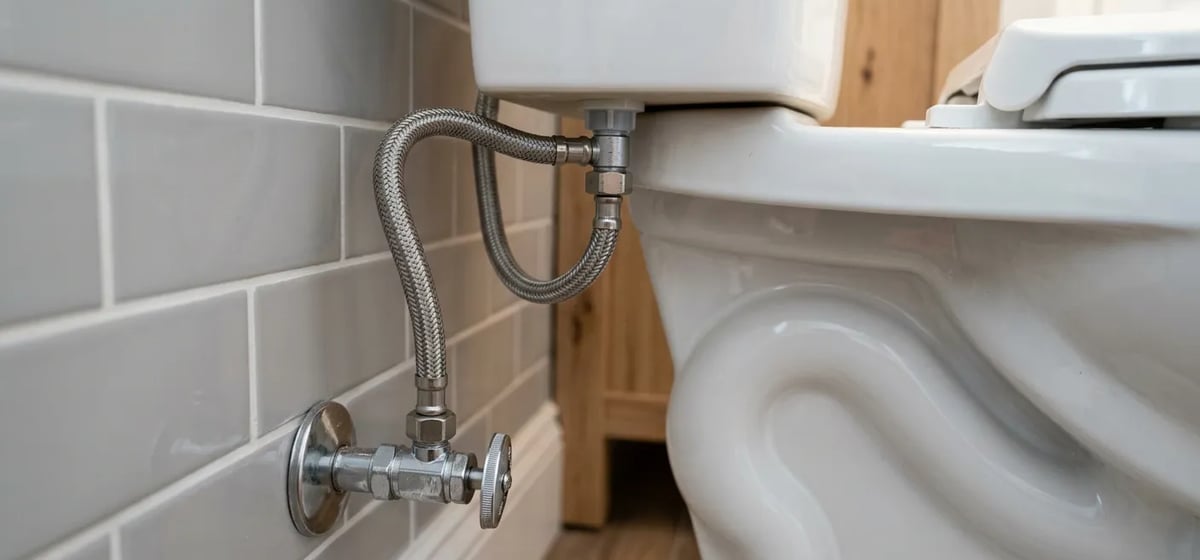
You will find supply lines hidden right out in the open all over your house. Look under your kitchen sink or bathroom vanity. You will see two small hoses connecting the wall valves to the faucet. One is for hot water and one is for cold water. Look behind your toilet. You will see a single hose bringing cold water to the tank.
You also have heavy duty supply lines behind your washing machine and your dishwasher. If your refrigerator has an ice maker, a very thin supply line runs behind it. You can learn more about how these connect in our guide to Plumbing.
Why They Matter
These small hoses hold back a lot of water pressure all day and all night. If a supply line bursts, it will spray gallons of water into your home every minute until you shut off the main valve. This is a leading cause of massive water damage in homes. A broken hose on the second floor can ruin your ceilings, floors, and walls in just a few minutes. This is why you need to know how to handle Home Emergencies and find your main water shutoff valve fast.
Today, the best supply lines have a braided stainless steel jacket. The metal braid wraps around a rubber or plastic inner tube. This strong metal layer stops the inner tube from swelling and bursting under pressure. Older homes might have cheap plastic or rubber hoses. You should replace plain rubber hoses immediately to protect your home.
When to Replace Them
You should inspect your supply lines once a year. Run a dry tissue along the length of the hose. If the tissue gets wet, you have a slow leak. You also need to look for rust, kinks, or bulging spots on the metal braid. If you see any damage, buy a new hose right away.
You can buy a braided steel supply line at any hardware store. They cost between 5 and 20 dollars depending on the length and the brand. A plumber will charge 150 to 250 dollars to replace a few of them during a service call. Costs vary based on where you live. It is usually a very simple DIY job. Just remember to turn off the little wall valve before you unscrew the old hose. If you are upgrading your laundry room, buy high quality hoses for your washer. You can read more about caring for these machines in our guide to Appliances.
How to Buy the Right One
When you go to the hardware store, you will see a whole wall of supply lines. You need to know three things to buy the right one.
- Length: Measure how long the hose needs to be. Buy one that is slightly longer than you need. You want the hose to make a gentle curve. A hose that is too tight will pull on the fittings and leak.
- Connection size: The end that attaches to the wall valve is usually three eighths of an inch. The end that attaches to a sink faucet is usually one half of an inch. Toilets often use a seven eighths inch connection.
- Material: Always pick braided stainless steel. Avoid plain gray plastic hoses. They get brittle over time and crack without warning.