What Not to Put in Garbage Disposal (And Stop Drain Clogs)
Avoid a holiday plumbing disaster. Learn exactly what foods destroy your garbage disposal, why potato peels are the ultimate enemy, and how to keep your drain clear.
Full guide Plumbing Learn how your home plumbing works and how to stop leaks before they ruin your house.The day after Thanksgiving is historically the busiest day of the year for residential plumbers. Sinks back up, dishwashers refuse to drain, and the kitchen grinds to a halt right in the middle of the holiday weekend. In my experience, the culprit is almost always the garbage disposal.
Homeowners often treat this appliance like a magical food-vanishing portal, rather than what it actually is: a motorized grinder meant only for tiny, residual food scraps. If you are searching for what not to put in garbage disposal drains, you are likely trying to avoid a $250 to $400 emergency plumbing call this fall. Let's look at the specific foods that destroy kitchen plumbing and how to keep your sink clear.
How Does a Garbage Disposal Actually Work?
Many people assume a garbage disposal works like a blender, spinning razor-sharp blades to chop up food. In reality, a disposal has no blades at all. It uses blunt metal impellers (also called lugs) mounted on a spinning plate, typically rotating at speeds between 1,725 and 2,800 RPM.
When you turn the unit on, centrifugal force flings the food waste against a stationary outer grinding ring. The food is pulverized through small holes and washed down the drain line. Because it relies on mashing rather than slicing, certain types of food simply cannot be processed and will instantly jam the mechanism.
While the basic mechanism is similar, disposals vary significantly in power and feed type. Continuous feed units run as long as the switch is on, allowing you to add scraps as you go, while batch feed disposals require a stopper to be inserted before grinding, offering an extra layer of safety. Motor sizes typically range from 1/3 HP for basic use to 1 HP for heavy-duty grinding, with higher horsepower units offering more grinding power and less susceptibility to jams. Regardless of the type or power, the core principle of mashing food waste against a grinding ring remains the same, emphasizing that it's a tool for residual scraps, not a primary waste bin.
What Not to Put in Garbage Disposal Drains?
Keeping your kitchen plumbing flowing means keeping a strict list of items out of the sink. Here are the worst offenders.
Fibrous and Stringy Vegetables
Celery, corn husks, asparagus, and onion skins are the natural enemies of a disposal. Because the impellers are blunt, they cannot cut through stringy fibers. Instead, the fibers wrap around the moving parts.
Beyond celery and onion skins, items like artichoke leaves, corn silk, rhubarb, and even tough banana peels (which have surprisingly strong, stringy fibers) pose a similar threat. These long, sinewy strands don't break down easily; instead, they intertwine around the impellers and the motor shaft, creating a dense, impenetrable ball. This not only jams the unit but can also put excessive strain on the motor, leading to premature wear or even burnout if the unit is forced to operate while bound.
Last November, I spent 45 minutes under a sink extracting a tangled, foul-smelling mass of onion skins and celery strings from a jammed 1/2 HP Badger unit with a pair of needle-nose pliers. The motor had completely bound up and tripped the internal breaker. Always toss these fibrous scraps directly into the compost bin.
Expandable Starches
Pasta, rice, and oats expand when exposed to water. Even after they are cooked, grinding them up and adding more water causes them to swell inside your pipes. A cup of leftover rice washed down the drain can easily swell to block a standard 1.5-inch PVC sink drain.
Think of oatmeal, grits, couscous, or even large quantities of bread. These items, when ground and mixed with water, form a thick, sticky sludge that adheres tenaciously to the inside of your drain pipes. Over time, this starchy buildup can accumulate, narrowing the pipe's diameter and eventually leading to a complete blockage that can be as stubborn as concrete. It's a slow but insidious process that often goes unnoticed until your sink is completely backed up.
Fat, Oil, and Grease (FOG)
Hot cooking grease is a liquid when you pour it out of the roasting pan, but it cools rapidly into a solid block of fat once it hits the cold pipes under your house. The EPA constantly warns municipalities about FOG because it creates massive "fatbergs" in city sewer lines.
Even small amounts of FOG, when combined with other food particles and soap scum, can create a sticky, viscous matrix that aggressively traps debris. This accumulation hardens over time, forming a stubborn, waxy clog that is extremely difficult to remove without professional intervention. These blockages not only slow down your drain but can also lead to foul odors as trapped organic matter decomposes within the pipes.
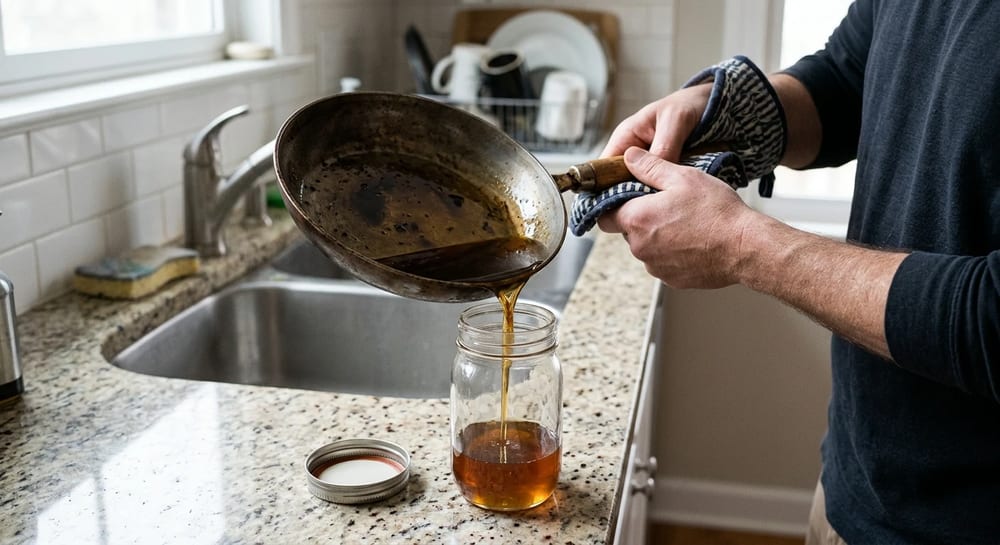
Pour bacon grease and meat drippings into an old glass jar or an empty tin can, let it solidify on the counter, and throw it in the regular trash.
Can You Put Potato Peels in the Garbage Disposal?
No. This is the classic holiday cooking mistake. A massive pile of potato peels goes down the drain, the disposal is turned on, and the sink immediately backs up.
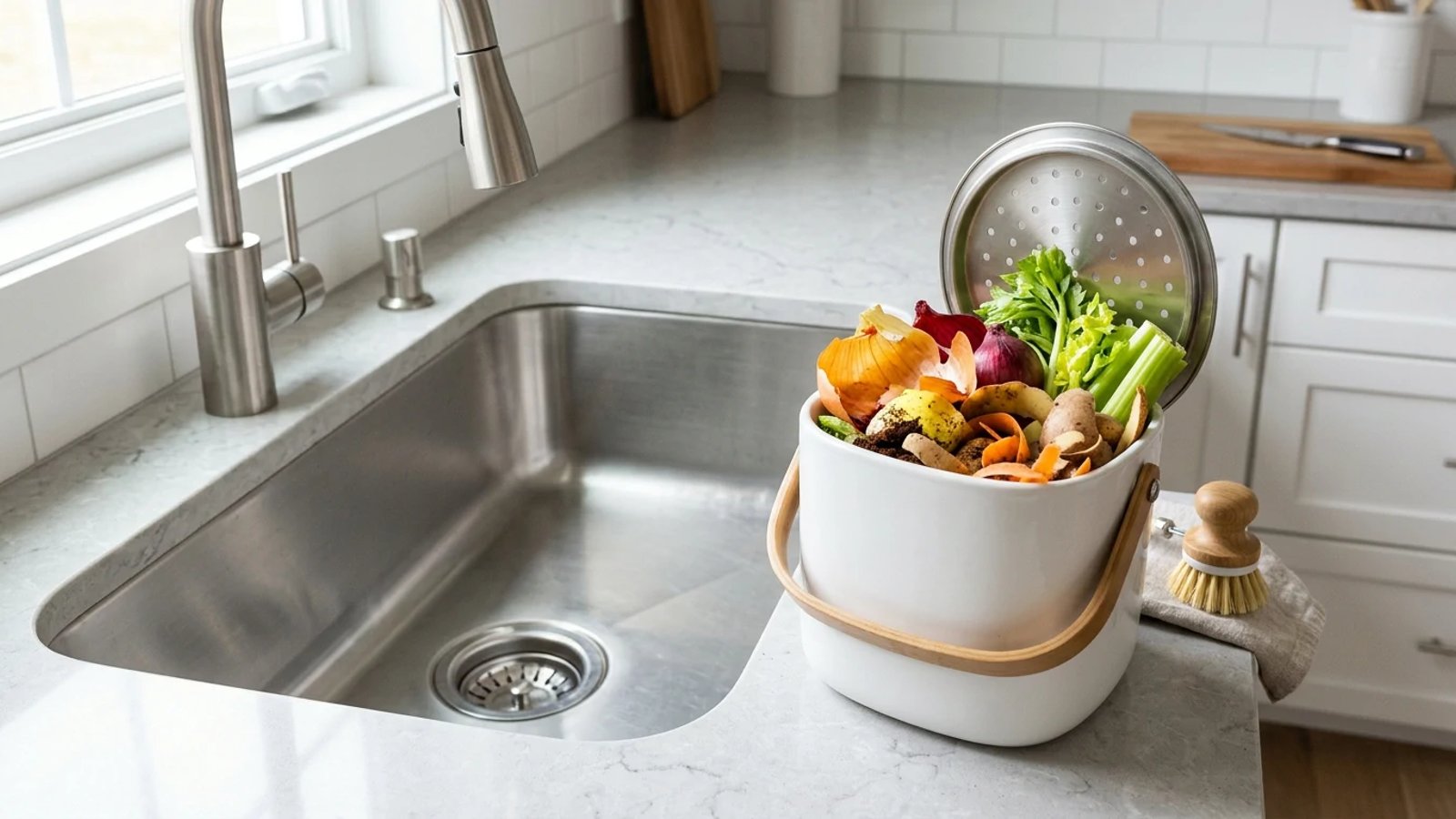
Because potatoes are mostly starch, the ground-up peels turn into a thick, glue-like paste. This heavy paste coats the inside of your drain lines, catches other debris, and eventually cures into a solid plug. Always peel potatoes directly into the trash or a countertop compost bucket.
This warning extends to other starchy root vegetables like carrots, beets, parsnips, and yams. While they might seem less problematic than potato peels, grinding large quantities of these can also contribute to the formation of a dense, starchy paste that coats pipes and reduces their flow capacity. It's always best to err on the side of caution and dispose of all vegetable peels directly into the trash or a dedicated countertop compost bucket, keeping your drain lines clear and free-flowing.
What Can Safely Go Down the Drain?
Your disposal is designed to handle the small bits of food left on a plate after you have already scraped the bulk of the waste into the trash. Safe items include:
- Small vegetable scraps (non-fibrous)
- Soft fruit remnants
- Ice cubes
- Citrus peels
Even with safe items, moderation is absolutely key. Only small amounts of food scraps should be introduced at a time, always with a strong, continuous stream of cold water running. The cold water helps solidify any trace fats, allowing them to be ground more effectively, and helps flush the ground particles through the drain lines, preventing them from settling and accumulating. Think of it as rinsing your dishes thoroughly *after* scraping, not as an alternative to scraping large amounts of food waste.
Ice cubes are particularly helpful. Dropping a handful of ice into the disposal and grinding it helps knock loose debris off the shredder ring. Adding half a lemon or a few orange peels at the same time will release natural citrus oils, eliminating odors trapped in the housing.
How to Fix a Jammed Disposal
Preventing a jammed disposal often comes down to vigilance and common sense. Beyond strictly avoiding forbidden foods, be mindful of non-food items that might accidentally fall into the drain. Silverware, bottle caps, twist ties, small plastic items, and even sponges are common culprits that can instantly seize the grinding mechanism. Always quickly check the sink basin before turning the disposal on, especially after guests or children have been in the kitchen.
If someone in your house accidentally drops a chicken bone or a pile of celery down the drain and the unit just hums loudly without spinning, turn it off immediately to prevent the motor from burning out. You can usually fix this yourself in a few minutes.
- Turn off the power. Unplug the unit under the sink or flip the breaker at the electrical panel.
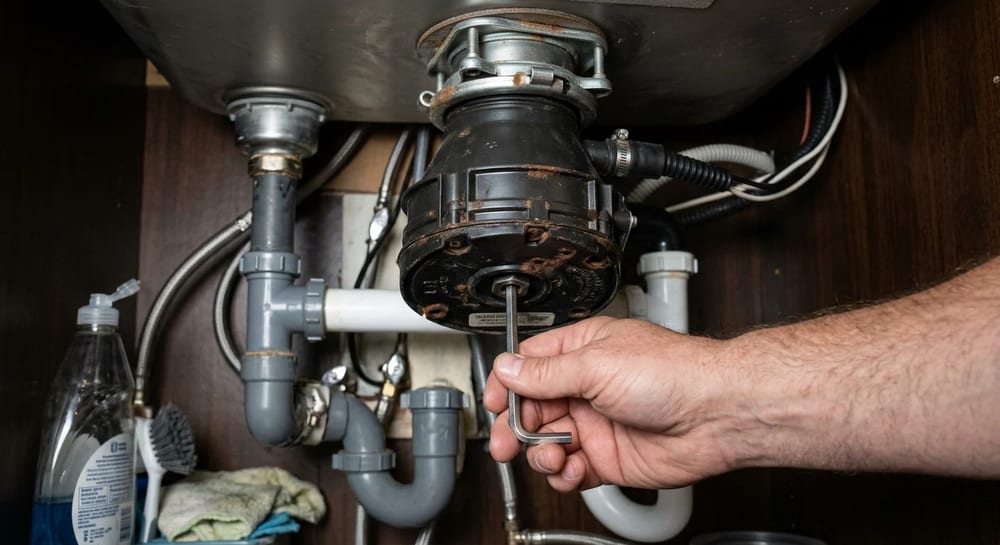
- Locate the hex socket. Look at the very bottom of the disposal cylinder under the sink. You will see a small hexagonal hole in the center.
- Insert the wrench. Insert a standard 1/4-inch Allen wrench (hex key) into the hole. Many disposals come with this wrench taped to the side of the unit.
- Crank the motor manually. Turn the wrench back and forth with force until the grinding plate spins freely in a full circle. This physically breaks the jam.
- Reset the breaker. Push the small red reset button located on the bottom of the unit.
- Restore power and test. Turn the water on, restore the power, and run the unit to flush the cleared debris.
A garbage disposal is a great convenience when used correctly. By scraping your plates, keeping fibrous and starchy foods out of the sink, and running plenty of cold water, your kitchen plumbing will easily survive the heavy cooking season.
- Scrape plates into the trash or compost, not the sink.
- Run cold water for 15 seconds before and after using the disposal.
- Keep a 1/4-inch Allen wrench under the sink to fix simple jams.
- Grind citrus peels and ice cubes to naturally clean the shredder ring.