Mice Behind the Stove? How to Safely Clean and Seal It
Finding mice behind your stove is a major health and fire hazard. Learn how to safely clean up droppings without risking hantavirus, and how to seal the wall gaps permanently.
Full guide Pest Control Learn how to stop ants, mice, termites, and wasps from invading your home and know when to hire a pro.Finding a mouse dropping on the kitchen floor is bad enough. Realizing they have set up camp under your oven is a whole different level of stress. Mice love the warm, undisturbed space behind ranges, often nesting directly in the fiberglass insulation of the oven walls. It is not just gross—it is a serious fire and health risk.
I have pulled out stoves to find wires chewed completely bare, just sitting there waiting to spark. Getting rid of mice behind the stove requires more than just setting a trap under the cabinets. You have to clean up hazardous waste safely, inspect the appliance for damage, and block their secret entry door permanently. If you just trap the mice without sealing the wall, new ones will simply move in next week.
Getting Rid of Mice Behind the Stove: Why They Hide There
The gap behind a freestanding range is the perfect rodent apartment. It offers heat from the oven, a dark environment where humans rarely look, and easy access to crumbs that fall in the crack between the counter and the stove. But the biggest reason they end up there is the built-in highway right behind the appliance.
When a house is built, tradesmen typically cut oversized holes—often 2-3 inches in diameter—in the drywall to run the thick 220V electrical cord or the rigid gas line. Because this area is hidden by the stove, those holes are almost never patched or sealed. Mice use these open wall voids to travel from the basement, crawlspace, or attic directly into your kitchen. They follow the draft of warm air right to the opening.
Safety First: The Danger of Sweeping Mouse Droppings
Your first instinct when seeing a pile of droppings might be to grab a broom and dustpan, or to break out the shop vacuum. Do not do either of these things. Dry sweeping or vacuuming kicks up fine dust that can carry dangerous pathogens, most notably Hantavirus, a severe respiratory disease. In my experience, many people overlook this critical safety step, but it's vital.
The CDC guidelines for cleaning up after rodents are incredibly strict on this point: you must use a wet cleaning method to keep the dust trapped. You will need rubber or nitrile gloves, a mask (an N95 is best to block particulates), paper towels, heavy-duty garbage bags, and a disinfectant spray.
How to Safely Pull Out the Stove and Clean
Cleaning up the mess takes a bit of preparation. You need to handle the visible mess first before you start moving heavy appliances around.
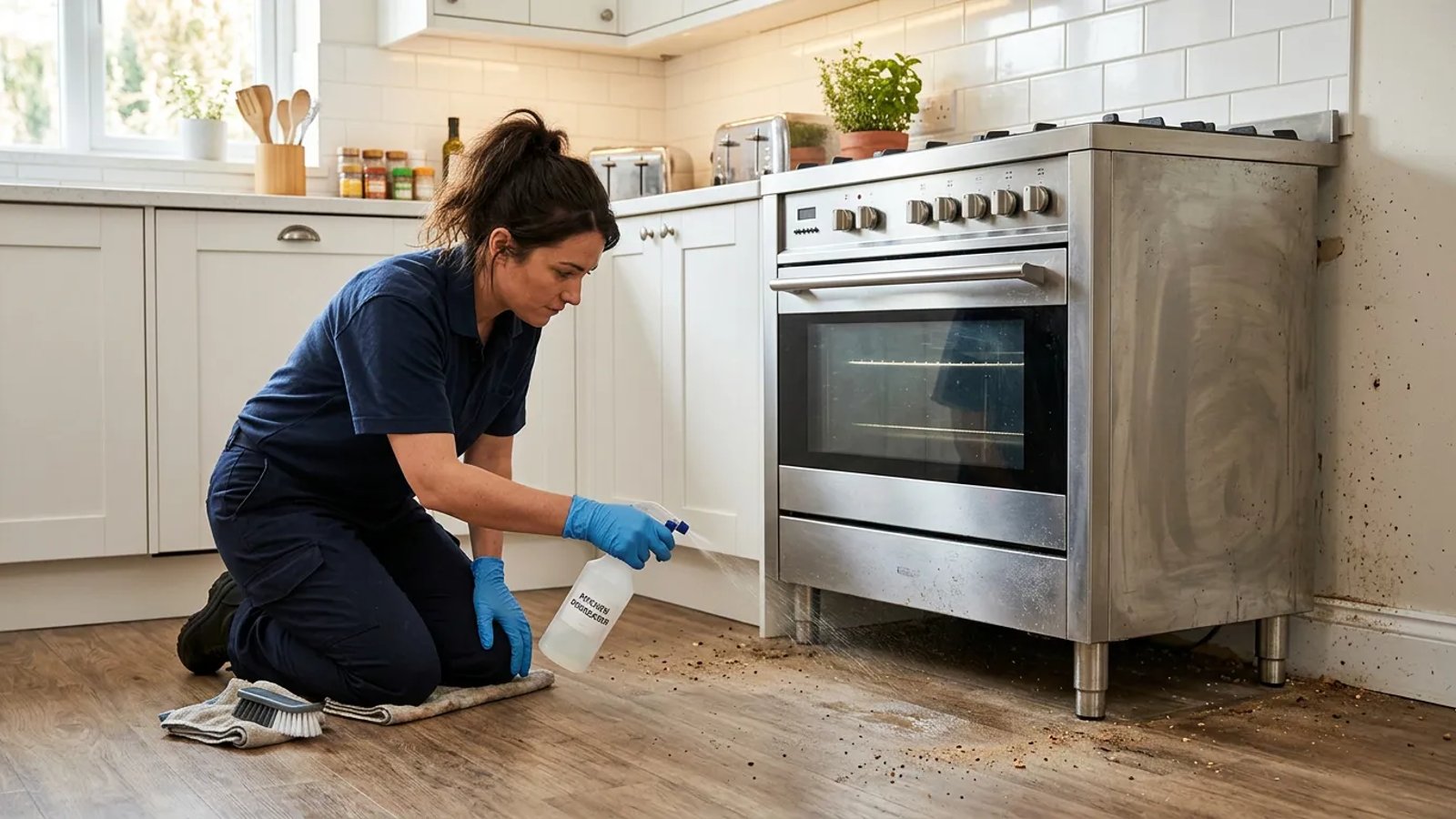
- Mix your disinfectant. A commercial bleach-based cleaner works, or you can mix 1 part household bleach to 10 parts water in a spray bottle.
- Spray the visible droppings. Before moving the stove, spray any droppings you can see near the front legs. Let the liquid sit for 5 minutes to soak the droppings and kill the bacteria.
- Wipe up the front. Using paper towels, pick up the wet droppings and throw them immediately into a plastic garbage bag.
- Pull the stove out. Open the oven door slightly and lift the front of the stove just enough to slide appliance sliders or a piece of cardboard under the front feet. This prevents gouging your linoleum or scratching your hardwood. Gently pull the stove straight out. Do not pull too far—you only have about 3 to 4 feet of slack on the electrical cord or flexible gas line.
- Spray and soak the main mess. Now that the back area is exposed, spray the entire floor, the baseboards, and the lower back panel of the stove. Let it sit for 5 minutes.
- Bag the waste. Wipe everything up with paper towels. Double-bag the waste, tie it tight, and take it to your outside trash can immediately.
Sealing the Entry Points
Once the floor is clean and dry, grab a flashlight and look at the wall behind the stove. You are looking for the spot where the power cord plugs into the wall receptacle, or where the gas pipe comes through the drywall. You will almost certainly see a jagged gap around the pipe or plug.
Last year, I helped a neighbor who kept catching mice in her kitchen but could not figure out where they were coming from. We pulled her gas range out and found a massive, jagged six-inch hole cut for a half-inch gas pipe. The edges of the drywall were greasy and stained dark brown—a classic sign of mice rubbing their fur against the opening as they squeezed through.
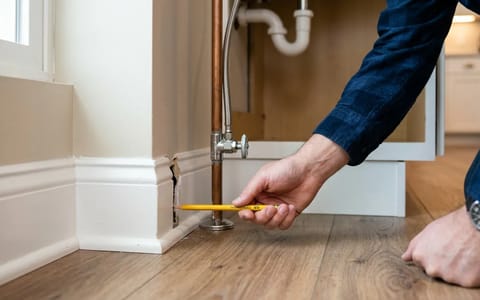
Mice can squeeze through a hole the size of a dime. If a pencil fits, a mouse fits.
To seal these gaps permanently, you need two things: coarse steel wool and expanding pest-block foam. Buy Grade 3 or Grade 4 steel wool from the hardware store. Do not use the fine, soapy steel wool pads from the kitchen aisle; they are too soft and will rust away.
Pull off chunks of the coarse steel wool and pack them tightly into the gap around the pipe or wire. Mice cannot chew through the thick metal fibers—it cuts their mouths. Once the hole is packed tightly with steel wool, spray a layer of expanding pest-block foam over the top to lock the steel wool in place and block the drafts that attract the mice in the first place. Let the foam cure for about an hour.
Checking Appliance Wiring for Chew Damage
Before you push the stove back into place, you need to perform a critical safety check. Mice chew constantly to file down their teeth, and the plastic insulation on appliance wiring is a favorite target. They also love to pull out the fluffy yellow or white fiberglass insulation from the back of the oven to build their nests.
Shine your flashlight on the heavy 220V power cord (or the standard 110V cord if it is a gas range). Look for any rough, chewed edges on the plastic casing. Check the flexible gas line for any signs of scratching or biting. Look at the back panel of the stove itself—if there are wires exposed on the outside of the metal casing, inspect them closely.
If the wiring looks pristine and the wall gap is sealed, you can safely push the appliance back into place. Remove your sliders, ensuring the stove is level and sits flat on the floor.
Dealing with mice behind the stove is an unpleasant chore, but taking the time to do it safely protects your health and your home. By taking away their entry point and ensuring your wiring is safe, you cut off their access to the kitchen and remove a hidden hazard. Keep the crumbs swept up, check behind the stove once a year, and you can cook in peace knowing the space behind your oven is clean and secure.
- Treat mouse droppings as a biohazard; always use the wet-clean method with a disinfectant solution.
- The gap where your 220V plug or gas line enters the wall is the most common rodent highway into a kitchen.
- Coarse steel wool (Grade 3 or 4) is your best defense because mice cannot chew through the metal fibers.
- Chewed appliance wiring is a severe fire risk that requires immediate replacement before you restore power.