What Is a Level?
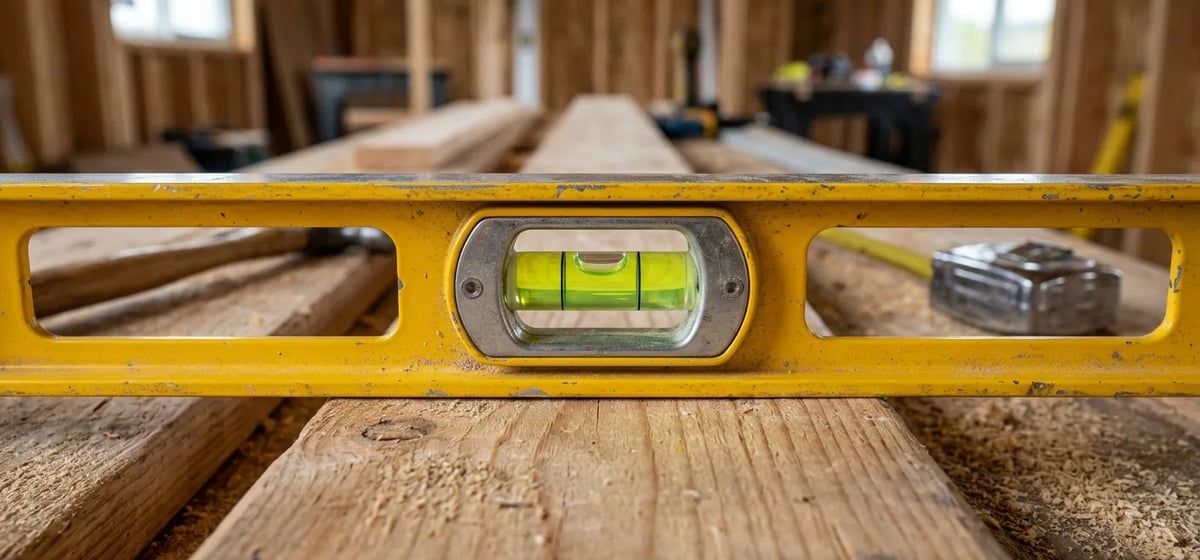
A level is a straight hand tool that tells you if something is perfectly flat or straight up and down. It has small clear tubes filled with colored liquid. Each tube has a single air bubble inside. When you place the tool on a surface, the bubble moves. If the bubble stops exactly between the two printed lines on the tube, your surface is straight. The tool gets its name from the Latin word libella. This means a water level or plumb line. French scientist Melchisedech Thevenot invented the familiar spirit bubble version in 1661. Today, it is one of the most important tools you can own.
Why You Need One
You will use a level constantly around your house. Human eyes are easily tricked by crooked ceilings or sloped floors. If you trust your eyes instead of a tool, your projects will look messy. You need this tool to hang picture frames, mount a TV, or install floating shelves. It is also critical for bigger jobs. When you set up a new washing machine, you must check the top and sides to make sure it sits flat. If it is not flat, it will shake violently and break. You can learn more about taking care of your machines in our guide to Appliances. Even hanging new doors requires a level so they swing shut correctly.
Types of Levels and What They Cost
You will find a few main types at the hardware store. Prices vary based on brand, size, and features.
- Torpedo level: This is a small tool about 9 inches long. It fits in your pocket and is great for tight spaces. Expect to pay 5 to 15 dollars.
- Box beam level: These are longer tools. They usually measure 24 to 48 inches. You use them for bigger jobs like hanging cabinets or drawing straight lines on a wall. They cost 20 to 60 dollars.
- Laser level: This tool shoots a perfectly straight laser line across your room. It is perfect for hanging a gallery wall of photos. These cost 40 to 150 dollars.
We highly recommend buying a basic torpedo level and a 24 inch box level during Your First Week as a Homeowner.
How to Read It Correctly
Reading a level is very easy once you know what the tubes mean. A standard level has at least two tubes. One tube sits parallel to the long edge of the tool. You use this to check if a flat surface like a table is perfectly horizontal. This is called being level. The other tube sits sideways. You use this to check if a vertical surface like a wall is perfectly straight up and down. This is called being plumb.
Place the edge of your tool firmly against your project. Look directly at the tube you need. Do not look at it from an angle. If the bubble touches one of the lines, your surface is tilted. Lift or lower one side of your project until the bubble floats exactly in the middle.
Common Mistakes to Avoid
Many homeowners make simple mistakes when using this tool. The biggest mistake is using a level that is too short for the job. If you are hanging a long shelf, a tiny 9 inch torpedo level will not give you an accurate reading. Any small bump on the wood will throw off the bubble. Always use the longest level that fits your workspace.
Another common error happens when drawing lines on a wall. People often hold the tool against the wall, center the bubble, and then press too hard with their pencil. Pushing hard can slide the tool down the wall before you finish the line. Hold it firmly with one hand spread wide across the middle. Use a light touch with your pencil. This is especially helpful when doing trim work or painting stripes, which you can read about in our guide to Interior: Paint, Drywall & Trim.
Finally, make sure the surface of your tool is clean. Dried paint or mud on the edge will lift it slightly off your project. This gives you a false reading. Wipe it down with a damp rag after every project to keep it accurate.