What is a crawlspace?
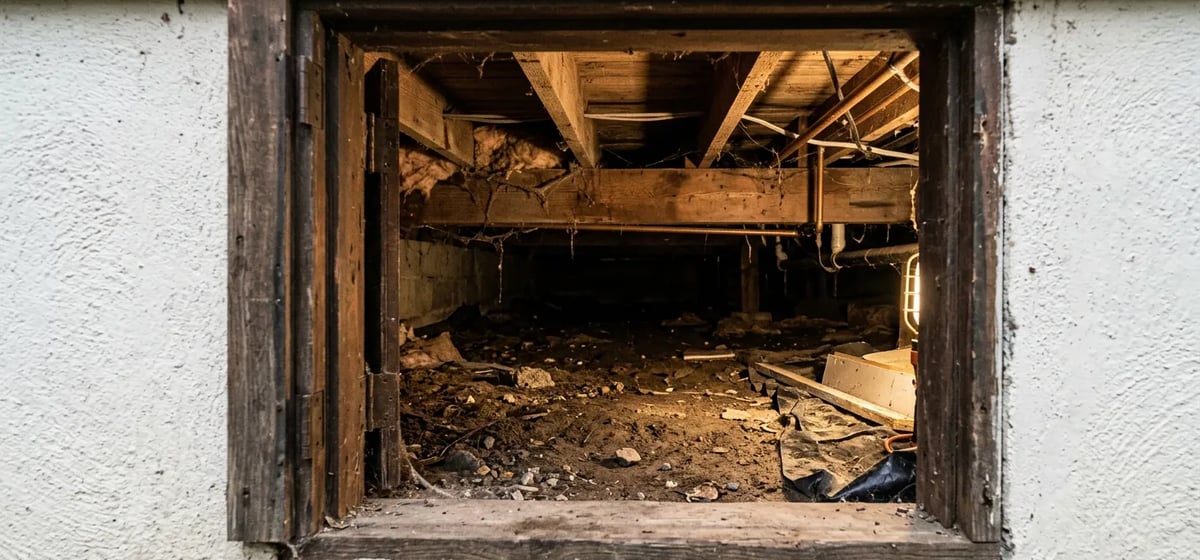
A crawlspace is an unfinished area under the first floor of your house. It is not tall enough to stand up in. The name is a literal description of the space. You have to crawl on your hands and knees to move around inside it. Builders made this foundation style popular in the middle of the 20th century. It gave buyers a cheaper alternative to digging a full basement. Today, you will find crawlspaces in many homes across the United States. They lift your house off the damp dirt. This gap protects your living area from ground moisture.
Why your crawlspace matters
Even though you rarely go down there, this space holds vital parts of your home. It provides easy access to your plumbing pipes, electrical wires, and heating ducts. If a pipe bursts or a wire needs fixing, a worker can crawl under the house to reach it. You can learn more about how these pipes run under your floors in our Plumbing guide. Your crawlspace also supports the weight of your entire house. The wooden joists and beams right above the dirt hold up your floors. If these wooden parts stay dry and healthy, your floors stay flat and strong. If they rot, your floors will sag.
Common problems to watch for
You must keep this area dry to prevent mold and wood rot from destroying your floors. Dirt floors naturally release moisture into the air. If that wet air gets trapped under your house, it causes big problems.
- Moisture and mold: Wet wood grows mold very fast. Mold eats the wood and makes it weak.
- Sagging floors: When the wooden beams rot from too much moisture, your floors above will start to bounce or sink.
- Pests: Mice, termites, and spiders love dark and damp places. A wet crawlspace is an open invitation for bugs and rodents. Read our Pest Control guide for tips on keeping them out.
- Bad smells: Musty odors from the damp dirt can seep up into your living room through small cracks.
Maintenance and repair costs
Taking care of your crawlspace saves you money in the long run. The most basic protection is a vapor barrier. This is a thick plastic sheet laid over the dirt floor. It stops ground moisture from rising into the air. A basic vapor barrier usually costs 500 to 1,500 dollars to install. Prices vary based on the size of your home and local labor rates.
For better protection, many homeowners choose full encapsulation. This process seals the entire space. Workers cover the floor and walls with heavy white plastic. They also seal the vents and add a dehumidifier. Encapsulation keeps the space completely dry. This major upgrade typically costs 3,000 to 8,000 dollars. Again, ranges vary depending on where you live and how much cleanup the space needs. If you need to fix rotten wood or sagging beams, expect to pay 1,500 to 5,000 dollars for structural repairs. You can read more about structural health in our Foundation & Structure guide. Check your crawlspace at least once a year with a strong flashlight. Look for torn plastic, hanging insulation, or signs of water. Catching small problems early keeps your home safe and solid.