Solar Panel Cost by State: 2026 Prices and Incentives

With the 30% federal solar tax credit officially expired, your zip code now determines your installation price. Here is a breakdown of 2026 solar costs and local incentives by state.
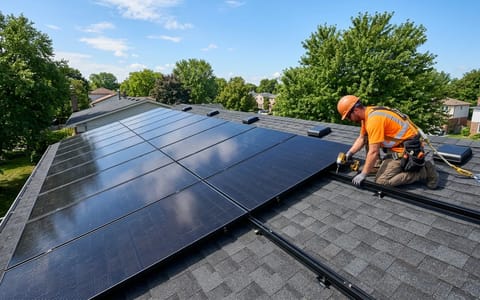
Full guide Solar Panels Learn what solar panels cost, how they work, and if they make financial sense for your home.If you are looking to install solar panels this year, you are facing a vastly different financial landscape than your neighbors did just a few months ago. The 30% federal residential solar tax credit officially expired on December 31, 2025. For years, that massive federal discount masked the underlying regional differences in installation prices. Now, the true price of going solar depends entirely on your local geography.
Without a blanket federal discount to rely on, homeowners need hard, localized data. The solar panel cost by state has become the single most important metric for anyone trying to budget for a new system in 2026. Whether you live in a sun-drenched southern state or a cloudy northern climate, your local labor rates, utility rebates, and state tax laws will dictate your final bill.
Let's break down the current state of solar pricing, look at why costs vary so wildly across state lines, and map out the remaining financial lifelines you can use to lower your out-of-pocket expenses.
What is the average solar panel cost by state in 2026?
To understand the current market, we need to talk in terms of "price per watt." This is how the solar industry standardizes costs, regardless of whether you are buying a small 5-kilowatt (kW) system for a townhouse or a massive 15kW array for a sprawling ranch. In 2026, the national average gross cost for residential solar sits between $2.50 and $3.50 per watt.
For a typical 8kW (8,000 watts) system, that translates to a gross price tag of $20,000 to $28,000 before any local incentives are applied. However, "national averages" are virtually useless when you are footing the bill. A homeowner in Texas will pay a drastically different price than a homeowner in Massachusetts for the exact same hardware.
These figures represent the gross cost—the number the installer puts on the initial contract. The net cost, which is what you actually pay after state tax credits and utility rebates, will be lower. But the starting line varies by thousands of dollars just based on your zip code.
Why do solar prices fluctuate so much across state lines?
If a monocrystalline solar panel costs the same to manufacture whether it is shipped to Nevada or New Jersey, why does the final installation price vary by up to 30%? For example, an 8kW system that costs $20,000 in Arizona might cost $27,000 in Massachusetts despite using identical panels. The answer comes down to local economics, specifically labor, permitting, and supply chain maturity.
Labor is the largest variable. Installing solar panels requires specialized, licensed electricians and experienced roofers. In states with high cost-of-living metrics and strong union presence, hourly labor rates are significantly higher. When I reviewed three recent quotes for a standard 8kW system in Ohio last month, the local labor rates made a $4,000 difference compared to identical hardware I saw quoted for a relative in California.
Permitting and interconnection fees also play a massive role. Some states have streamlined, standardized permitting processes that cost a flat $100 fee and take three days to process. Other states allow individual municipalities to set their own rules, leading to complex engineering reviews, multiple inspections, and fees that can top $1,000. Installers pass these administrative costs directly to the homeowner.
Which are the cheapest states for solar in 2026?
In my experience, when searching for the cheapest states for solar, you will generally find the Sun Belt leading the pack. Arizona, Texas, Nevada, and Florida consistently offer the lowest gross installation costs. These states benefit from a highly competitive installer market, streamlined local permitting, and lower average labor rates.
However, a low installation price does not automatically equal a great financial investment. The true value of solar is measured by its payback period—how many years it takes for your energy savings to cover the cost of the system. This requires looking at your local utility rates.
A cheap solar installation in a state with low electricity rates often takes longer to pay off than an expensive system in a state with high utility bills.
For example, while installing solar in Massachusetts is expensive upfront, the state also has some of the highest electricity rates in the country. A homeowner there might pay off their expensive system in six years because they are offsetting a massive monthly utility bill. Meanwhile, a homeowner in a state with cheap electricity might take twelve years to break even on a low-cost solar array. When evaluating your solar cost by state, always compare the upfront price against your current monthly power bill.
State and Local Incentives: Your New Financial Lifelines
With the federal tax credit gone, state and local programs are the only remaining tools to drive down your solar prices in 2026. These incentives are highly localized, meaning your neighbor three towns over might qualify for a program that you do not. Here is a breakdown of the four main types of local incentives you need to hunt for.
State-Specific Tax Credits
Several states offer their own income tax credits for residential solar installations. Unlike deductions, which simply lower your taxable income, a tax credit is a dollar-for-dollar reduction of the income tax you owe the state. New York, for instance, has historically offered a 25% tax credit capped at $5,000. Maryland, Massachusetts, and South Carolina also have robust state-level tax credits. You claim these when you file your state taxes the year after your installation.
Local Utility Rebates
Many utility companies offer cash rebates to homeowners who install solar. They do this because distributed residential solar helps them manage peak demand on the grid, saving them money on infrastructure upgrades. These rebates are usually calculated per watt. For example, a utility might offer $0.20 per watt installed, which translates to a $1,600 cash rebate on an 8kW system. These funds are often limited and distributed on a first-come, first-served basis each calendar year.
Property Tax Exemptions
Adding a $25,000 solar array to your roof increases the appraised value of your home. Under normal circumstances, an increase in home value results in higher annual property taxes. Fortunately, many states have passed solar property tax exemptions. This means the added value of the solar panels is completely excluded from your property tax assessment, saving you hundreds of dollars a year in taxes over the lifespan of the system.
Net Metering Rules
Net metering is arguably the most important state policy for solar owners. When the sun is shining at noon, your panels likely produce more power than your house is using. Net metering laws force the utility company to buy that excess power from you. The rate they pay varies by state. Some states mandate a 1-to-1 retail rate (they pay you exactly what they charge you), while others use a lower wholesale rate. Strong net metering laws can cut your payback period in half.
To find the exact incentives available in your specific zip code, I highly recommend checking the Database of State Incentives for Renewables & Efficiency (DSIRE). It is maintained by NC State University and is the most accurate, regularly updated source for local solar policies.
How to Calculate Your True Out-of-Pocket Cost
Figuring out your actual budget requires a bit of math. Do not rely on generic online calculators; they often use outdated federal tax credit data. Grab a piece of paper and follow this framework to determine your true out-of-pocket cost.
- Determine your required system size. Look at your past 12 months of utility bills to find your total annual kilowatt-hour (kWh) usage, then ask an installer what size system (in kW) will offset that usage.
- Gather three local quotes. Get gross pricing from three reputable local installers to establish the baseline cost for your specific roof and electrical setup.
- Subtract upfront utility rebates. If your local power company offers a cash rebate, subtract this from the gross cost immediately, as it is often paid out shortly after the system is turned on.
- Calculate your state tax credit. Apply your state's specific tax credit percentage to the remaining balance, keeping in mind any maximum caps (e.g., capped at $1,000).
- Subtract the tax credit to find your net cost. Subtract the state tax credit amount from your running total to see the final, true cost of your solar investment.
Should you upgrade your electrical panel before going solar?
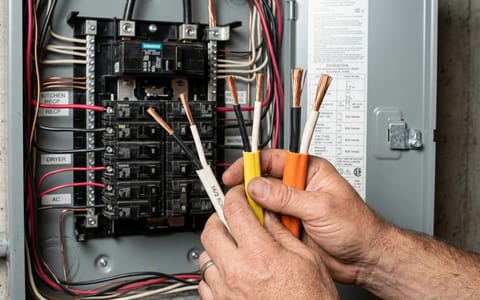
One hidden cost that catches many homeowners off guard is the electrical panel upgrade. Solar panels generate electricity that must be safely fed into your home's main breaker box. If your home was built before 1990, there is a strong chance you have a 100-amp or 150-amp electrical panel. Modern solar arrays, especially when paired with battery storage or electric vehicle chargers, almost always require a robust 200-amp panel.
Upgrading a panel is not a DIY job. It requires pulling a permit, coordinating a temporary power shutoff with the utility company, and rewiring the main service entrance.
If your panel is located in an awkward spot or your local codes require moving the meter outside, that price can climb even higher. Factor this into your initial budget so you are not surprised when the installer does their site survey.
Navigating the solar panel cost by state in 2026 requires more legwork than it did in the past. Without a massive federal tax credit to lean on, your financial success depends entirely on understanding your local market. Take the time to research your state's specific tax credits, call your utility company to verify their net metering rules, and never settle for the first quote you receive. A well-planned solar installation is still one of the best ways to protect yourself against rising utility rates, provided you do the math upfront.
- Check the DSIRE database to find exact, up-to-date 2026 state and local solar incentives for your specific zip code.
- Budget an extra $1,500 to $2,500 if your home is older and requires a 200-amp electrical panel upgrade to handle the new solar load.
- Always compare at least three local quotes to find the true market rate for labor and equipment in your area.
- Ask your utility company for their current 2026 net metering policy before signing any solar contract.