Cost of Home Solar System: The True 2026 Price Guide
The 30% federal solar tax credit ended on January 1, 2026. Here is a transparent, realistic breakdown of what home solar systems actually cost today.
Full guide Solar Panels Learn what solar panels cost, how they work, and if they make financial sense for your home.If you are researching the cost of home solar system installations right now, you are probably walking into a trap. A quick search online pulls up thousands of articles promising massive savings, rapid payback periods, and an automatic 30% discount courtesy of the federal government. There is just one massive problem: the federal residential solar tax credit officially expired on January 1, 2026.
Most of the budgeting advice floating around the internet is completely outdated. In my experience, homeowners who expect a government rebate to shave ten thousand dollars off their final bill are getting a nasty shock at the kitchen table when the sales representative hands them the actual 2026 estimate. If you want to budget accurately for renewable energy this year, you need hard numbers based on today's reality.
Let's break down exactly what solar panels cost right now, what drives those prices up or down, and where you can still find legitimate savings.
What is the true cost of a home solar system in 2026?
Without the federal tax credit to soften the blow, the gross cost of a solar installation is now the actual price you pay. In 2026, the national average cost for residential solar panels hovers between $3.10 and $3.50 per watt. This price includes the panels, inverters, mounting hardware, wiring, and the labor to install them.
To figure out your baseline estimate, you need to know what size system your house requires. The average American home uses a system sized between 6 kilowatts (kW) and 10 kW, depending on square footage, air conditioning usage, and overall energy habits.
These numbers represent cash prices. If you choose to finance your system through a solar loan, you will also need to account for dealer fees and interest rates, which can add 15% to 25% to the total cost over the life of the loan.
The 2026 Reality Check: Life After the Federal Tax Credit
For over a decade, the Investment Tax Credit (ITC) was the single biggest driver of residential solar adoption in the United States. It allowed homeowners to deduct up to 30% of their total installation costs directly from their federal taxes. That era is over. The expiration of the ITC means the upfront financial hurdle for solar is higher than it has been in years.
This shift has completely changed the math on solar payback periods. A system that might have paid for itself in six years under the old rules might now take nine or ten years to break even. It also means you need to be highly skeptical of aggressive sales pitches.
What Drives Your Solar Installation Cost?
From panel efficiency to roof complexity, several factors can sway your final bill by thousands of dollars.
Last month, I sat down with a neighbor to review three different solar bids for a standard 8kW system on an asphalt shingle roof. The price swing between the highest and lowest bid was nearly $6,000. That difference had nothing to do with corporate greed; it was entirely based on hardware choices, labor warranties, and add-ons.
I always tell people that buying solar panels is a lot like buying a car. The base model generates power just fine, but the premium upgrades are where the final price tag balloons. Here is what shifts the cost:
Equipment Quality
Not all solar panels are created equal. High-efficiency monocrystalline panels from top-tier manufacturers degrade slower and produce more electricity in low-light conditions, but they cost significantly more upfront. Similarly, your choice of inverter matters. String inverters are the cheapest option, but if one panel is shaded, the whole system's output drops. Microinverters—which attach to each individual panel—solve this problem but add $1,000 to $2,000 to your total bill.
Roof Complexity and Material
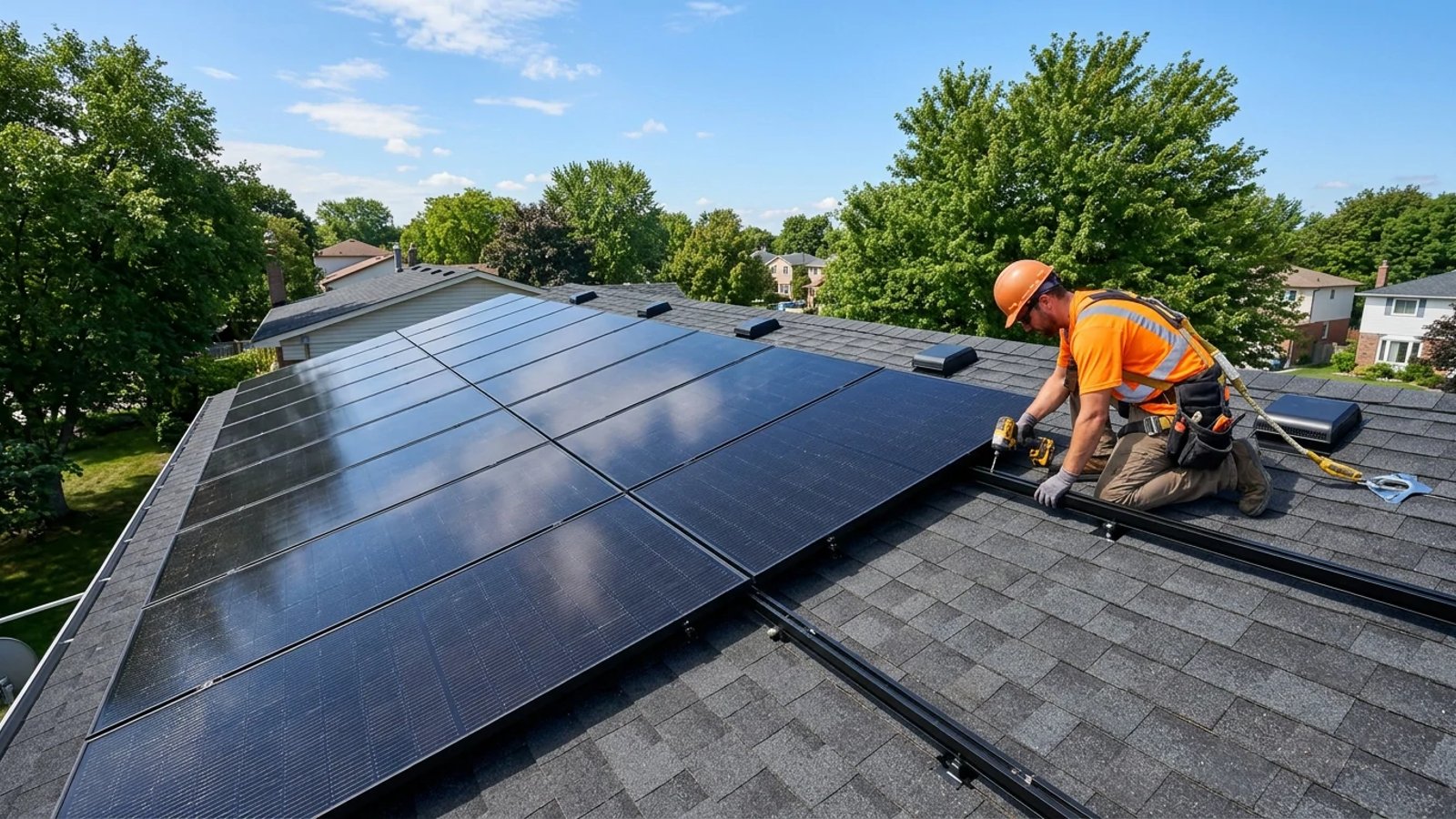
Installers base their labor costs on how difficult it is to get the panels onto your roof. A single-story home with a standard 4/12 pitch asphalt shingle roof is the easiest and cheapest scenario. If you have a steep three-story roof, multiple dormers that require breaking the panels into smaller arrays, or fragile roofing materials like clay tile, slate, or metal standing seam, expect to pay a premium for specialized mounting hardware and extra labor hours.
Battery Storage
Solar panels alone will not keep your lights on during a grid outage. For that, you need a battery backup system. Adding a standard 10kWh to 13.5kWh lithium-ion battery to your installation will increase your total cost by $8,000 to $12,000. Batteries are excellent for energy independence, but they drastically extend your financial break-even point.
Where Can You Still Find Solar Savings?
Just because the federal government pulled back its funding does not mean you are entirely on your own. The responsibility for renewable energy incentives has simply shifted to the state and local levels. Depending on where you live, you can still chop thousands off your installation cost.
State-level tax credits are the best place to start. States like New York, Massachusetts, and Maryland still offer robust income tax credits for residential solar. Additionally, many local utility companies offer cash rebates for installing panels or batteries, as it helps them manage peak grid demand.
You also need to understand your state's net metering laws. Net metering allows you to sell excess electricity back to the grid in exchange for credits on your utility bill. Strong net metering policies are what make solar a good investment, even without federal tax breaks. To find out exactly what incentives are active in your zip code this year, check the Database of State Incentives for Renewables & Efficiency (DSIRE), funded by the U.S. Department of Energy.
How to Vet Local Installers and Compare Bids
Because the market is tougher in 2026, some of the smaller, less stable solar companies are going out of business. It is critical that you hire an installer who will still be around in ten years to honor their warranty. Never accept the first bid you receive.
- Request three local quotes. Stick to local or regional installers rather than massive national conglomerates, as local crews generally have better customer service and understand your specific permitting laws.
- Check the hardware specifications. Ensure all three quotes are quoting similar system sizes (kW) and compare the degradation warranties on the specific panels they plan to use.
- Verify the workmanship warranty. The manufacturer covers the physical panels, but the installer covers the holes they drill into your roof. Look for a minimum 10-year roof penetration warranty.
- Read the financing fine print. If you are using a solar loan, look past the monthly payment and find the "dealer fee." Some low-interest solar loans hide massive 20% dealer fees in the total principal.
Transitioning to solar power remains a highly effective way to lock in your electricity rates and protect yourself against rising utility costs. The math has changed in 2026, requiring a bit more upfront capital and a longer view of your return on investment. By understanding the true costs, avoiding outdated tax credit promises, and thoroughly vetting your local installers, you can make a confident, budget-conscious decision for your home.
- Ignore online articles published before 2026 that factor a 30% federal discount into their final price estimates.
- Expect to pay between $3.10 and $3.50 per watt for a standard residential solar installation this year.
- Always get at least three local quotes to compare equipment quality, labor warranties, and financing terms.
- Have your roof inspected by an independent roofer before signing a solar contract to avoid costly removal and reinstallation fees later.