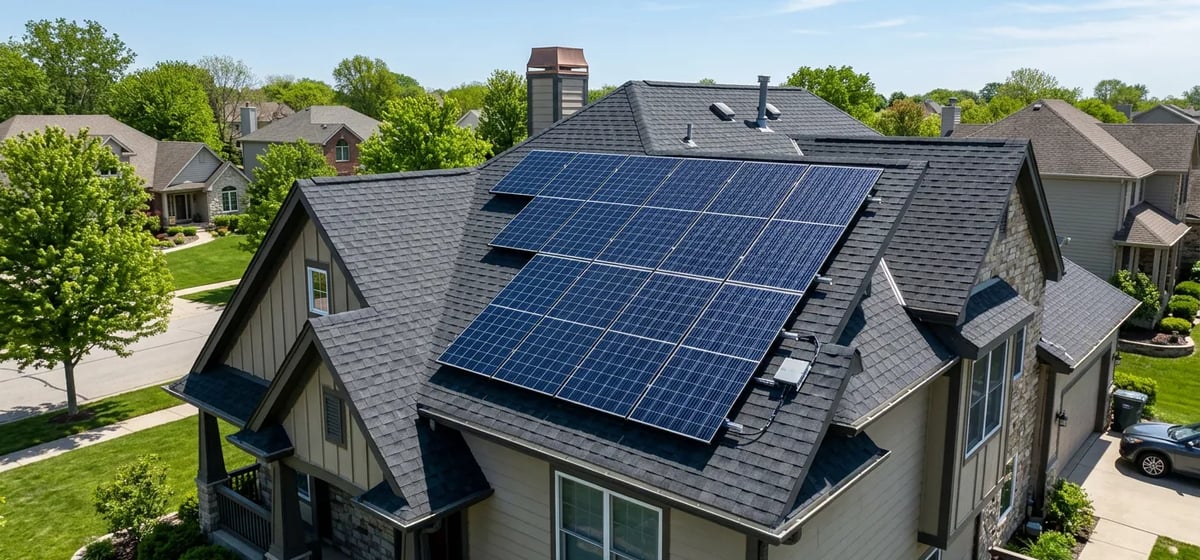
What is a solar array?
A solar array is a complete group of solar panels wired together to generate electricity for your home. You can think of it as a single power plant sitting on your property. The word array comes from the Old French word areer, which means to put in order. Solar engineers used this term to describe multiple panels arranged in a neat grid. While a single panel produces a small amount of power, an entire array works as a team to run your household.
Most homes need a full array to make a real dent in their utility bills. The size of your setup determines how much of your daily energy needs the sun can cover. Your installer will calculate this based on your past utility bills. You can learn more about individual panels in our guide to Solar Panels.
Why it matters to you
Your solar array is the main engine of your home energy system. It captures sunlight and turns it into direct current electricity. A device called an inverter then changes this power into alternating current, which is what your home actually uses. This setup ties directly into your Electrical panel to power your lights, fridge, and air conditioner.
A well-designed array saves you money every month by lowering your utility bills. It also increases your overall home value. When you produce your own power, you rely less on the local utility company. In many states, you can even sell extra electricity back to the grid. The utility company gives you a credit on your bill for the power your array sends them.
Where you put them
Most homeowners install their solar array on the roof. This keeps the panels out of the way and catches the most sunlight. A south-facing roof is the best spot, but east and west sides work well too. If you have a large yard, you might choose a ground-mounted array instead. Ground mounts are easier to clean and adjust, but they take up valuable lawn space.
What it costs
Buying a solar array is a major investment for any homeowner. The total price depends on how much energy you use and where you live. In the US, a typical residential solar array costs between 15,000 and 30,000 dollars before federal and state tax credits. Keep in mind that prices and ranges vary widely based on your local market and the specific equipment you choose.
Here are a few things that change the final price tag:
- The total number of panels in the array.
- The type of inverter you use to convert the power.
- Labor rates in your specific city or town.
- Whether you add a battery backup system to store power for the night.
- Any required upgrades to your main electrical panel.
What to watch for
Once your solar array is up and running, it needs very little work. Rain usually washes away dirt, pollen, and dust. However, you should still keep an eye on a few things to make sure your system runs at peak performance all year long.
Watch out for growing trees around your property. A small sapling today can cast a huge shadow in five years. Shade is the biggest enemy of a solar array. Even a little bit of shade on one corner of the array can lower the output of the whole system. You should also check your inverter display or monitoring app once a month. A green light usually means everything is working fine. A red light or error message means you need to call your installer for a checkup.