What an accumulator is
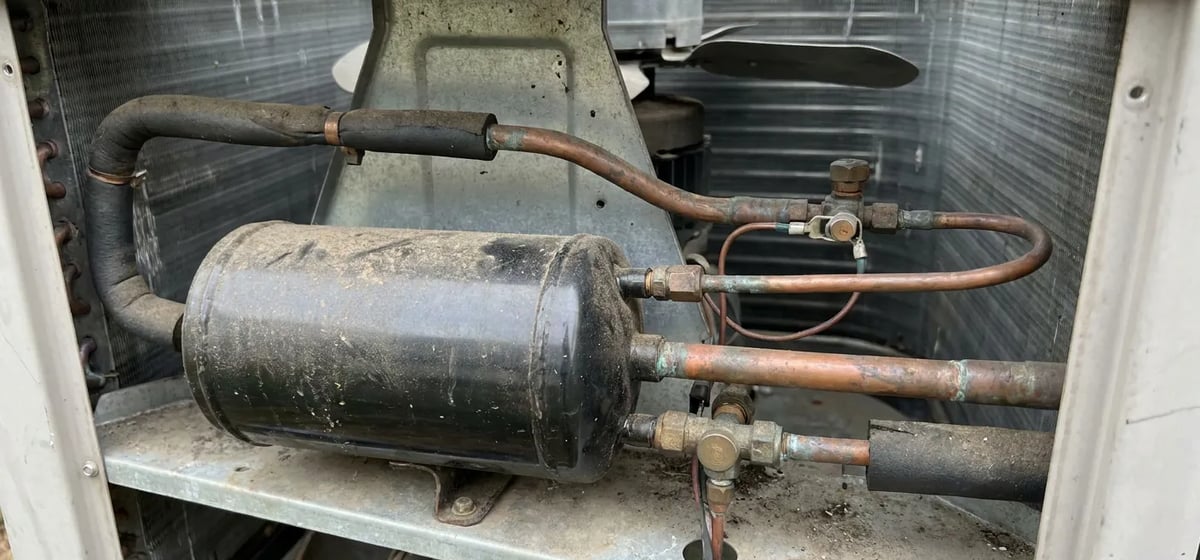
An accumulator is a metal tank attached to the outside unit of your air conditioner or heat pump. It acts as a safety trap for the system. The word comes from the Latin word accumulare, which means to heap up or gather. Engineers used it to describe a tank that gathers extra fluid in a mechanical system.
In your home heating and cooling setup, this tank gathers liquid refrigerant. It sits right on the suction line just before the compressor motor. Its only job is to catch liquid before it can enter the compressor and cause major damage.
How it protects your system
Your HVAC & Climate Control system uses a special chemical called refrigerant to move heat. This chemical constantly changes back and forth between a liquid and a gas as it travels through copper pipes. The heart of this system is the compressor. The compressor is a large motor that pumps the refrigerant through the lines.
Compressors are built to pump gas. They cannot pump liquid. If liquid refrigerant enters the compressor, it causes a problem called liquid slugging. Since liquids do not compress, the force can bend or break the metal parts inside the motor. This will destroy the compressor completely.
The accumulator stops this from happening. When the refrigerant flows back toward the compressor, it enters the accumulator tank first. Any liquid drops to the bottom of the tank. Only the gas rises to the top and moves on to the compressor. The liquid stays safely in the tank until it warms up enough to boil into a gas.
Why heat pumps need them
You will almost always find an accumulator on a heat pump. Heat pumps are unique because they provide both heating and cooling. To switch from cooling your house in the summer to heating it in the winter, the system reverses the flow of the refrigerant.
When the system switches gears or goes into a defrost cycle, it often sends a sudden surge of liquid refrigerant back down the line. Without an accumulator to catch this sudden flood of liquid, the compressor would fail very quickly. If you have a standard air conditioner that only cools, you might still have an accumulator, but they are much more common on heat pumps.
What to watch for
Accumulators are simple metal tanks with no moving parts. They do not break in the traditional sense. However, they sit outside in the rain, snow, and dirt. Over time, the steel tank can rust. This is the most common problem homeowners face with an accumulator.
- Surface rust: A little rust on the outside is normal as the unit ages. You do not need to replace it just because it looks old.
- Deep rust and leaks: If the rust eats through the metal, the pressurized refrigerant will leak out. You might notice your system blowing warm air instead of cold.
- Oily spots: Refrigerant oil travels with the chemical. If you see a dark, oily stain on the bottom of the tank, you likely have a leak.
Replacement costs
Fixing a rusted or leaking accumulator is strictly a job for a licensed professional. It involves handling regulated chemicals and welding copper pipes. The pro must remove the remaining refrigerant, cut out the old tank, weld in the new one, test for leaks, and recharge the system.
The part itself is relatively cheap. A new accumulator tank usually costs 100 to 250 dollars. However, the labor and the cost of new refrigerant make the total bill much higher. You can expect to pay 600 to 1200 dollars for a complete replacement, though exact prices vary by location and system size. Before you agree to a major repair, it is smart to read up on Hiring Contractors & What Things Cost so you know what to expect from a quote.