What Underlayment Is
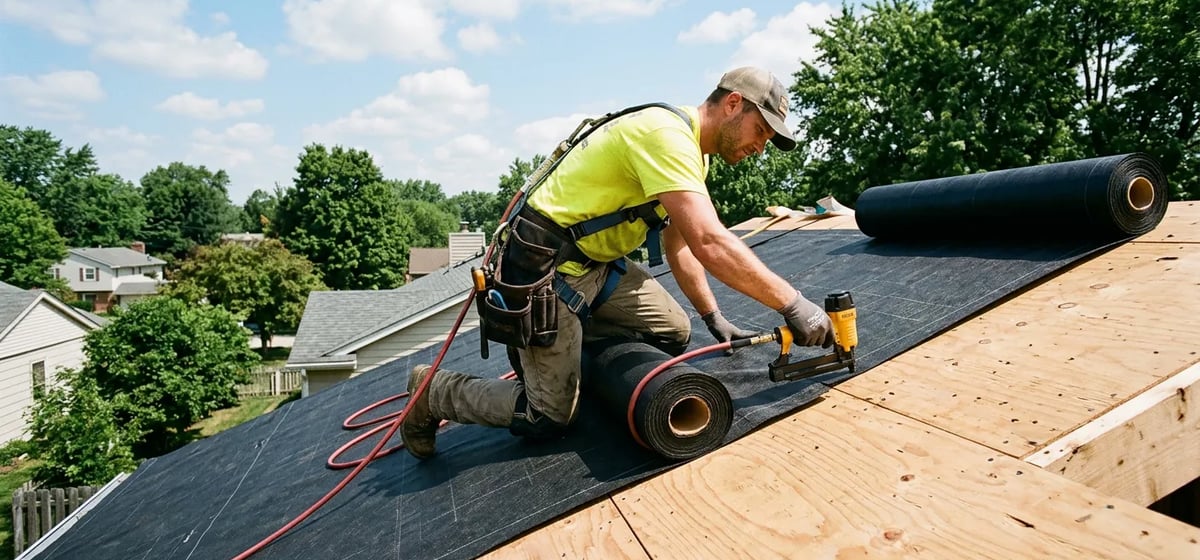
Think of your roof as a sandwich. The wooden boards on top of your house make the base. The shingles sit on the very top. Underlayment is the protective layer right in the middle. It's a thin sheet of material rolled out over the bare wood before the roofer nails down the shingles. It acts as a second skin for your home. If a strong storm blows a shingle off, this layer stops water from getting inside your house. It also gives your home an extra shield against rain and melting snow. Builders have used this term since the early 1900s when asphalt roofing first became popular. The word combines under and lay, meaning a layer placed beneath another material. You will learn more about how all these parts work together in our guide to Roofing.
Why It Matters to You
Shingles do a great job of blocking rain and snow. But they aren't perfect. High winds can lift them up during severe weather. Heavy rain can blow sideways and sneak between the cracks. Winter ice dams can push water backward under the edges of the shingles. Without underlayment, that trapped water would soak right into your bare roof deck. Wet wood rots very quickly. Once the wood rots, water drips into your attic and eventually ruins your ceilings. This hidden layer buys you vital time. It protects your house while you wait for a roofer to fix a missing shingle. It also keeps the chemicals in your asphalt shingles from baking into the wood deck during hot summer months. It even helps the shingles lay flat and look smooth from the street.
Types You Will See
Roofers mostly use three types of underlayment. The type they choose depends on your local weather and your budget.
- Felt paper: This is the old standard. It's heavy paper soaked in asphalt to make it water resistant. Builders have used it for many decades. It's cheap but it can tear easily if the roofer steps on it wrong.
- Synthetic: This material is made from tough woven plastics. It's very strong and lightweight. It resists tearing and lays perfectly flat on the roof. Most modern roofers prefer this type because it's safer to walk on and lasts longer.
- Peel and stick: This type has a sticky adhesive on the back. Roofers stick it directly to the bare wood. It seals tightly around every single nail hole. Roofers usually put this thick, waterproof layer near the edges of the roof and in the valleys to stop winter ice dams.
What to Watch For
You usually can't see your underlayment once the roof is finished. The shingles cover it completely. But you might spot problems during a roof replacement or a home inspection. If you are Buying a Home, the inspector will look up in the attic. They will carefully check the underside of the roof deck for dark water stains. Stains mean water got past the shingles and the underlayment completely failed. When you hire a crew to replace your roof, they need to remove all the old material.
What It Costs
Replacing underlayment happens when you replace your entire roof. The cost of this specific material makes up just a small part of the total bill. Felt paper costs about 15 to 30 cents per square foot. Synthetic rolls cost between 20 and 40 cents per square foot. Peel and stick is the most expensive option at 50 cents to 1 dollar per square foot. For a typical home, the total underlayment material adds 400 to 800 dollars to the roofing job. Keep in mind that material and labor prices vary based on where you live and the size of your roof. You can read more about typical home repair bills in our guide to Hiring Contractors & What Things Cost.