What is aeration?
The term comes from the Greek word aer, which means air. Landscapers adopted this word to describe the act of introducing air into dense, packed soil. Over time, the soil in your yard gets squeezed together tightly. This happens from kids playing, pets running, mowing the lawn, and even heavy rain. When dirt is hard and packed, grass roots cannot breathe or grow. Aeration fixes this problem.
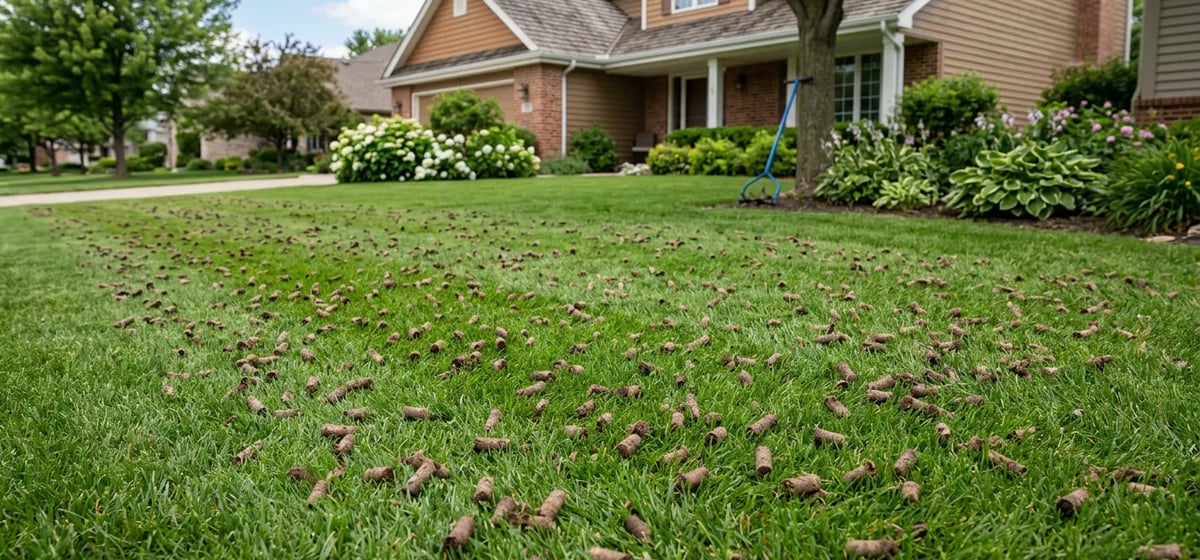
During the process, a heavy machine drives over your grass. It punches small holes into the ground and pulls out little plugs of dirt. These plugs are usually two to three inches long. They sit on the surface of your yard and slowly melt back into the earth over a few weeks. The empty holes leave space for the grass roots to stretch out. They also let water, air, and fertilizer sink deep into the soil where the grass needs it most.
Why your yard needs it
You might wonder if your yard really needs this extra step. If water pools on your grass after a rainstorm, your soil is likely too hard. Grass that looks thin, feels spongy, or turns brown easily in the summer is another big warning sign. A thick layer of dead grass stems, called thatch, can also build up on the surface. Aeration punches right through that dead layer. This helps the thatch break down naturally.
When you open up the soil, your lawn grows thicker and greener. A healthy, thick lawn naturally fights off weeds and disease much better than a thin lawn. If you are trying to improve your Landscaping, Drainage & Outdoor areas, this is one of the most helpful things you can do for your grass.
When and how to do it
The best time to aerate depends on the type of grass you have in your yard. You want to do it right before the grass enters its fastest growing season. This helps the lawn recover quickly from the machine damage.
- Cool season grasses: If you have Kentucky bluegrass, fescue, or ryegrass, early fall is the absolute best time.
- Warm season grasses: If you have Bermuda, Zoysia, or St. Augustine grass, late spring or early summer is best.
There are two main ways to aerate a lawn. Spike aerators just poke holes in the dirt with solid metal spikes. Core aerators use hollow tubes to actually pull out plugs of soil. You always want to use a core aerator. Poking holes with solid spikes just pushes the dirt to the sides and makes the compaction worse.
Costs and hiring a pro
You can rent a core aerator from a local hardware store or tool rental shop. Rental costs usually run from 70 to 100 dollars for a half day. Keep in mind that these machines are extremely heavy, bulky, and hard to turn. They bounce around a lot on hard ground. If you have a large yard, a steep hill, or a bad back, doing it yourself is a very tough job.
You might want to hire a local landscaping company to handle it. Paying a professional usually costs between 100 to 250 dollars for a standard suburban yard. Prices vary based on your location and the exact size of your property. For many people, the small price difference between renting the machine and hiring a professional makes it worth paying someone else. If you are struggling to decide, reading our guide on DIY vs. Hiring a Pro can help you make the right choice for your budget and schedule. If you are new to yard care, you can also check out Your First Year as a Homeowner for more seasonal maintenance checklists.