What an Anode Rod Is
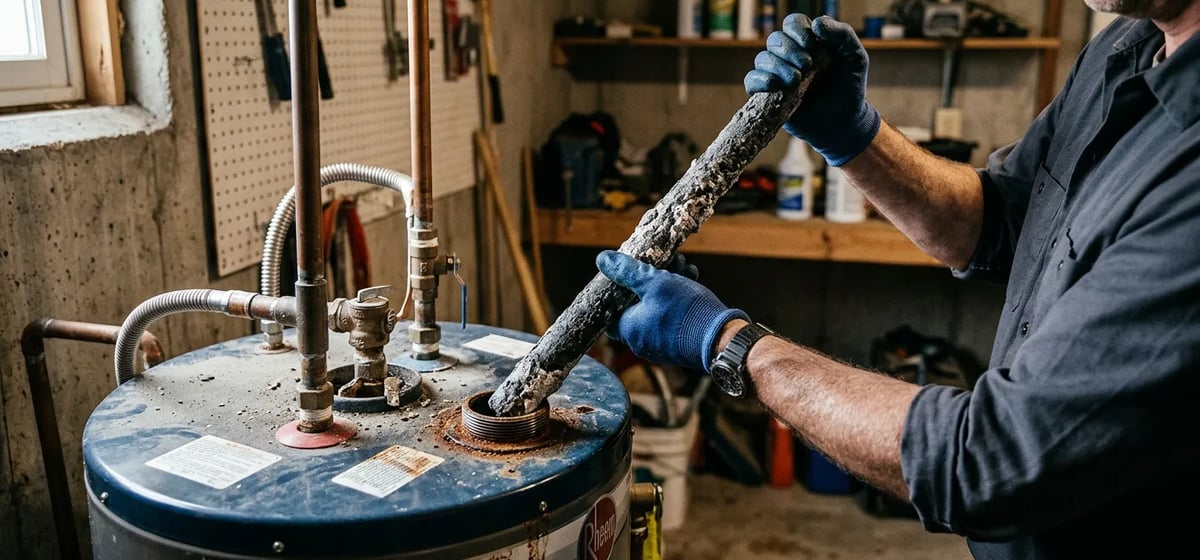
An anode rod is a long metal stick screwed into the top of your water heater. It reaches down deep into the tank. Its main job is to protect the inside of the tank from rusting. Water naturally eats away at metal over time. The anode rod is made of a softer metal than the steel water heater tank. Because of this, the corrosive elements in the water attack the rod instead of the tank walls.
Plumbers often call it a sacrificial anode rod. It sacrifices itself so your water heater can live a longer life. You will find this rod in almost all standard tank water heaters. Tankless water heaters do not have them. If you want to learn more about the pipes and fixtures connected to your water heater, check out our guide on Plumbing.
Why It Matters to You
Your water heater is an expensive appliance. Replacing a rusted out tank can cost well over a thousand dollars. A simple anode rod keeps that tank safe. If the rod completely dissolves, the water starts eating the steel tank right away. Once the tank rusts through, it will leak and ruin your floors.
Replacing the rod before it runs out adds years to the life of your water heater. It is one of the cheapest and easiest ways to protect your home. Many homeowners ignore their water heater until it breaks. If you stay on top of this small part, you will save a lot of money and avoid a huge mess in your basement or garage.
What to Watch For
You cannot see the anode rod without unscrewing it from the top of the tank. However, your water heater will give you clues when the rod goes bad. The most common sign is a rotten egg smell coming from your hot water. This happens when the metal in the rod reacts with bacteria in your water. If you notice strange scents in your home, you might also find helpful tips in our guide on Smells & Odors.
Another warning sign is rusty or brown hot water coming out of your faucets. This means the rod is completely gone and the steel tank itself is rusting. Finally, listen to your tank. Loud popping or rumbling noises mean sediment is building up at the bottom. A worn out rod often leads to more sediment. If you hear these noises, it is time to check the rod and flush the tank.
When to Check and Replace It
You should check the rod every three years. If you use a water softener or have hard water, you might need to check it every year. Softened water eats up anode rods much faster. A new anode rod is cheap. The part usually costs 20 to 60 dollars at a hardware store. If you hire a professional plumber to install it, expect to pay 150 to 300 dollars for labor and parts. Keep in mind that local prices and ranges vary.
Types of Anode Rods
When you buy a replacement rod, you will see three main types of metal. You need to pick the right one for your water supply.
- Magnesium rods work best in soft water. They protect the tank very well but they dissolve faster than other metals.
- Aluminum rods are better for hard water. They last longer and can handle high mineral levels without breaking down too fast.
- Zinc rods are actually aluminum rods mixed with a little bit of zinc. You should buy this type if your hot water smells like sulfur or rotten eggs. The zinc kills the bacteria that cause the bad smell.
Some newer water heaters use a powered anode rod. These plug into a standard wall outlet and use a tiny bit of electricity to stop rust. They do not dissolve over time. They cost more up front but last for many years without needing a replacement.