What A Backstab Connection Is
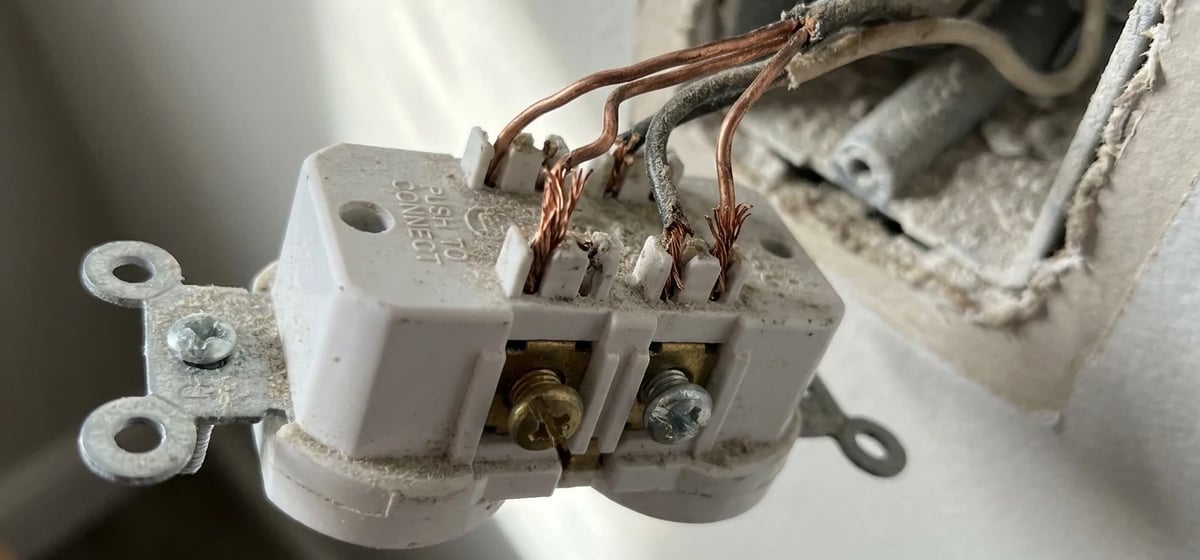
A backstab connection happens when someone pushes a bare electrical wire into a small hole on the back of a switch or outlet. Inside the hole, a tiny metal spring blade grabs the wire to hold it in place. Builders and electricians started using this method decades ago because it saves a lot of time during construction. Trade workers adopted the slang term in the mid twentieth century when these push in terminals first became popular. The name comes from the physical action of stabbing the wire directly into the back of the device. You just strip the wire and shove it in. It's much faster than bending the wire into a hook and tightening it under a side screw.
Why They Cause Problems Over Time
Backstab connections often fail as the years go by. The metal spring inside the outlet gets weak. Electricity heats up the metal when power flows through the wires. The metal expands when it gets hot and shrinks when it cools down. Every time you plug in a heavy device like a vacuum or a space heater, a lot of power rushes through that tiny spring. The spring is very thin, so it can't handle heavy electrical loads as well as a thick metal screw can. After years of this heating and cooling cycle, the spring loses its grip.
When the wire gets loose, the electrical connection gets sloppy. A loose wire can cause sparks. This sparking can melt the plastic outlet or even start a fire behind your wall. This is a common issue covered in Electrical safety guides.
How To Spot Them In Your Home
You can't see a backstab connection just by looking at your wall. You have to turn off the power at your breaker box, unscrew the cover plate, and pull the outlet out of the wall. If you see wires going straight into the back of the plastic housing instead of wrapped around the screws on the sides, you have backstabbed outlets.
You might also notice warning signs before you ever open the wall. Watch out for these common clues:
- A crackling or buzzing sound coming from the wall plate.
- Lights that flicker when you plug in a heavy appliance.
- An outlet cover plate that feels unusually warm to the touch.
- A faint smell of melting plastic in the room.
If you smell something burning near an outlet, you should treat it like one of your Home Emergencies and shut off the power right away.
Fixing The Issue And Typical Costs
Fixing a backstabbed outlet is a simple job for an electrician. They'll pull the wire out of the back hole. Sometimes the wire is stuck tight. If it won't come out, the electrician will just cut the wire close to the outlet and strip off a little bit of the plastic insulation to expose fresh copper. Then they make a small hook with pliers. They loop the hook around the side screw in a clockwise direction. As they tighten the screw, it pulls the wire tighter around the metal post. This is called a side-wired connection. It creates a solid metal clamp that won't come loose over time.
If the outlet is old or melted, the electrician will just replace the whole thing. A new standard outlet only costs about 2 to 5 dollars at the hardware store. Hiring a professional to replace or rewire your outlets usually costs 150 to 300 dollars per hour, and prices vary based on where you live. They can usually fix several outlets in a single hour. If you're handy and understand basic safety, you might decide to fix it yourself after reading about DIY vs. Hiring a Pro.