What is a ball valve?
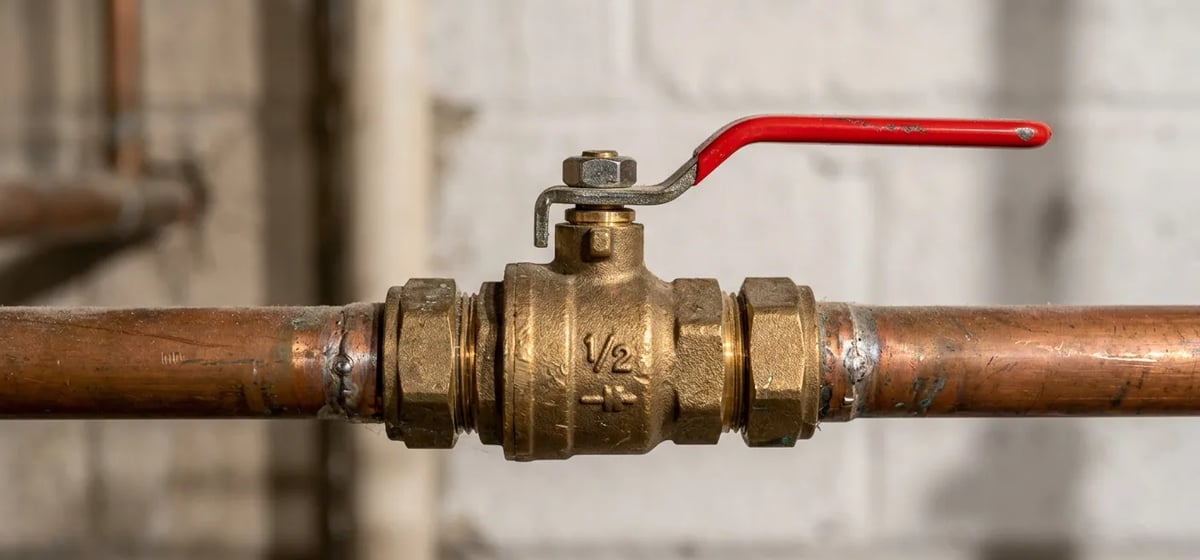
A ball valve is a very common type of shutoff switch for water or gas pipes in your house. The name comes from the hollow metal sphere inside the valve. This ball has a hole drilled right through the middle. When the valve is open, the hole lines up with the pipe so water flows freely. When you turn the handle a quarter of the way around, the solid side of the ball blocks the pipe and stops the water completely.
Engineers invented this design in the 1950s. Before that, homes used older gate valves that required you to spin a round knob many times to stop the water. Those older valves often leaked or got stuck as they aged. The ball valve fixed those problems with its simple quarter turn. Because they are so reliable, they are now the standard choice for modern homes across the country.
Where you will find them
You will spot these valves all over your house. They usually have a straight metal handle covered in brightly colored plastic. The plastic is often red, yellow, or blue to help you see it easily. You can find them anywhere you might need to turn off a liquid or gas quickly.
- Next to your water heater on the cold water pipe coming into the tank.
- Near your washing machine hoses in the laundry room.
- Under the kitchen sink or bathroom sinks.
- On the main water supply pipe coming into your house from the street.
- Behind your gas stove or near your gas furnace in the basement.
Finding your main shutoff valve is a great step to take when learning about your Plumbing system. Knowing exactly where these valves live saves you time and stress when you need to turn the water off in a hurry.
Why they matter
When a pipe bursts or a washing machine hose breaks, water floods your house fast. You do not have time to struggle with a rusty knob. A ball valve lets you cut the water in one second with a single push of the handle. You can easily see if the valve is open or closed just by looking at it from across the room. If the handle points in the same direction as the pipe, the water is flowing. If the handle crosses the pipe like a letter T, the water is off.
This quick action is crucial during Home Emergencies. A fast shutoff can save you thousands of dollars in water damage. It also makes routine maintenance much easier. When you need to change a faucet or fix a toilet, you can just flip the valve handle and get to work without draining the whole house.
What to watch for and costs
Ball valves are very tough, but they do not last forever. Hard water can build up inside the pipe over the years. This mineral buildup can make the ball hard to turn. If you try to force a stuck handle, you might bend the metal or break the valve entirely.
If a valve gets stuck or starts to drip, you will need to replace it. A DIY replacement is cheap but requires cutting pipes and sometimes soldering copper. Most homeowners hire a professional for this job to avoid leaks. A plumber typically charges 150 to 300 dollars to replace a single ball valve. Keep in mind these ranges vary based on where you live and how hard the valve is to reach. If you plan to hire someone, you can read more about Hiring Contractors & What Things Cost to prepare for the expense.