What Is Balloon Framing?
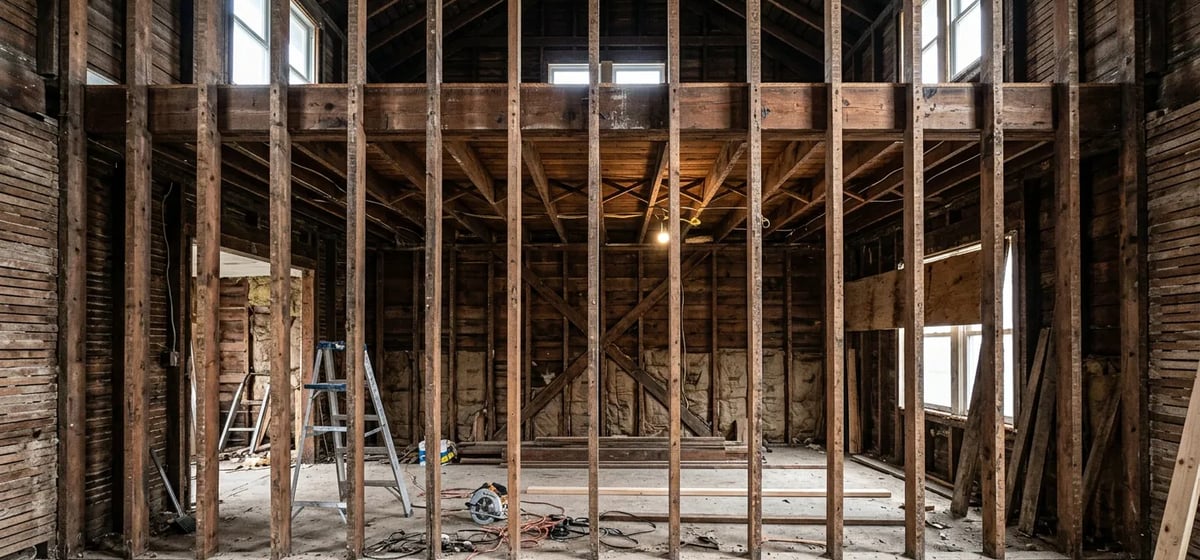
Balloon framing is an older style of house construction. Builders used it mostly from the late 1800s until the 1930s. In a balloon framed house, the wooden wall studs run in one continuous piece from the foundation all the way up to the roof. The floor joists for the second story hang right off these tall studs.
The name actually started as a joke. Older carpenters in the 1830s thought these houses looked incredibly flimsy. They joked that a strong wind would blow the house away like a giant balloon. But the method caught on because it was fast and cheap. It allowed builders to put up houses quickly using mass produced lumber and nails.
Today, builders use platform framing instead. In platform framing, they build the first floor, build a platform on top of it, and then build the second floor. This breaks up the walls into much shorter sections.
How to Tell if You Have Balloon Framing
If your house was built before 1930 and has two or more stories, it might have balloon framing. You can often check this yourself if you have an unfinished basement or an attic with exposed walls.
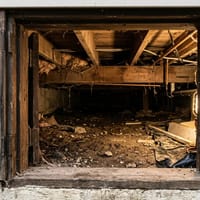
Go to your basement and look at the exterior walls where they meet the ceiling. If you can look up into the wall cavity and see daylight or a long empty space going up, you have balloon framing. In a modern platform framed house, you would just see a solid piece of wood blocking that space.
You can also look in the attic. If you see open gaps where the exterior walls meet the attic floor, that is another clear sign. Sometimes, an inspector will note this on your home inspection report when you buy the house.
The Hidden Fire Hazard
The biggest problem with balloon framing is fire safety. Because the wall cavities run straight from the basement to the attic, they act just like a chimney. If a fire starts in the basement, the flames and smoke can shoot straight up through the walls and reach the roof in minutes.
Modern homes have built in stops between floors. Balloon framed homes have wide open gaps. This rapid fire spread is a major reason why building codes changed. It is also why your insurance company might ask about your home structure. You can learn more about how your home build affects your premiums in our guide to Home Insurance.
Insulation and Energy Loss
Those tall, empty wall cavities also make balloon framed houses very drafty. Cold air from the basement easily flows up the walls. This makes your heating system work much harder in the winter.
Many older homes have no insulation in these exterior walls. If you want to fix this, you usually have to hire a contractor to blow loose insulation into the walls through small holes. This project helps seal the gaps and keeps your home warm. Expect to pay 1,500 to 3,000 dollars to insulate the exterior walls of an older home. Keep in mind that costs range widely based on your location and house size. Getting this right takes pressure off your HVAC & Climate Control system.
How to Fix the Risks
You do not need to tear down your house if it has balloon framing. But you should add fireblocking. Fireblocking means sealing up the empty spaces in the walls so fire and smoke cannot travel upward.
Contractors usually add fireblocking in the basement and the attic. They wedge pieces of treated wood, fire resistant foam, or rockwool insulation into the gaps where the walls meet the floors. This blocks the chimney effect.
- Basement blocking: A pro will seal the gaps where the wall studs meet the foundation sill plate.
- Attic blocking: They will seal the top of the wall cavities where they open into the attic space.
- During a remodel: If you ever gut a room to the studs, your local building inspector will require you to add wooden fireblocks between the studs before you put up new drywall.
Hiring a professional to add fireblocking in an unfinished basement and attic usually costs 1,000 to 2,500 dollars. As always, local prices vary. It is a smart investment that makes your older home much safer. If you are curious about other structural quirks in older homes, check out our guide on Foundation & Structure.