What is a Board Foot?
When you walk into a big box hardware store, you usually buy wood by the piece. A standard two-by-four has a set price. But if you visit a real lumberyard or hire a custom woodworker, they use a different system. They sell wood by the board foot.
A board foot is a special unit of measurement for volume. It equals a piece of wood that's 12 inches long, 12 inches wide, and 1 inch thick. It measures the total amount of wood in the board, not just how long it is.
This measurement standard started in the early North American timber trade. Sawmills needed a fair way to price wood based on total volume rather than just length. Today, it remains the standard way professionals buy and sell rough lumber.
Why It Matters to Your Wallet
Understanding this term helps you read contractor quotes. If you hire a pro to build a custom dining table, install solid wood floors, or build a new deck, they'll calculate the raw materials in board feet. Knowing how this works helps you understand hiring contractors and what things cost.
Different types of wood have different prices per board foot. Common woods like pine might cost 2 to 4 dollars per board foot. Hardwoods like oak or maple usually cost 4 to 8 dollars per board foot. Premium woods like walnut can run 8 to 15 dollars or more per board foot. Keep in mind that lumber prices change often, and these ranges vary widely based on your location and the quality of the wood.
Contractors also buy extra wood to account for waste. When they cut and shape the rough lumber, they lose some material. They'll usually add 10 to 20 percent more board feet to your quote to make sure they have enough wood to finish the job.
Where You'll See This Term
You won't see board feet on a standard receipt from a home improvement store. You'll run into this term in a few specific places as a homeowner.
- Custom woodworking quotes: Carpenters list the board feet of raw material needed for built-in shelves or custom cabinets.
- Hardwood flooring estimates: When you buy raw, unfinished planks for flooring, the supplier bills you by the board foot.
- Lumberyard invoices: If you buy rough-sawn lumber for a big DIY project, your receipt will show the total board footage.
Don't confuse a board foot with a linear foot. A linear foot only measures length in a straight line. A board foot measures the actual volume of the wood. A board that's 10 feet long is always 10 linear feet, but its board footage changes based on how thick and wide it is.
How to Do the Math
You don't need to be a math genius to figure out board feet. You just need to know the thickness, width, and length of the board. The formula is simple.
First, measure the thickness and width in inches. Then, measure the length in feet. Multiply those three numbers together. Finally, divide that total by 12. The result is your total board feet.
For example, imagine you have a board that's 2 inches thick, 6 inches wide, and 10 feet long. You multiply 2 times 6 times 10 to get 120. You divide 120 by 12 to get 10. That board is exactly 10 board feet. If that specific wood costs 5 dollars per board foot, that single piece of lumber will cost you 50 dollars.
Knowing this simple math helps you check estimates. If a carpenter says your project needs 100 board feet of cherry wood, you can easily verify the material costs before you sign the contract.
Rough vs. Surfaced Lumber
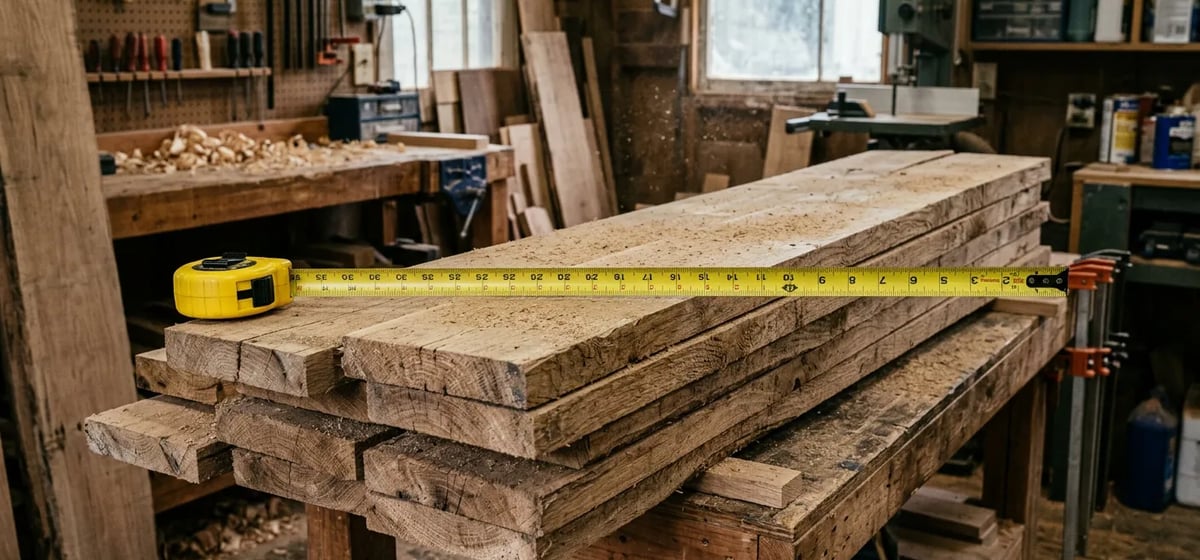
When you buy wood by the board foot, you're usually buying rough lumber. This means the wood comes straight from the sawmill. It has a rough texture and uneven edges. A woodworker has to plane and sand it down to make it smooth and usable.
Because the milling process removes some wood, a rough board shrinks in size once it's finished. A board that measures a full inch thick at the lumberyard might only be three-quarters of an inch thick by the time it goes into your custom cabinets. However, you still pay for the original, rough volume. The lumberyard bills you for the wood you started with, not the wood you end up with.