What Is a Linear Foot?
A linear foot is simply a measurement of length in a straight line. It is exactly 12 inches long. When a contractor uses this term, they don't care how wide or thick the material is. They only care how long it is. If you buy a piece of wood trim that is 10 feet long, it is 10 linear feet. It doesn't matter if the trim is two inches wide or six inches wide. The length stays the same. Construction workers use this measurement to make pricing easy for long materials. It is the fastest way to measure the edges of a room or the border of a yard.
Where You Will See It
You will run into this measurement during many home projects. Contractors use it to price materials that come in long pieces or rolls. You will see it on quotes, supply store receipts, and building permits.
- Fencing: Fence builders charge by the linear foot to install the panels and posts around your yard.
- Baseboards and crown molding: Carpenters measure the walls of your room to know how much trim to buy. You can learn more about these details in our guide to Interior: Paint, Drywall & Trim.
- Kitchen cabinets: Cabinet makers measure the wall space in your kitchen to price out the lower and upper boxes.
- Gutters: Roofers measure the edges of your roof to install new gutters and downspouts.
- French drains: Landscapers measure the trench length to fix water issues.
It also pops up when you look at plumbing pipes or electrical wires. If a plumber needs to replace a long drain pipe, they will price the new PVC pipe by the linear foot.
How to Measure It Yourself
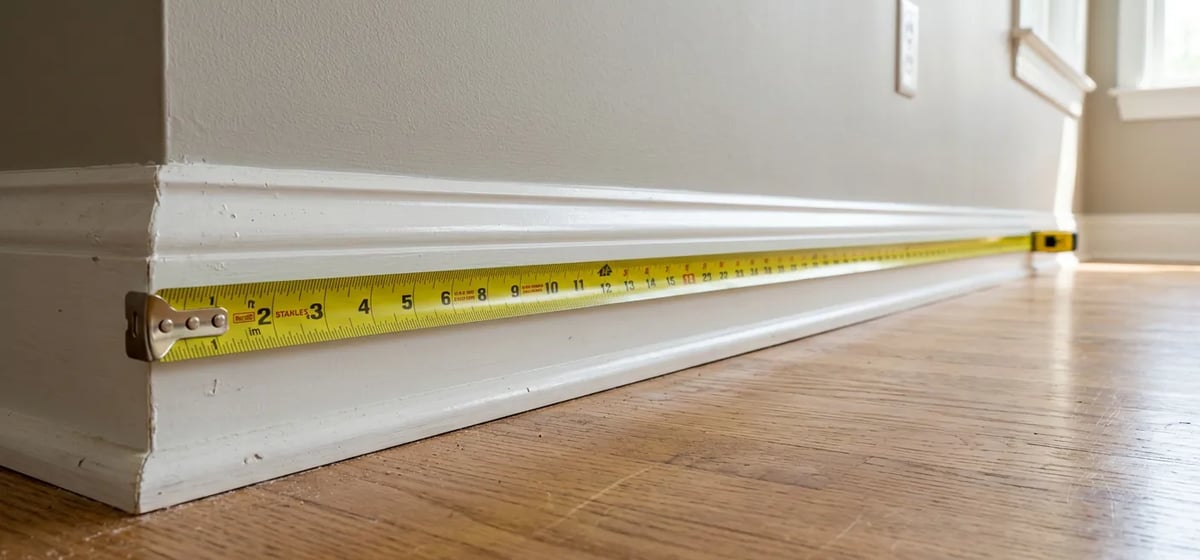
Measuring linear feet is a very easy task. You only need a standard tape measure. You don't need to do any complex math or multiply numbers together. Simply stretch your tape measure along the edge of the space you want to cover. If you are measuring a room for new baseboards, measure the length of each wall. Add the lengths of all four walls together. That total number is your linear footage. If your walls measure 10 feet, 12 feet, 10 feet, and 12 feet, you need 44 linear feet of baseboard. You don't need to measure the height of the wall or the width of the floor.
How It Changes Your Costs
Pricing by the linear foot makes it easy to compare quotes from different pros. But you need to know that the price usually covers everything in that one foot of space. For example, a linear foot of fencing includes the wood, the nails, the concrete for the post, and the labor.
Here are a few ballpark costs you might see. Keep in mind that prices always vary based on where you live and the materials you pick.
- Wood privacy fence: 15 to 30 dollars per linear foot.
- Custom kitchen cabinets: 100 to 300 dollars per linear foot.
- Seamless aluminum gutters: 8 to 15 dollars per linear foot.
- Baseboard installation: 5 to 10 dollars per linear foot.
If you are planning a big project, check out our guide on Hiring Contractors & What Things Cost to help you budget.
What to Watch For
Don't confuse a linear foot with a square foot or a board foot. A square foot measures a flat area, like the floor of a room. You use square feet for carpet or tile. You use linear feet for the baseboards around that same floor. A board foot is a volume measurement used at lumber yards, which looks at length, width, and thickness.
Always ask what is included in the linear foot price. Some quotes only cover the raw materials. Other quotes cover the materials, the labor, the paint, and the cleanup. Ask for a breakdown so you aren't surprised by the final bill.