What Is a Boiler?
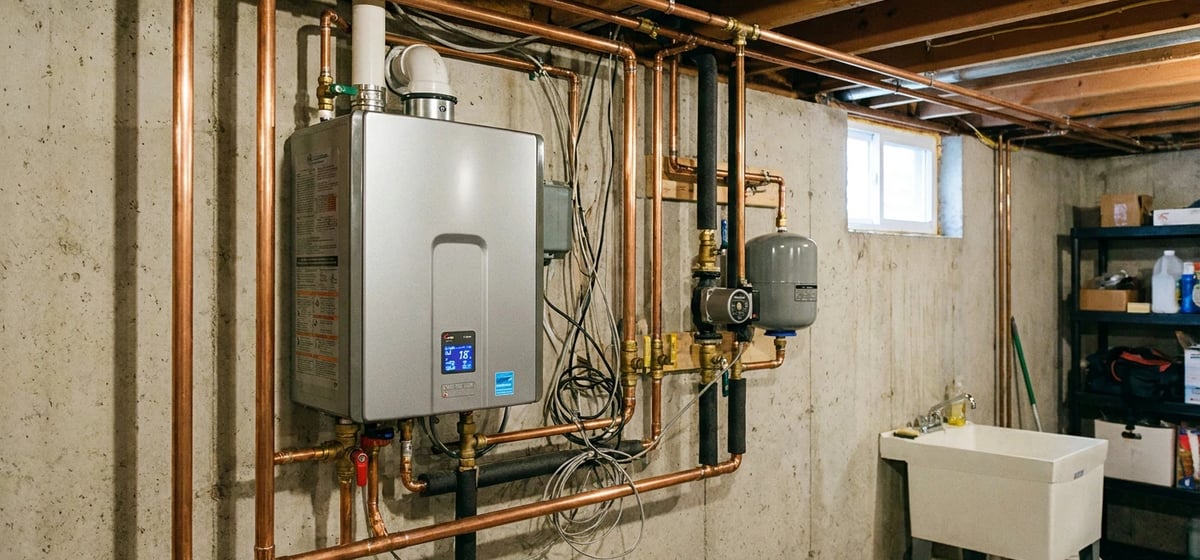
A boiler is a large metal appliance that heats your home. It usually sits in your basement, garage, or utility room. Unlike a standard furnace that blows warm air through vents, a boiler heats water. It pumps this hot water or steam through a network of pipes. These pipes connect to heavy metal radiators or baseboard heaters in each room. The heat from the water warms the metal, which then warms the air in the room. You will usually find boilers in older homes, especially in the colder Northeast and Midwest regions. They are a major piece of your HVAC & Climate Control system.
Many people prefer boiler heat over forced air. Radiant heat does not blow dust or pet dander around your house. It also does not dry out your indoor air as much during the winter. The word boiler comes from an old Latin word meaning to bubble. It became a common trade term during the industrial revolution.
How It Works
Most modern residential boilers use natural gas, heating oil, or electricity to heat the water. The system works in a closed loop. The boiler heats the water and sends it out. The water travels through the house, gives off its heat to the rooms, and cools down. Then, the cool water flows right back to the boiler to get heated again. Because it relies on water, your boiler connects directly to your Plumbing setup.
There are two main types of boilers. A hot water boiler keeps the water in liquid form as it travels. A steam boiler actually boils the water into steam before sending it up through the pipes. Steam boilers are mostly found in very old houses. Many hot water boilers also let you set up different heating zones. Each zone gets its own thermostat and water valve.
What to Watch For
Boilers are built tough, but they still need regular checkups. You should look at your boiler a few times a year to catch small problems early. Keep an eye out for these common warning signs:
- Water pooling around the base of the metal tank.
- Loud banging or rumbling noises from inside the tank, often called kettling.
- Radiators that stay cold at the top even when the heat is turned up high. This usually means trapped air is blocking the water, and you need to bleed the radiator.
- A sudden, unexplained spike in your winter heating bills.
Repair and Replacement Costs
When a boiler breaks down, it can get expensive. A simple repair like fixing a leaky valve or replacing a broken thermostat usually costs 200 to 600 dollars. If your boiler is more than 15 or 20 years old, you might need to replace the whole unit. A brand new boiler costs 4,000 to 10,000 dollars to buy and install. High efficiency models can cost even more up front, but they save you money on gas over time.
Keep in mind that these price ranges vary based on where you live and the size of your house. If you are planning a budget for the year, you can check our guide on What Home Repairs Cost to see how a boiler fits into your overall home maintenance plan. Getting your boiler serviced by a professional once a year will help it run safely.