What is a blower motor?
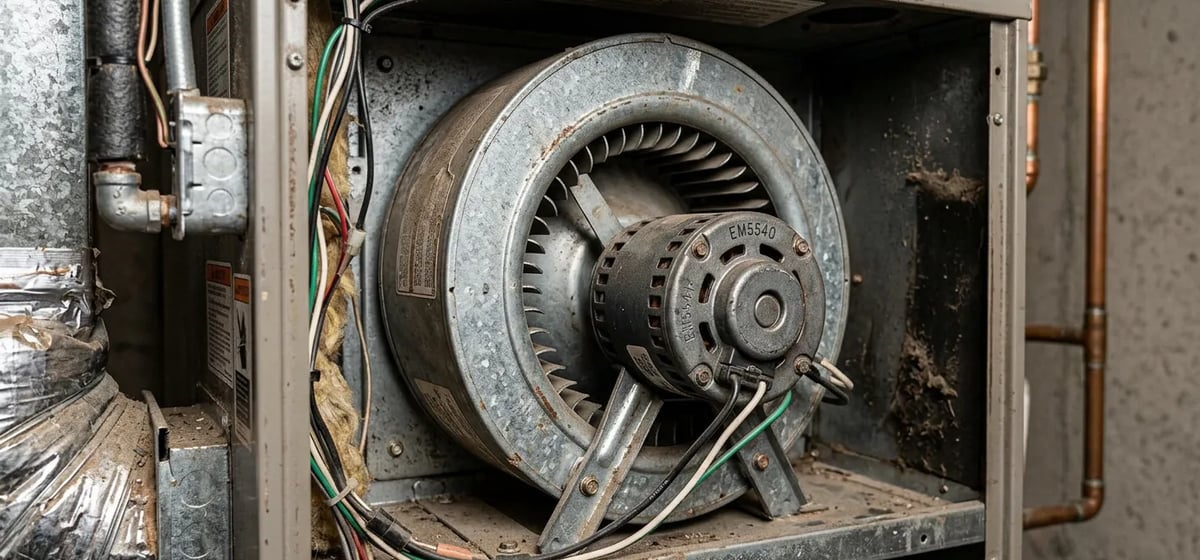
The blower motor is the heart of your home air system. It is a large fan located inside your indoor furnace or air handler. It takes the air that your system just heated or cooled and pushes it out into your house. The air travels through your ductwork and comes out of the vents in your rooms. Without this fan, your system won't move any air at all. The word blow traces back to the Old English blawan which means to move air. Mechanics combined it with motor, from the Latin word for mover, during the early days of forced air heating. Today, it is a key piece of your HVAC & Climate Control setup.
Why it matters to your home
Your heating and cooling equipment relies completely on the blower motor to keep you comfortable. If your furnace creates heat but the fan doesn't push it away, the furnace will overheat and shut down. If your air conditioner cools the coils but the fan doesn't blow air over them, those coils will freeze solid into a block of ice. The motor also pulls stale air from your rooms back into the system through the return vents. This cycle filters your indoor air and keeps the temperature even across your whole house.
Modern homes often use variable speed blower motors. Older homes usually have single speed motors. A single speed motor turns on at full blast and then turns off. A variable speed motor can run at lower speeds to save energy and keep the air mixing quietly. Both types do the exact same job. They move the air so you stay comfortable.
Signs of a failing blower motor
Blower motors work hard all year long. Eventually, the parts wear out. You'll usually notice a few warning signs before the motor dies completely. Pay attention to how your system sounds and feels.
- Weak airflow coming from your vents when the system is running.
- Loud squealing or grinding noises from your indoor unit.
- The fan won't turn on at all, even when you hear the furnace fire up.
- Your energy bills suddenly spike because the motor is working too hard.
- The system turns itself off after just a few minutes because it gets too hot.
What it costs to replace
Replacing a broken blower motor is a common repair. You'll usually need to hire a professional heating and cooling technician for this job. They have to open the unit, disconnect high voltage wires, and slide the heavy fan assembly out of the cabinet. The price you pay will depend on the size of your system and the type of motor you have.
For a standard single speed motor, you can expect to pay 400 to 600 dollars for the part and the labor. If you have a high efficiency variable speed motor, the price goes up. Those complex motors often cost 800 to 1,500 dollars to replace. Keep in mind that these are just estimates and exact ranges vary by location. If your unit is still under warranty, the manufacturer might pay for the part itself. You'd only have to pay the technician for their labor. You can read more about typical repair pricing in our guide to Hiring Contractors & What Things Cost.
How to protect your motor
You can help your blower motor last longer with one simple habit. Change your air filter regularly. A dirty filter blocks the air from entering the system. When the air can't get through, the motor has to work twice as hard to pull it in. This extra strain makes the motor run hot and burns out the parts faster. Check your filter every month and replace it when it looks dirty. Keeping the filter clean saves money and prevents sudden breakdowns.