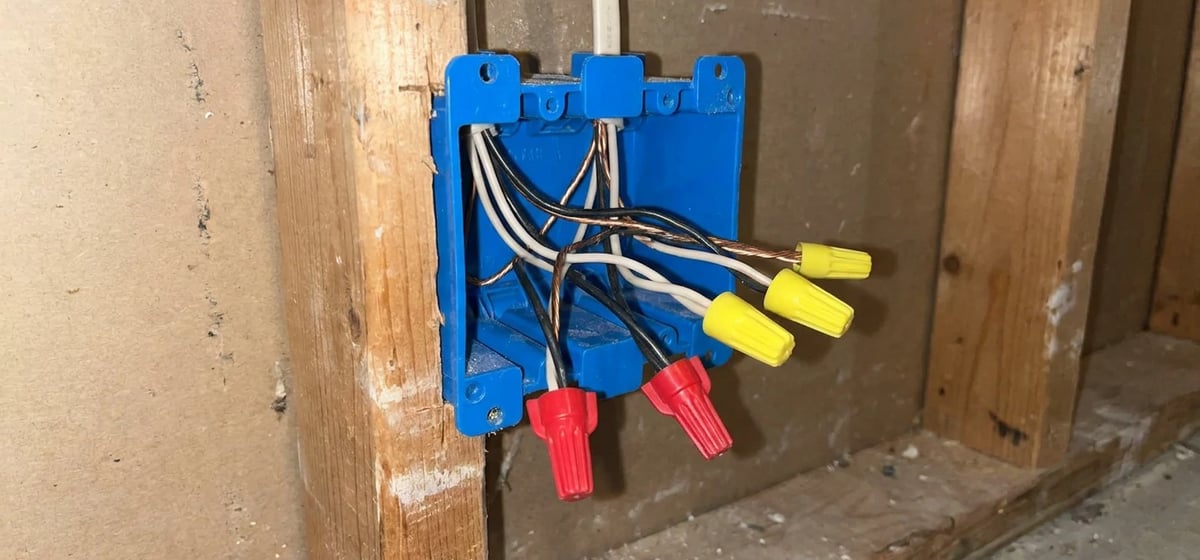
What Box Fill Means
Every electrical box in your walls has a specific physical volume. Box fill refers to the total amount of space taken up by everything inside that junction box. This includes the electrical wires, the wire nuts, the internal clamps, and the actual devices like switches or outlets.
The National Electrical Code sets strict limits on how much stuff you can safely pack into a single box. Electricians must calculate this volume to make sure they do not exceed the legal limit. The calculation itself is very precise. An electrician looks at the size of the box, which usually has its cubic inch volume stamped right inside the back. Then, they count the items going inside. A thick 12 gauge wire takes up more legal space than a thinner 14 gauge wire. An outlet takes up the space of two wires. Even the ground wires and internal cable clamps count toward the total. It is basically a math puzzle that must be solved before the wall gets closed up.
Why Box Fill Limits Keep You Safe
Electricity generates heat as it moves through wires. When wires have enough empty space around them, this heat dissipates harmlessly into the air inside the box. If you stuff too many wires into a tiny space, that heat gets trapped. Over time, trapped heat degrades the plastic insulation wrapped around your wires.
Once the insulation melts or cracks, bare metal wires can touch each other or touch the side of a metal box. This creates an electrical arc, which is a massive spark that can easily start a fire inside your walls. Box fill rules exist purely to prevent this overheating hazard. For more context on keeping your home safe, you can read our guide on Electrical systems.
Where You Will Notice It
You will usually run into box fill issues when you try to upgrade your home. Older houses often have very shallow electrical boxes. Decades ago, a simple toggle switch and two wires fit perfectly fine. Today, things are much different.
Smart switches, dimmer switches, and USB outlets are bulky. They take up a lot of room. When you try to install one of these modern devices into an old, shallow box, you might find it impossible to push the device flush with the wall. If you have to force the switch into the wall with all your body weight, the box is overfilled. You also run into this when finishing a basement or adding new outlets, because contractors might try to splice too many new wires into an existing junction box to save time.
Another common spot for this problem is the ceiling box holding your light fixtures. If you upgrade a simple dome light to a heavy ceiling fan with a remote control receiver, you suddenly need much more room. The remote receiver block is notoriously difficult to fit into standard ceiling boxes alongside all the necessary wire nuts.
How Professionals Fix Crowded Boxes
If a home inspector or an electrician flags a box fill violation, you have a few ways to fix it. A licensed electrician will usually take one of the following steps.
- Install a deeper box: The electrician cuts out the old shallow box and installs a new, deeper box that holds more volume.
- Add an extension ring: If the box is mounted in an unfinished space like a basement or garage, they can screw a metal or plastic extension ring onto the front of the existing box. This adds extra depth and volume.
- Reroute the wires: Sometimes, they can pull a set of wires out and run them to a brand new junction box nearby to split up the load.
Fixing a single overfilled box is usually a small job. You can expect to pay an electrician $150 to $300 to replace a crowded wall box with a larger one, though ranges vary based on your local labor rates and whether they need to cut into your drywall. If you are budgeting for broader updates, check out our guide on What Home Repairs Cost to help plan your expenses.