What Is a Brad Nailer?
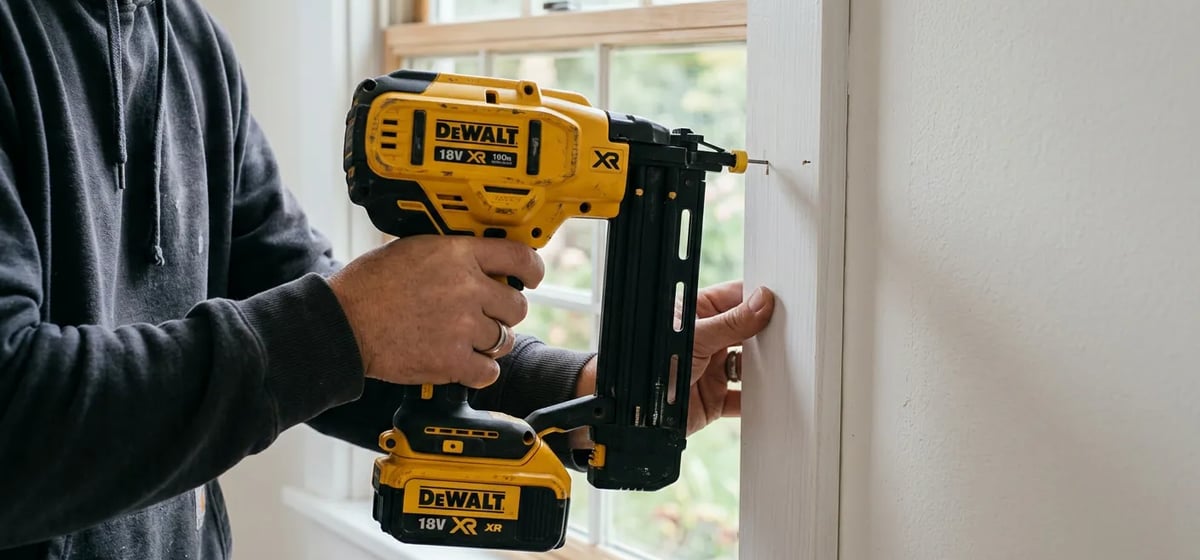
A brad nailer is a handy power tool that shoots very thin nails into wood. You can find models that run on an air compressor or use rechargeable batteries. These tools specifically use 18 gauge nails. These nails are much thinner than standard construction nails. The word brad comes from the Old Norse word broddr, which means a spike or shaft. Tool companies invented pneumatic brad nailers in the 20th century to speed up finish carpentry work. Today, they are a staple in home workshops across the country. The thin nails have tiny heads that sink slightly below the surface of the wood. You can easily hide the tiny holes with a quick dab of wood putty. Once you paint over the putty, the nail completely disappears.
Why It Matters for Your Home
If you want to update your home, a brad nailer makes the job much easier. You use it to attach delicate trim pieces like baseboards, crown molding, and window casings. Driving nails by hand with a heavy hammer often splits thin or delicate wood. A brad nailer shoots the nail so fast that the wood rarely splits. This saves you money on wasted materials. It also saves you hours of frustrating work. When you swing a hammer in a tight corner, you risk denting the wall or the trim. A brad nailer lets you place the tool exactly where you want it and pull the trigger. If you are tackling a project covered in our Interior: Paint, Drywall & Trim guide, a brad nailer is often the best tool for the job.
Buying or Renting a Brad Nailer
You have two main choices when you shop for a brad nailer. Pneumatic nailers connect to an air compressor with a long rubber hose. They feel lighter in your hand and usually cost between 30 to 100 dollars. However, you also need to buy or rent an air compressor to make them work. Battery powered brad nailers are much more convenient because they don't need a bulky air hose. These cordless models cost between 120 to 300 dollars. Tool prices and rental rates vary by location and brand. If you only need the tool for one weekend, you can rent one at a local big box store for about 20 to 40 dollars a day. Before you buy expensive new tools, check out our guide on DIY vs. Hiring a Pro to decide if doing the trim work yourself makes sense.
What to Watch Out For
A brad nailer isn't a heavy tool. The nails are simply too thin to hold thick structural wood together. You should never use a brad nailer to build a deck, hang heavy cabinets, or frame a wall. It's strictly for lightweight trim, small furniture repairs, and crafts. Also, you must always wear safety glasses when using one. Sometimes a nail hits a hard knot in the wood and shoots out the side. Keep your free hand well away from the spot where the nail goes into the wood.
Popular Projects for a Brad Nailer
Homeowners reach for a brad nailer for many different weekend projects. It's the perfect tool for adding decorative touches to plain rooms. Here are a few common ways you'll use this tool around your house:
- Installing shoe molding around the bottom edge of your baseboards.
- Putting up decorative shiplap or wainscoting in a bathroom or dining room.
- Fixing a loose piece of door casing that keeps pulling away from the wall.
- Building small wooden crafts or birdhouses with your family.
If you just bought a home that needs work, a brad nailer is a great early investment. You can read more about setting up your basic tool kit in Your First Week as a Homeowner.