What a Junction Box Is
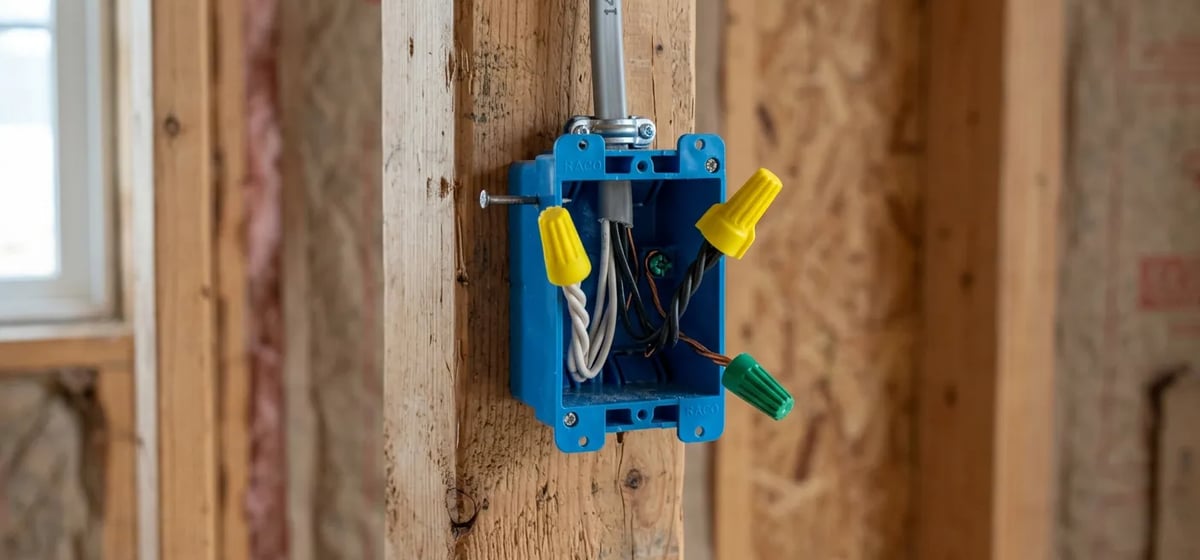
A junction box is a small, rigid enclosure made of plastic or metal. You will find them installed inside your walls, up in your ceilings, or tucked away in your attic. Electricians use these boxes to connect wires together safely. The word junction comes from the Latin word jungere, meaning to join together. Early electricians began using these boxes in the 1900s to stop house fires caused by exposed wire splices.
Today, building codes require all wire connections to happen inside one of these boxes. They keep the wire splices protected from physical damage. If a wire connection fails and throws sparks, the sturdy box contains the sparks so the surrounding wood does not catch fire. Metal boxes are common in older homes or places with exposed wiring, while plastic boxes are standard in most modern residential construction.
Why It Matters to You
Your home relies on a massive web of wires to power everything you use daily. Anytime a wire needs to split off to feed a new light fixture or an extra wall outlet, an electrician must make a splice. Making these connections out in the open is incredibly dangerous. A loose wire can spark and ignite the wooden framing inside your walls.
The junction box acts like a tiny fire vault for your home. It also protects people and pets from accidental electric shocks. If a mouse chews on a wire or a nail punctures a wall, the box keeps the critical connections safe. For a deeper look at how your home power works, check out our guide on Electrical systems. Knowing how these boxes protect your home will give you peace of mind.
Where You Run Into Them
You might never see most of the junction boxes in your home. Builders hide them right behind your light fixtures, behind your ceiling fans, and behind your electrical outlets. The fixture itself acts as the cover for the box.
However, you will sometimes see plain square or round boxes with blank metal or plastic covers on them. You might spot these blank covers mounted on your garage wall, attached to a joist in an unfinished basement, or nailed to a beam up in your attic. Electrical codes strictly require these covers to stay accessible. You can never bury a junction box behind drywall or hide it under a permanent floor. If an electrician needs to troubleshoot a bad circuit or add a new line, they must be able to open the cover and reach the wires easily.
What to Watch For
As a homeowner, you need to watch out for missing covers or exposed wires. Sometimes a previous owner or a careless handyman will make a sloppy wire connection outside of a box. Home inspectors call this an open splice. It is a major safety hazard that you must fix before you sell your house or right after you buy it.
If you hire an electrician to fix an open splice or add a new junction box, expect to pay 150 to 300 dollars per box. Costs vary based on your location and how hard it is to reach the wires. If they have to cut into the drywall, you will also need to pay for minor wall repairs.
Keep an eye out for these common junction box problems around your house:
- Missing cover plates on boxes in your attic, basement, or garage.
- Wires joined together with plastic tape and left resting on bare wood.
- Boxes stuffed with far too many wires for the available space.
- Burn marks, melted plastic, or a burning smell near a wall plate.
If you notice a burning smell near any electrical box, this is an urgent issue. Turn off the power at the breaker panel immediately. Check out our guide on Smells & Odors to know exactly when to call for emergency help.