What is a Closet Flange?
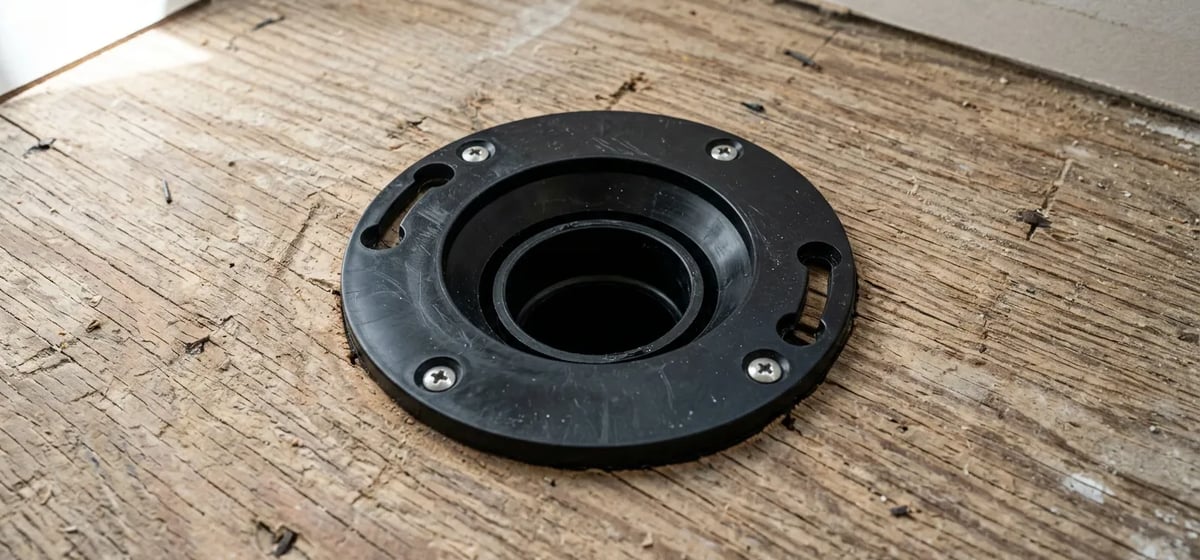
A closet flange is the critical link between your toilet and your home plumbing system. The name might sound strange at first. The word closet comes from water closet, an old term for an indoor toilet room. Flange comes from the Old French word flanchir, meaning to bend. This part is a round collar that mounts securely to your floor and connects directly to the drain pipe.
You'll usually find closet flanges made of PVC plastic, ABS plastic, cast iron, or brass. The flange has two main jobs. First, it gives you a solid base to bolt the toilet down so it doesn't move. Second, it holds a wax ring in place. This wax ring creates a tight seal that stops water and sewer gases from escaping into your bathroom.
Why It Matters to You
Your toilet handles a lot of weight and water every single day. Without a strong closet flange, your toilet would just sit loosely on the floor over a hole. Every time you sat down, the toilet would shift. That movement would quickly break the wax seal underneath.
When that seal breaks, you get leaks. Sometimes the water pools on your bathroom floor. Other times, the water hides under the floorboards and rots the wood. If your bathroom is on the second floor, a bad flange seal can ruin the ceiling in the room below. A broken flange also lets awful sewer gas leak into your house. If you notice a foul scent near your bathroom, you might want to check our guide on Smells & Odors to see if a broken toilet seal is the cause.
Common Problems to Watch For
Closet flanges break down over time. Metal flanges can rust and rot away. Plastic flanges can crack if the toilet bolts are tightened too much. Here are the most common signs that your closet flange needs attention:
- Your toilet rocks back and forth when you sit on it.
- You find water pooling around the base of the toilet.
- Your bathroom smells strongly of sewage.
- The floor feels soft or spongy right next to the toilet.
Another common issue happens when you install new tile or thick wood planks. This can make the floor higher than the flange. The flange needs to sit flush with or slightly above the finished floor. If your new Flooring makes the toilet sit too high, you'll need to install a flange extender so the wax ring can still make a good seal.
Repair and Replacement Costs
If your closet flange is cracked or rusted, you usually need to hire a plumber to fix it. The parts are very cheap, but the labor takes time. A plumber has to turn off the water, drain the toilet, pull the toilet off the floor, and scrape away the old wax ring before they can even touch the flange.
If the flange just has a broken bolt slot, a plumber can often install a metal repair ring over the old plastic one. A repair ring part costs about 10 to 30 dollars. If the whole flange needs to be cut out and replaced, the new PVC or cast iron part costs 10 to 50 dollars. However, the total cost for a professional to do this job usually runs 150 to 300 dollars. Keep in mind that price ranges vary depending on where you live and how hard it is to reach the pipes. If the leaking toilet rotted your subfloor, you'll pay much more to rebuild the floor structure. You can learn more about hiring help in our guide to Hiring Contractors & What Things Cost.