What Is a Concrete Form?
A concrete form is a temporary mold made of wood or metal. It holds wet concrete in place. It keeps the heavy liquid in the exact shape you need until it hardens into a solid wall or patio. Your builder will pull these boards away once the concrete completely cures.
The word form comes from the Latin word forma which means shape or mold. Ancient Roman builders used wooden forms to shape their famous concrete domes and aqueducts over two thousand years ago. Today, residential contractors still rely on this same basic idea to build your home.
Where You Will See Them
You'll spot concrete forms anytime you add hard surfaces to your property. Contractors use them for nearly every concrete project.
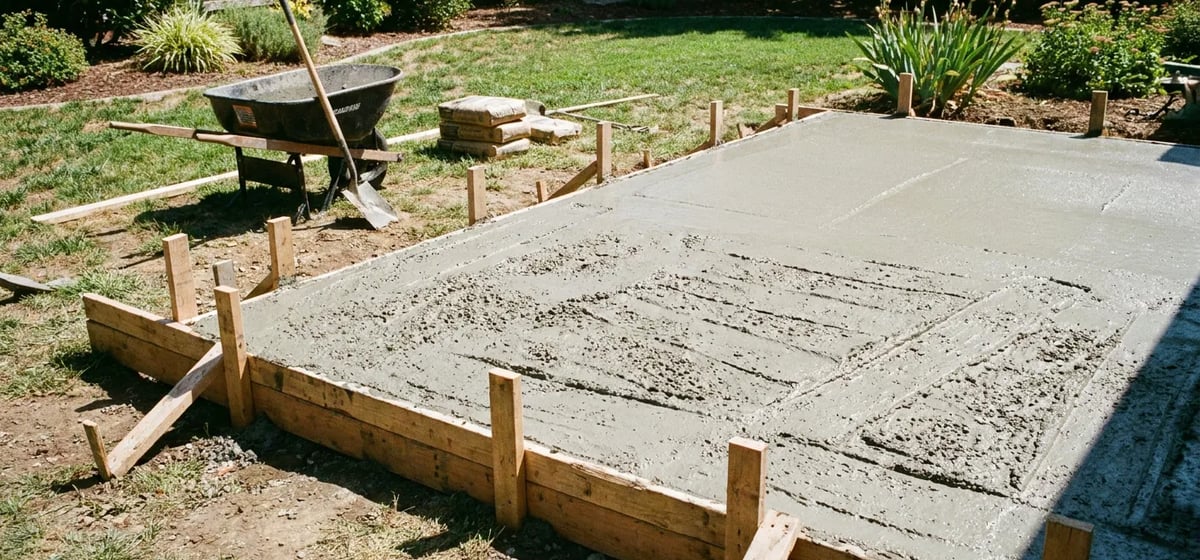
- Driveways and walkways: Workers stake long wooden boards into the dirt to outline the path.
- Patios and porches: Forms hold the edges crisp and straight while the slab dries.
- Basement walls: Builders use tall, heavy steel or engineered wood panels to pour vertical walls.
- Footings: These are the hidden concrete tracks buried in the ground. They support your entire house.
If you're planning a backyard makeover, you'll likely see forms stacked up on your lawn. You can read more about outdoor projects in our guide to Landscaping, Drainage & Outdoor.
Types of Concrete Forms
Contractors use a few different materials to build these molds. The right choice depends on what they're building.
- Lumber: Standard pine boards are the most common. Builders use them for flat work like sidewalks and garage floors. They're cheap and easy to cut.
- Plywood: Builders use thick plywood sheets to form vertical walls. They coat the wood with a special oil so the concrete doesn't stick to it.
- Steel or Aluminum: Large foundation companies own reusable metal panels. These heavy panels lock together. They create perfectly straight walls for basements and tall retaining walls.
- Insulated Concrete Forms: Also known as ICF, these are thick foam blocks that snap together like giant toy bricks. Builders pour concrete inside the hollow foam. Unlike wood or metal, the foam stays in place forever to insulate the house.
Why Good Forms Matter
Wet concrete is incredibly heavy. A single cubic yard weighs about 4,000 pounds. That massive weight pushes hard against the sides of the mold. If a contractor uses cheap wood or doesn't brace the form correctly, the boards can bow outward. This creates a wavy, ugly edge on your driveway.
In a worst case scenario, a weak form can completely burst open. Builders call this a blowout. A blowout spills hundreds of pounds of wet concrete across your yard. It wastes expensive materials and creates a huge mess. A good contractor takes their time building strong forms before the cement truck ever arrives. Solid forms are a critical part of your Foundation & Structure.
What Forms Cost
You usually don't pay for forms as a separate line item. Contractors roll the cost of the wood and the labor to build the mold into the total price of the concrete job. However, the complexity of the form directly impacts your final bill.
A simple straight driveway is easy to form. A patio with sweeping curves requires flexible forming materials. These specialty materials cost more and take more time to install. If you want decorative concrete steps, the builder has to build a custom wooden box for each individual stair.
For a basic flat slab, forming labor and materials typically add $2 to $5 per square foot to the project. Tall foundation walls require heavy metal forms that contractors rent by the day. Renting these large wall panels can cost $500 to $1,500 per week. Keep in mind that all price ranges vary based on your local market and the size of your project. You can learn more about hiring the right professional in our guide to Hiring Contractors & What Things Cost.