What is a conductor?
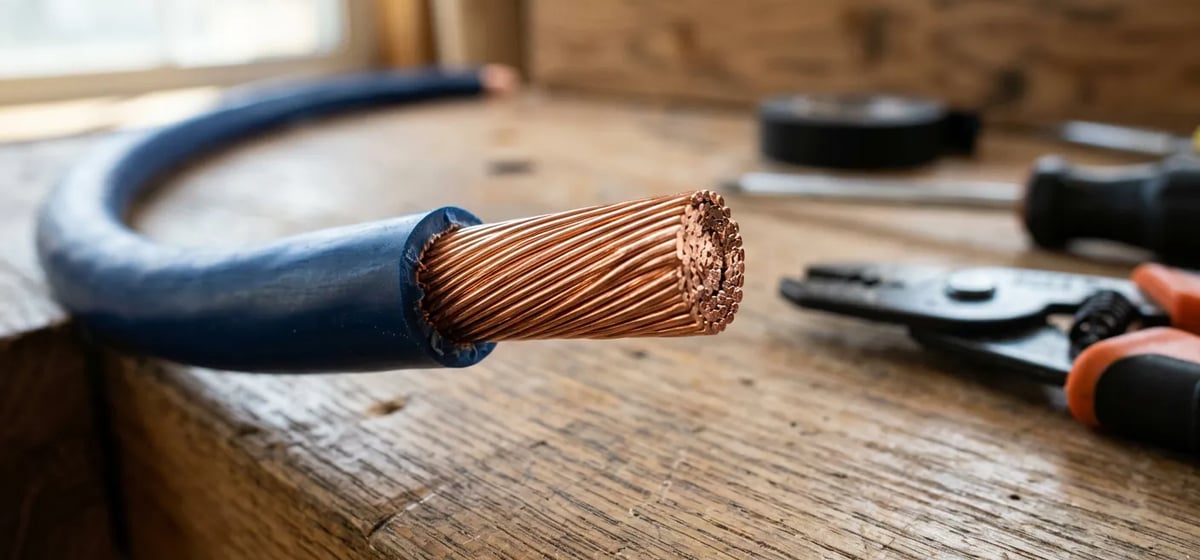
Every time you flip a light switch or plug in a phone, you rely on a conductor. A conductor is simply any material that lets electricity flow through it easily. In a home, this usually means metal. Copper is the most common conductor you'll find inside the wires behind your walls. Aluminum is another common metal, often used for the main heavy power lines coming into your house from the street. These metals act like pipes for electricity. They carry power from your breaker panel to every outlet, switch, and light fixture in your home. If you want to learn more about how this whole system works, check out our guide to Electrical basics.
Conductors don't work alone. They're always wrapped in an insulator. An insulator is a material that blocks electricity, like rubber or plastic. The conductor moves the power, and the insulator keeps that power safely contained so it doesn't shock you or spark against wood framing.
Why it matters to you
Understanding conductors matters because electricity is always trying to find the easiest path to the ground. A good, properly sized conductor gives it a safe, controlled path. If a conductor gets damaged, or if it's too small for the amount of power it's trying to carry, it creates a bottleneck. This bottleneck causes the metal to heat up. Over time, that heat can melt the plastic insulation around the wire and start a fire in your walls.
You also rely on a special type of conductor called a ground wire. This is usually a bare copper wire running alongside the insulated wires in your walls. If something goes wrong with an outlet or a heavy machine, the ground wire grabs the stray electricity and guides it safely into the earth outside your house. This protects you from getting shocked when you touch metal Appliances like a refrigerator or a washing machine.
Where you run into them
You'll run into conductors in a few different ways around your property. The most obvious ones are the power cords attached to your lamps and televisions. Inside those flexible plastic cords are many tiny copper wires twisted together. The solid wires hidden behind your drywall are thicker and stiffer.
If you own a house built between 1965 and 1973, you might have aluminum wiring instead of copper inside your walls. Aluminum is a decent conductor, but it expands and contracts much more than copper when it gets warm. This constant movement can cause the connections at your outlets and switches to come loose. Loose connections are a major fire hazard. Fixing a whole house with older aluminum wiring usually costs between 4000 and 8000 dollars, though ranges vary based on the size of your home and local labor rates.
What to watch for
You should always keep an eye out for signs of failing conductors. Watch for these common warning signs:
- Outlets or switch plates that feel warm to the touch.
- Lights that dim or flicker when your air conditioner kicks on.
- A faint burning plastic smell near your walls.
- Frayed appliance cords where the colored plastic has peeled back.
If you notice any of these, you need to call a licensed electrician right away. You might also see bare metal if a pet chews on a power cord or if old wiring gets brittle over time.
If you're planning a major renovation or adding a hot tub, your contractor will likely need to install new conductors to handle the extra electrical load. Adding a new dedicated circuit for a heavy appliance usually costs between 250 and 600 dollars. This price covers the new copper wire, the breaker, and the labor to run it safely through your walls. Keeping your conductors in good shape ensures your home stays safe and your modern gadgets have the steady power they need.