What Is Conduit?
Conduit is a tough tube used to protect electrical wires from damage. You'll see it made of metal or plastic. It often runs along exposed basement walls or outside your house. The word comes from a Latin term meaning to bring together. In your home, it brings wires together in a safe, secure path. It acts like thick armor for your home Electrical system. It keeps pests, dirt, and moisture away from dangerous electrical currents. Without this hard shell, everyday activities could easily damage the fragile wires that power your lights and appliances.
Why It Matters To You
Wires hidden behind your drywall are usually safe on their own. The wood framing and drywall act as a barrier. But when wires run along an unfinished wall or outside, they need extra protection. A stray shovel hit in the garden or a chewed wire in the attic can cause a major fire. Conduit stops these accidents before they happen. It also makes future electrical work much easier and cheaper. An electrician can pull new wires through the existing tube without tearing open your walls. This saves you time, mess, and money when you want to upgrade a circuit or add a new outlet.
Common Types And Costs
Contractors use a few different types of conduit. The right choice depends on where the wires go and what local building codes require. Prices usually range from $1 to $5 per foot for the material alone. Installation labor adds more to the final bill, and ranges vary based on your location, the job size, and whether the electrician has to dig a trench. Expect to pay an electrician $50 to $100 per hour for the labor.
- Rigid Metal: This is the thickest and strongest type. You'll find it outdoors, underground, or in places prone to heavy damage. It costs $3 to $5 per foot.
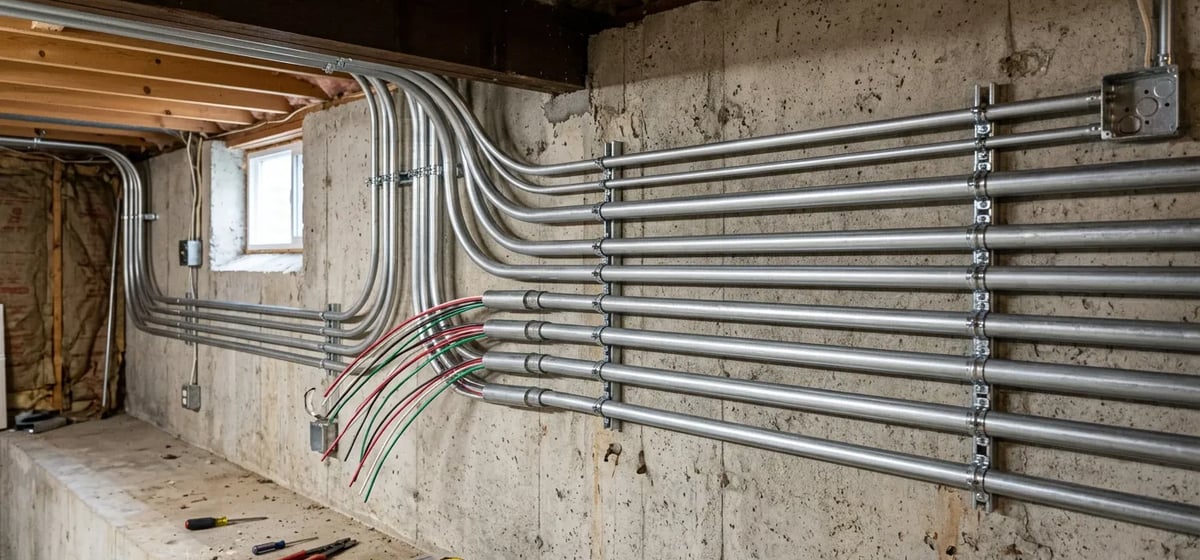
- Thin Metal: This lightweight tubing is easy to bend. You'll see it on exposed indoor walls like basements and garages. It costs $1 to $3 per foot.
- Plastic PVC: This type will never rust. Electricians use it for underground trenches or wet areas. It costs $1 to $2 per foot.
- Flexible Metal: This bendable armor connects vibrating equipment like water heaters or motors. It costs $2 to $4 per foot.
Where You Will Spot It
You probably walk past conduit every day without noticing it. It's very common in unfinished spaces and on the exterior of your house. Here are the main places you'll see these protective tubes around your property.
- Basement walls: Wires running to light switches or outlets on bare concrete walls must sit inside metal tubes to meet safety codes.
- Garages and sheds: Exposed wiring for garage door openers, workbenches, or extra outlets is wrapped in metal or plastic tubing to prevent accidental bumps.
- Outdoor equipment: You'll see a short, flexible tube connecting your outdoor HVAC & Climate Control unit to the power disconnect box on your siding.
- Underground lines: If you have a detached garage, a pool pump, or yard lights, buried plastic tubes protect the power lines from water and yard tools.
- Attics and crawlspaces: In some older homes, wires might run through metal tubes in these areas to stop mice and squirrels from chewing the plastic insulation.
What To Watch For
Conduit is built to last a very long time. But it can break down over decades of use and weather exposure. You should check the visible tubes around your home once a year. Look at the metal tubes in your basement for any signs of rust. Rust means moisture is getting to the metal, which could eventually reach the wires inside. Check the plastic tubes outside for cracks caused by the hot sun or accidental hits from a weed whacker. Make sure the metal straps holding the tubes to the wall are tight. If a tube is hanging loose, it can pull wires out of their connections and create a serious hazard.