What It Is
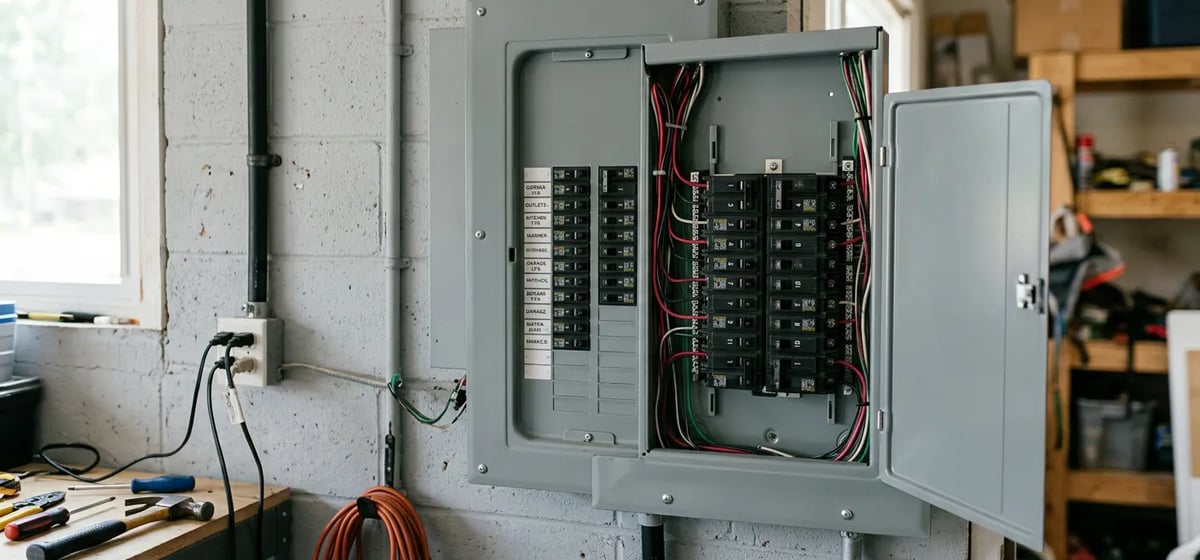
Your breaker panel is the heart of your home electrical system. It's a metal box mounted on a wall. Power lines from the street bring electricity straight into this box. Inside, the power splits into smaller paths called circuits. Each circuit goes to different rooms or big items in your house. The term "breaker" comes from the job these switches do. They break the electrical circuit to stop power from flowing. Thomas Edison invented the very first circuit breaker back in 1879 to protect his early lighting setups.
Today, this box holds rows of plastic switches. At the top of the panel, you'll see one large switch. This is the main breaker. It controls all the power to the entire house. If you turn this off, everything goes dark. Below the main breaker, you have two columns of smaller switches. These are the branch breakers. Each one handles a specific zone, like the kitchen outlets or the living room lights. If a wire gets too hot or draws too much power, the switch automatically flips off. This stops the electricity dead in its tracks.
Why It Matters to You
This metal box keeps your house from catching fire. When you plug in too many space heaters or hair dryers, the wires inside your walls get hot. If the breaker didn't trip, those hot wires could start a fire. The panel also lets you safely work on your house. If you need to change a light fixture, you just find the right switch in the box and turn it off. This kills the power to that one room so you don't get shocked.
Learning your way around this box is a huge part of Your First Week as a Homeowner. You need to know exactly which switch controls your kitchen, your bathrooms, and your bedrooms. Labels are incredibly important here. A panel with missing or wrong labels is a headache waiting to happen. You don't want to guess which switch controls the oven when you're trying to fix something. Take the time to map out your panel. Have a friend plug a lamp into different outlets while you flip switches. Write down exactly what each switch does on the paper index inside the panel door.
Where You Run Into It
You'll usually find your breaker panel in a garage, a basement, or a utility room. Sometimes builders put them in a hallway or even outside on the side of the house. You'll open this box anytime the lights go out in just one part of your home. When a breaker trips, the switch moves to the middle position. You have to push it all the way off, then push it all the way back on to fix it.
You might also run into subpanels. A subpanel is a smaller version of the main breaker panel. People often put these in detached garages or additions. The subpanel gets its power from the main box, but it has its own set of switches for that specific area. This saves the electrician from running a dozen long wires all the way across the property. When you deal with major systems like HVAC & Climate Control, you'll notice they usually have dedicated breakers that take up two slots in the panel. If you have questions about adding big items, check out the Electrical guide.
What to Watch For and What Things Cost
Older homes sometimes have outdated panels that are no longer safe. Brands like Federal Pacific or Zinsco are known to start fires because their breakers fail to trip. If a home inspector tells you that you have one of these, you need to replace it right away. Panels also get full. If you run out of empty slots for new switches, you might need a panel upgrade.
| Project | Estimated Cost |
|---|---|
| Add a new standard breaker | $150 to $250 |
| Replace a bad main breaker | $200 to $400 |
| Upgrade to a 200 amp panel | $1,500 to $3,000 |
Keep in mind that these prices are just ballpark figures. Actual costs will vary based on where you live and the electrician you hire. Watch out for these warning signs that mean you need to call a pro immediately:
- A buzzing or crackling sound coming from the box.
- Breaker switches that feel hot to the touch.
- Rust or water damage inside the panel.
- A burning plastic smell near the box.