What It Is
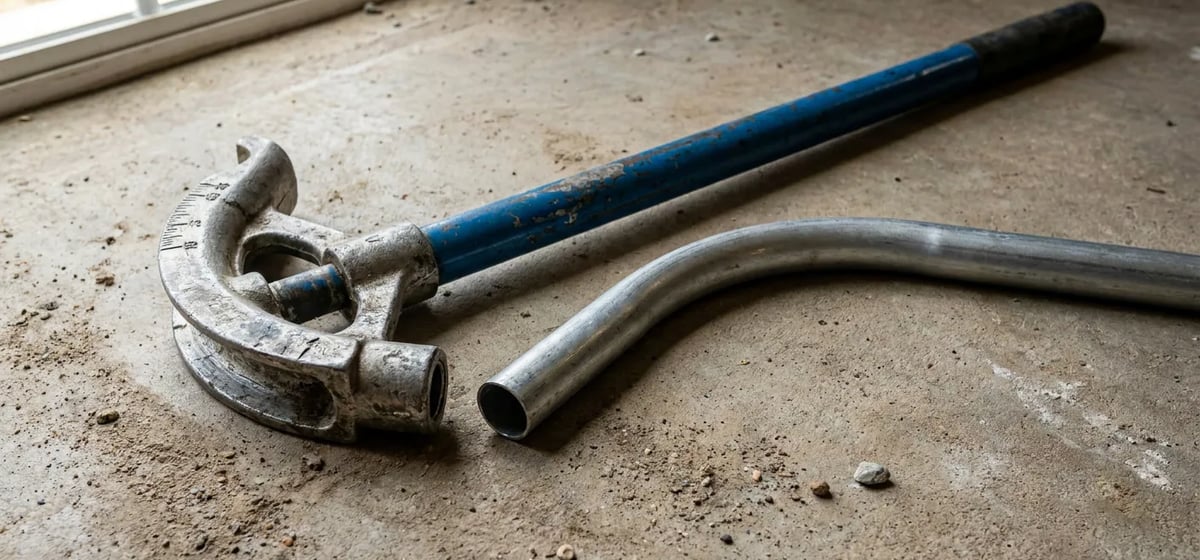
A conduit bender is a heavy metal hand tool that electricians use to curve protective metal pipes. You step on a foot pedal and pull a long handle to shape the pipe so it'll fit around corners. This keeps your electrical wires safe inside a continuous metal tube. Electricians created early versions of this tool in the 1920s when metal tubing became a standard safety requirement. The word conduit comes from the Latin conductus meaning to lead or bring together.
The tool itself looks like a curved metal shoe attached to a long steel handle. The curved shoe has specific angle markings on it. These marks help the user bend the pipe to exact angles like 30 degrees, 45 degrees, or 90 degrees. You need these exact angles so the pipe can sit flat against your walls and ceilings. The shoe also acts as a cradle. It supports the sides of the pipe so the metal stretches smoothly instead of snapping.
Why It Matters for Your Home
When you add new outlets to a garage or an unfinished basement, local building codes usually require metal conduit. This metal pipe protects the wires from physical damage. You can't just leave standard plastic coated wires in exposed areas where a shovel or a car door might hit them. To make the metal pipe go around a corner or over a concrete block, you have to bend it.
A conduit bender makes a perfectly smooth curve. If you try to bend the pipe over your knee or a workbench, it will kink and flatten. A flattened pipe makes it impossible to push wires through from one end to the other. It also creates a massive safety hazard. Sharp internal edges from a kinked pipe can easily slice the protective coating off your wires. This exposes bare copper and leads to short circuits. A proper bend protects your entire Electrical system.
When You Might See One
You will usually see an electrician using a conduit bender for specific projects around your property. Common jobs include:
- Installing exterior security lighting on brick walls.
- Running power to a new backyard shed or detached garage.
- Adding electrical outlets to an unfinished basement or workshop.
The electrician measures the wall, marks the metal pipe with a pencil, and places the bender on the floor. They step heavily on the heel of the tool and pull the long handle back toward their body. It takes physical strength and a lot of practice to get the angles exactly right. An experienced pro can make three or four complex bends on a single piece of pipe so it weaves perfectly around your plumbing pipes and air ducts.
Costs and Hiring a Pro
You can buy a manual conduit bender at any major hardware store if you want to tackle a project yourself. The tool itself usually costs 30 to 100 dollars. The price depends heavily on the thickness of the pipe it's designed to handle. Keep in mind that retail prices vary by location and brand.
However, bending metal conduit is very tricky for beginners. If you measure wrong or pull the handle too far, you ruin a piece of metal pipe and have to start over. If you aren't completely comfortable cutting, measuring, and bending metal, this is a great time to read up on DIY vs. Hiring a Pro.
Most homeowners choose to hire a licensed electrician for this type of work to ensure it meets local building codes. An electrician typically charges 75 to 150 dollars per hour for labor, plus the cost of materials. You can learn more about typical labor rates and project expectations in our guide to Hiring Contractors & What Things Cost.