What is a conduit body?
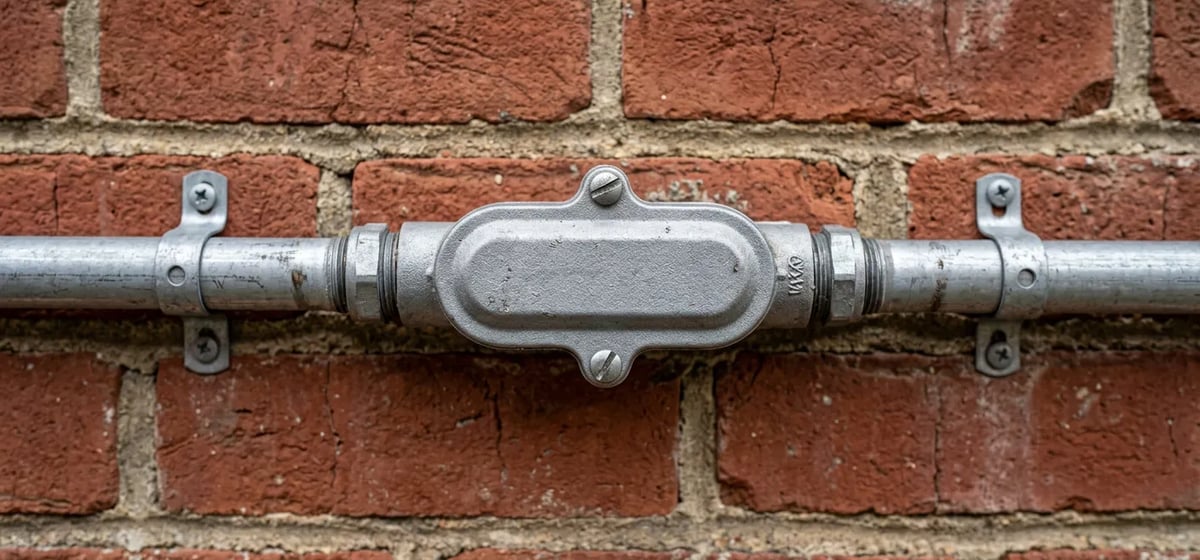
Conduit originates from the Latin word conducere. This means to bring together or lead. Electricians began using conduit bodies in the early 1900s to make wiring jobs easier in rigid pipe systems. Today, a conduit body is a common sight on many homes. It is a small metal or plastic box that joins sections of electrical pipe together.
You'll notice it has a removable plate on the back or side. This cover is the secret to how it works. When an electrician runs thick wires through a pipe, those wires don't bend easily. If they try to force wires around a sharp 90 degree corner, the wires can snag, scrape, or snap. The removable cover gives the worker an open space to pull the wire straight out, loop it, and feed it down the next pipe without causing damage.
Common types of conduit bodies
Electricians use a few different shapes depending on the job. They name these shapes with letters that describe how the pipe enters and exits the box. You don't need to memorize these, but knowing them helps if you are buying parts.
- LB bodies: These make a 90 degree turn into a building. The letter L stands for elbow and the letter B means the cover is on the back. You see these most often where wires go straight through your exterior wall.
- LR and LL bodies: These also make a 90 degree turn, but the removable cover is on the right or left side.
- T bodies: These look exactly like the letter T. They let power run straight through while branching a new wire off to the side to feed another device.
- C bodies: These are straight tubes with a cover on top. Electricians place them in the middle of a very long run of pipe to make pulling wires much easier.
Why conduit bodies matter to your home
These small fittings play a big role in keeping your home safe. They protect your electrical wires from rain, snow, dirt, and pests. If water gets inside your wiring, it can cause a short circuit or a fire. The tight seal on a conduit body keeps the weather out.
They also make future repairs much easier. If a wire goes bad or you need to upgrade your service, an electrician can just unscrew the cover. They don't have to cut open the pipe or tear apart your walls to reach the wires. You can learn more about how your home power system works in our Electrical guide.
Where you will run into them
You usually find conduit bodies on the outside of your house. They are very common in places where power lines enter the building from the street. You will also see them near heavy equipment that lives outdoors.
- Next to your main electrical panel on the outside wall.
- Connecting power to your outdoor air conditioner unit. For more on cooling systems, check out our HVAC & Climate Control page.
- Running power lines out to a detached garage or a backyard shed.
- Near pool pumps, hot tub heaters, and outdoor lighting controllers.
What to watch out for and what it costs
Conduit bodies are tough, but they don't last forever. Sun and rain can eventually wear them down. Metal bodies can rust over time. Plastic ones can crack if they get hit by a lawnmower or a flying baseball.
Take a walk around your house once a year and look at your exterior wiring. Check the conduit bodies for missing screws, loose covers, or visible cracks. If the rubber gasket under the cover rots away, water can easily get inside.
The actual part is very cheap. A basic plastic conduit body costs 5 to 15 dollars at a hardware store. A heavy metal one might cost 15 to 30 dollars. However, fixing a broken one is rarely a simple swap. If the box breaks, an electrician usually has to disconnect the wires inside to slide a new box onto the pipe. You're mostly paying for their time and expertise. A typical service call to replace a cracked conduit body and check the wires will cost you 150 to 300 dollars. Keep in mind that ranges vary depending on where you live and how hard the box is to reach.